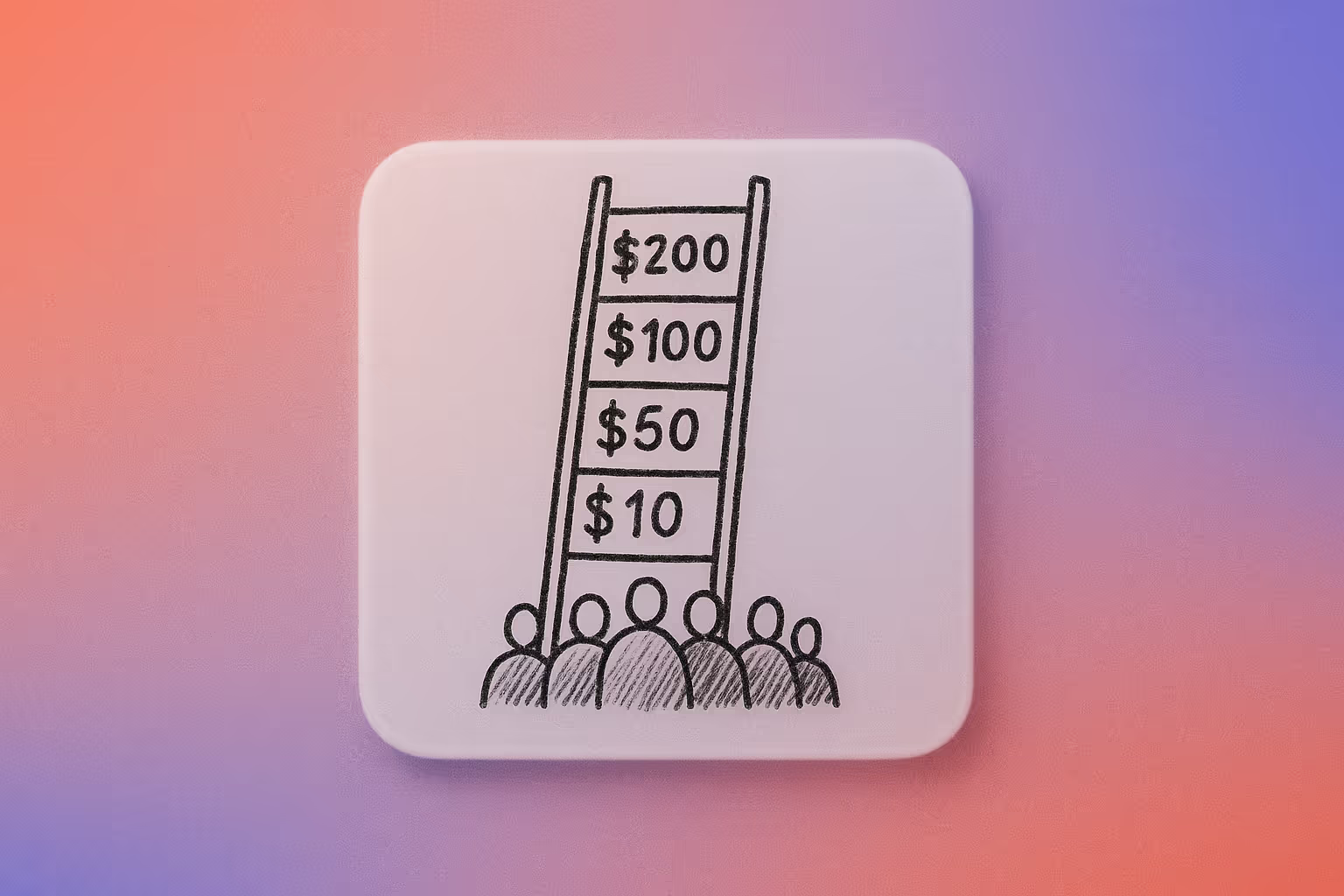
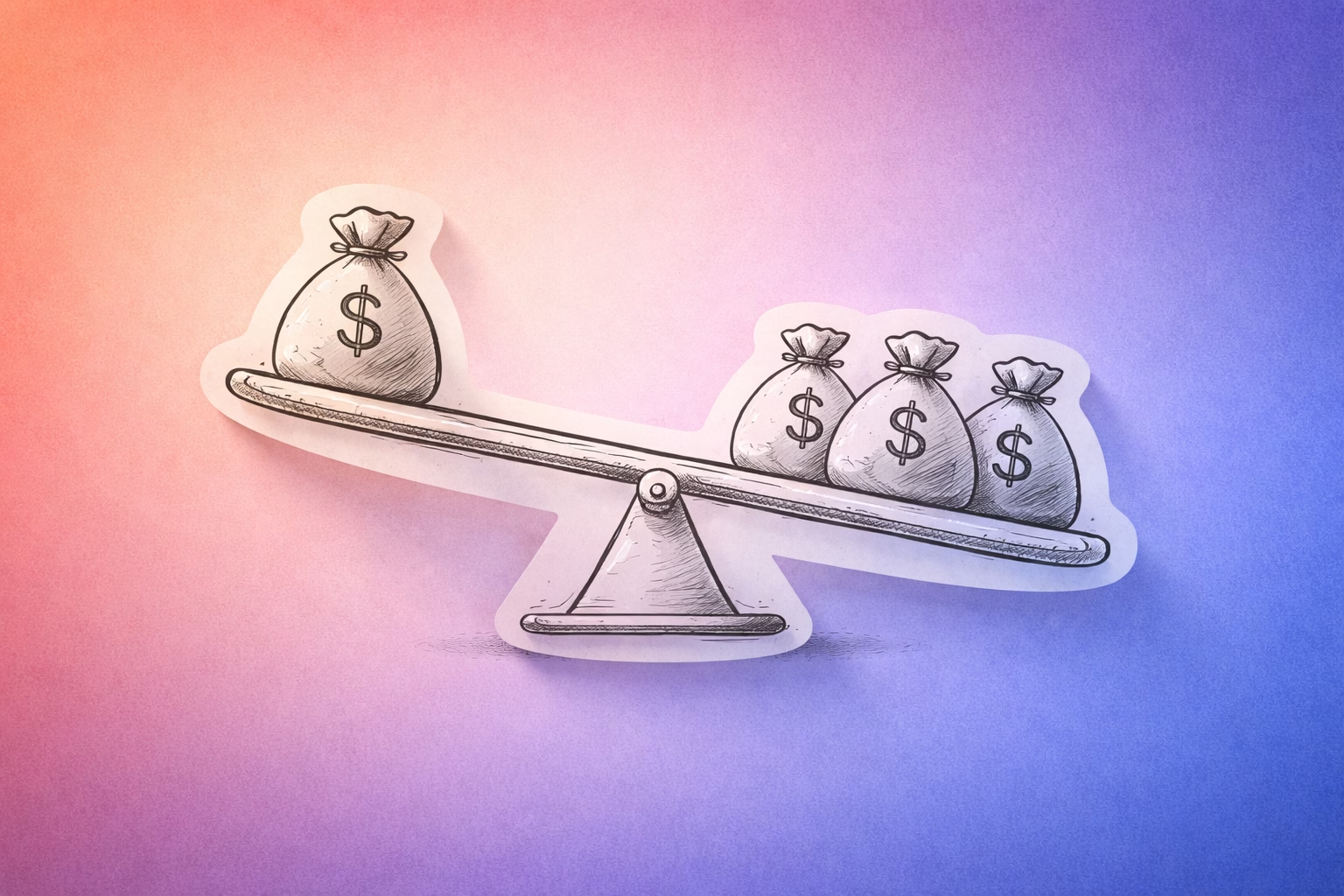
Higher-priced communities don't just make more revenue per member. They often attract more members, retain them longer, and generate better engagement than cheaper alternatives. This is counterintuitive, but it's one of the most consistent patterns we see across community builders on Heartbeat. Price is a signal that tells potential members how serious you are, how valuable the experience is, and whether this community is for committed people or casual browsers.
The community builders who struggle most with growth aren't the ones charging $149/month. They're the ones charging $9/month and wondering why nobody sticks around.
The $9 problem
During a Heartbeat tutorial on pricing tiers with Doc Williams, one of our customers, Drew, shared some stats on his business. He runs a niche health community, a training program for people with lazy eye, structured like a gym membership. He tested three price points: $9/month, $29/month, and an annual plan.
The $9/month tier performed worst. Not just on revenue, but on response. Fewer people signed up, and the ones who did were less engaged. Higher pricing got a better response across the board. Not slightly better. Meaningfully better.
This isn't an anomaly. It's a pattern that repeats across hundreds of community businesses. The cheapest option consistently underperforms in signups, in engagement, and in retention. Here's why.
Price is a filtering mechanism
When you charge $9/month, you're telling the market: "This isn't that important." You attract people who agree. People looking for something casual, something they might try for a month and forget about. They signed up because the barrier was low, not because the value was high.
When you charge $79/month or $149/month, you're telling a different story. You're saying: "This is for people who are serious about results." The people who respond to that message are, by definition, more committed. They've made a real decision to invest. That investment changes their behavior from the moment they join.
This is the same reason a $3,000 conference gets more engaged attendees than a free webinar. The price selects for the right audience, not just funds the event.
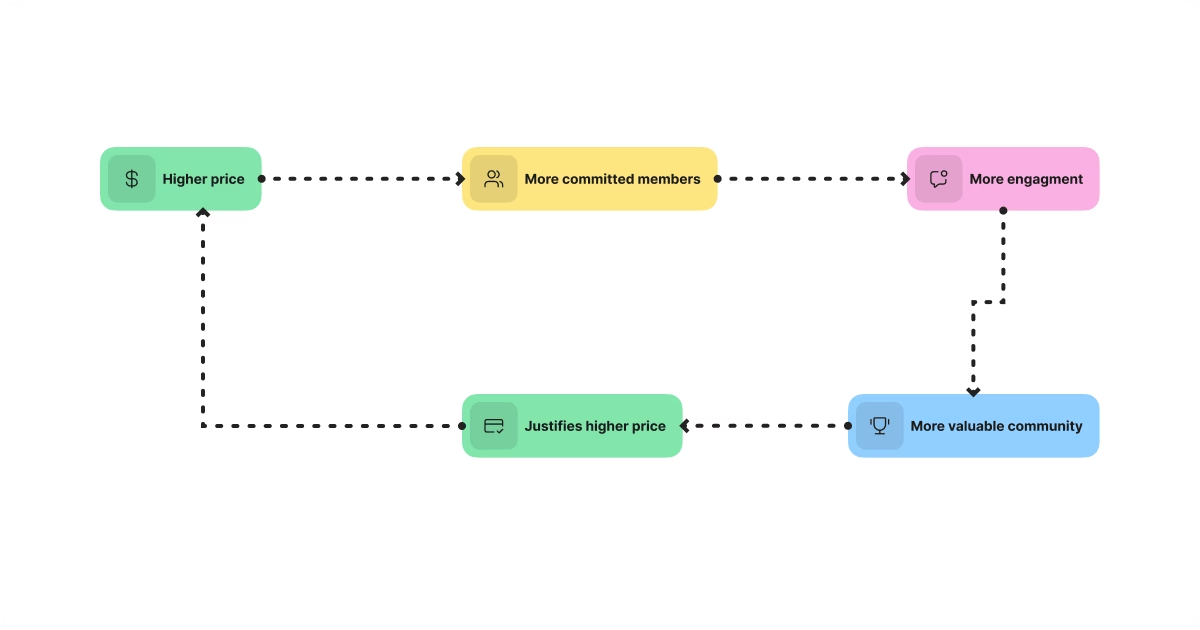
The virtuous cycle (high-priced communities):
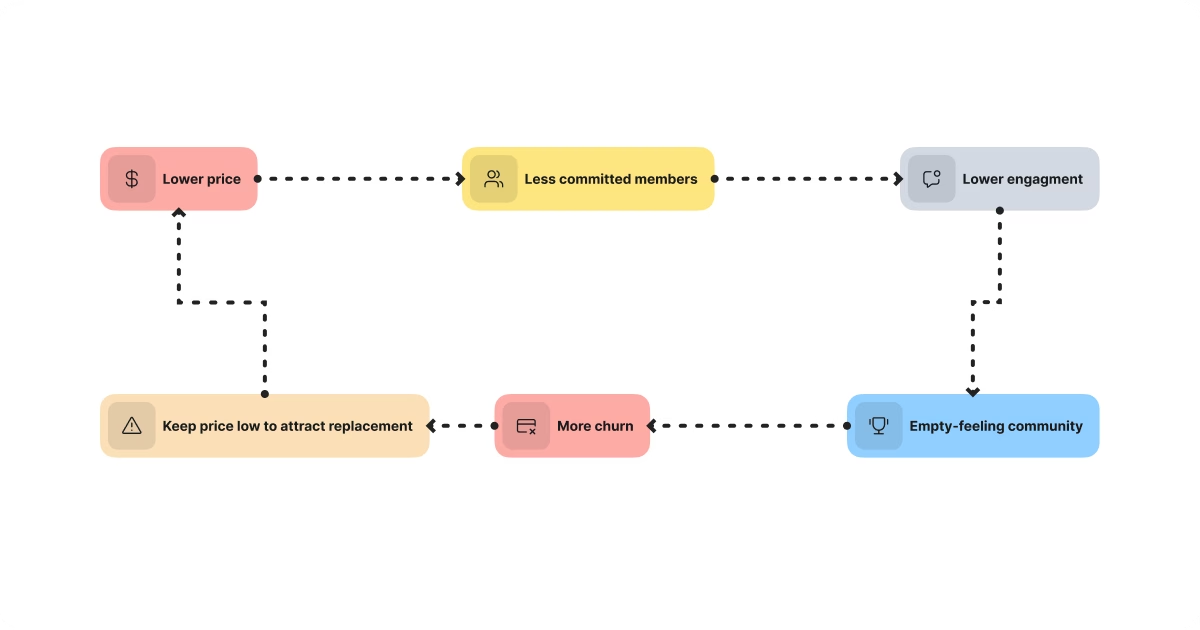
The death spiral (underpriced communities):
Investment drives engagement (which drives retention)
The relationship between price and engagement is causal, not just correlational. When someone pays a meaningful amount, they show up differently.
Lisa Princic, a Business Strategist & Membership Expert who's worked with hundreds of community builders, taught one of our most-watched tutorials on sustainable pricing and observed this across her client base and her own experience.
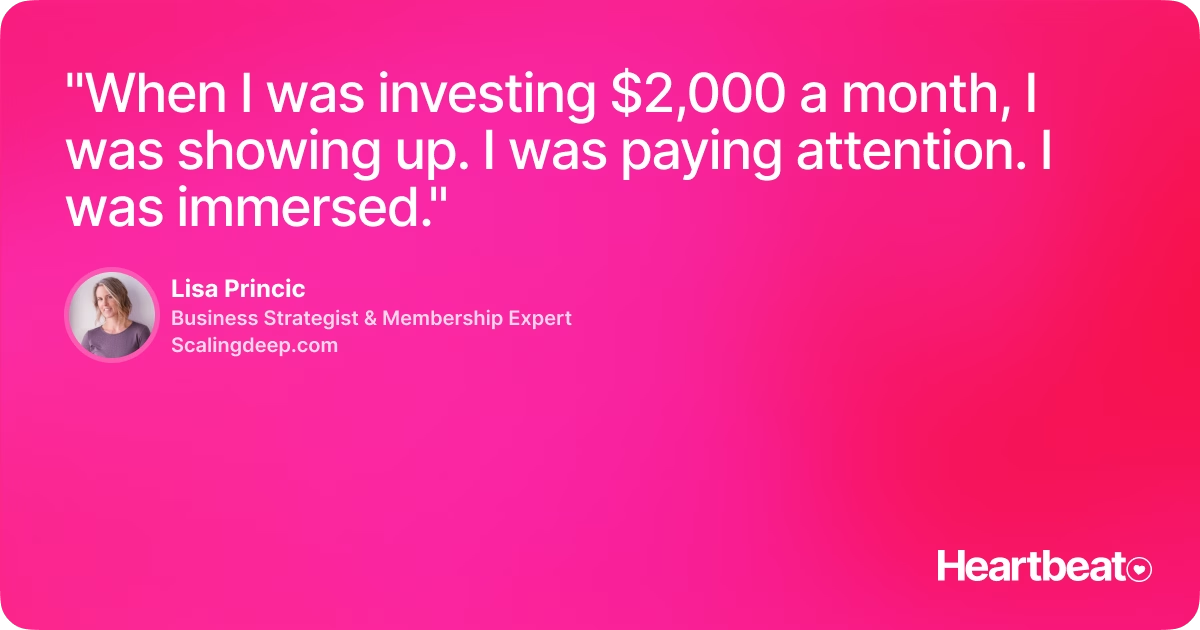
Members investing at the premium level had the most engaged behavior, not because the content was dramatically different from a lower-priced community, but because the financial commitment changed how they participated. This creates a compounding effect. Higher-priced members engage more, which makes the community more valuable, which justifies the higher price, which attracts more committed members. It's a virtuous cycle that starts with the pricing decision.
The opposite cycle is equally real. Low-priced members engage less. Low engagement makes the community feel empty. An empty-feeling community gets cancelled. You need more new members to replace churn. You keep the price low to attract more people. Repeat. This is the death spiral of underpriced communities.
The math of confidence
There's a psychological component to pricing that most community builders underestimate: confidence.
When you're not confident in your price, your potential members sense it. It shows up in how you describe your community, how you handle your community pricing page, and how you respond when someone asks "is it worth it?" Uncertainty in pricing undermines the entire value proposition.
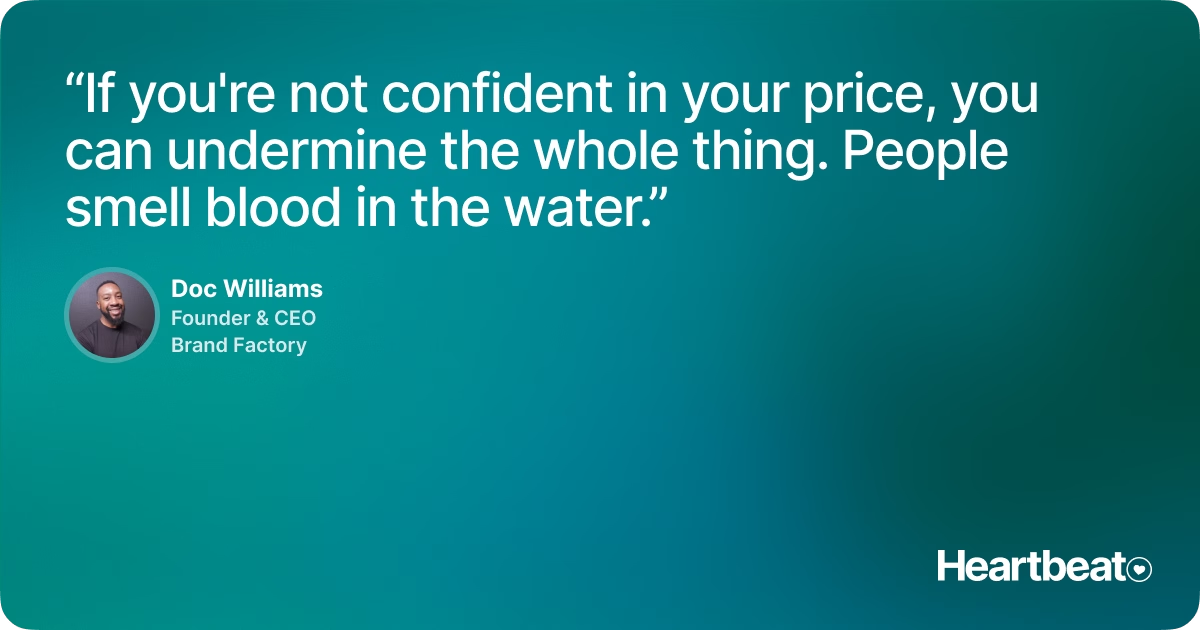
Doc Williams, CEO & Founder of Brand Factory who built communities for ESPN and the NBA Summer League, taught our tutorial on pricing tiers and puts it simply: confidence in pricing is the single most important selling skill. The inverse is also true. When you believe your community is worth $149/month and you can articulate exactly why, that confidence transfers to the buyer. They're evaluating whether you believe in what you've built, not just the price.
The specificity premium
Here's what makes higher prices actually work: specificity. Generic communities can't charge premium prices. Specific ones can.
"A community for entrepreneurs" is vague. It could be worth $15/month or $500/month. But "a community for DTC founders doing $1M-$5M in revenue who want to scale without raising venture capital"? That's worth $200/month to the right person. They know immediately if it's for them, and the specificity implies that the value is concentrated and relevant.
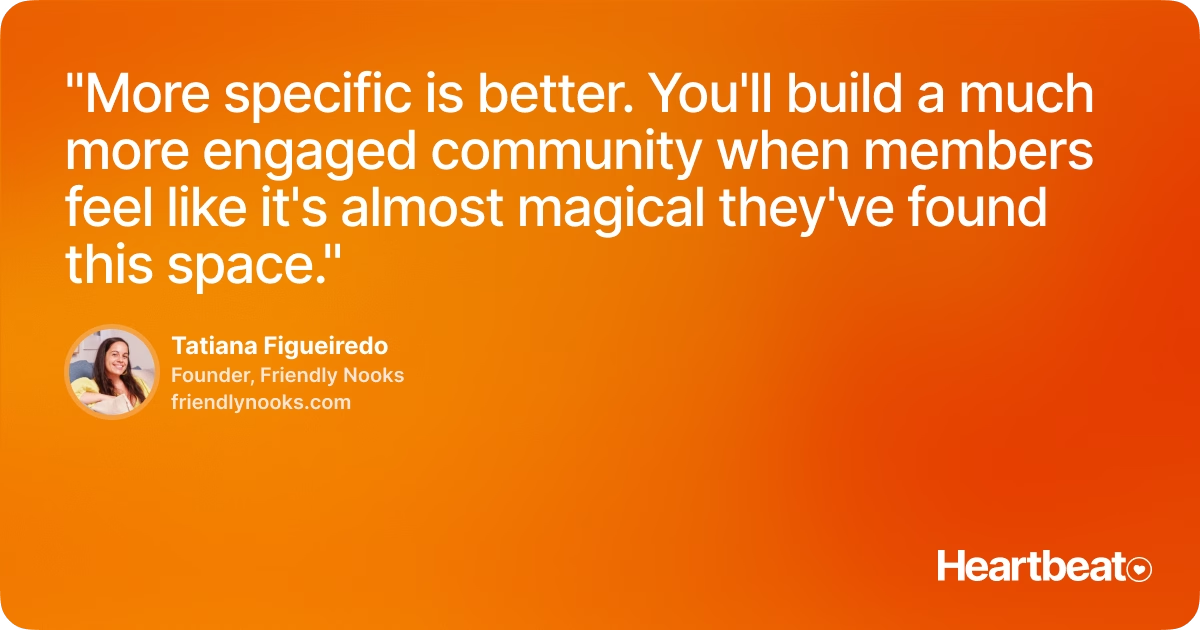
Tatiana Figueiredo, Founder of Friendly Nooks, taught one of our most attended tutorials on community business models and coaches founders on this constantly. The more specific your community, the more you can charge. Specificity reduces the perceived size of the audience, but it increases the perceived value for each member. You stop competing on price and start competing on relevance.
A community builder working with women entrepreneurs of a certain age doesn't need 10,000 members. She needs 150 members who feel like the community was built specifically for them. That feeling, what Tatiana calls the "almost magical" sense of finding your people, is what people pay for. Not content. Not features. Belonging.
What "charging more" actually means
This isn't an argument for arbitrarily doubling your price tomorrow. It's an argument for pricing based on the transformation you deliver, not the volume you hope to attract.
Match price to outcome. Communities that deliver skills get one price. Communities that change behavior get a higher price. Communities that shift values and beliefs, that change how someone sees themselves, command the highest prices. A community that helps someone go from "I don't know how to start" to "I run a $100K/year community business" is worth far more than a community that shares weekly tips.
| Level | What it delivers | Price range | Example |
|---|---|---|---|
| 1: Skills | Teaches a specific skill | $15–$49/mo | "Learn Canva" |
| 2: Behavior | Changes what members do | $49–$149/mo | "Build a content habit" |
| 3: Identity | Changes how members see themselves | $149–$500+/mo | "Become a full-time creator" |
Price for your actual audience size. If you have 30 potential members, you can't price for 3,000. With 30 people, even $100/month gives you $3,000/month, enough to build a real business. With $9/month and 30 people, you have a hobby that pays for lunch.
Use scholarships instead of lower prices. If you care about accessibility (and you should), don't solve it by underpricing for everyone. Set the right price for the value you deliver, then offer scholarships, sliding scale options, or regional parity pricing for people who genuinely can't afford the full rate. This preserves the signal that your community is valuable while making it accessible to those who need it.
Test upward, not downward. When you're unsure about pricing, test the higher number first. You can always lower a price. Raising a price after people have anchored to a lower number is much harder, and you'll lose the grandfathered members who feel the rug got pulled.
The real risk of underpricing
The real risk is that you charge too little, attract the wrong members, burn out from overdelivering for what you earn, and conclude that "communities don't work as a business."
Communities absolutely work as a business. But not at $9/month with a thousand features and weekly live calls and personal DMs and unlimited access. That's a business model designed to exhaust the founder and disappoint the members.
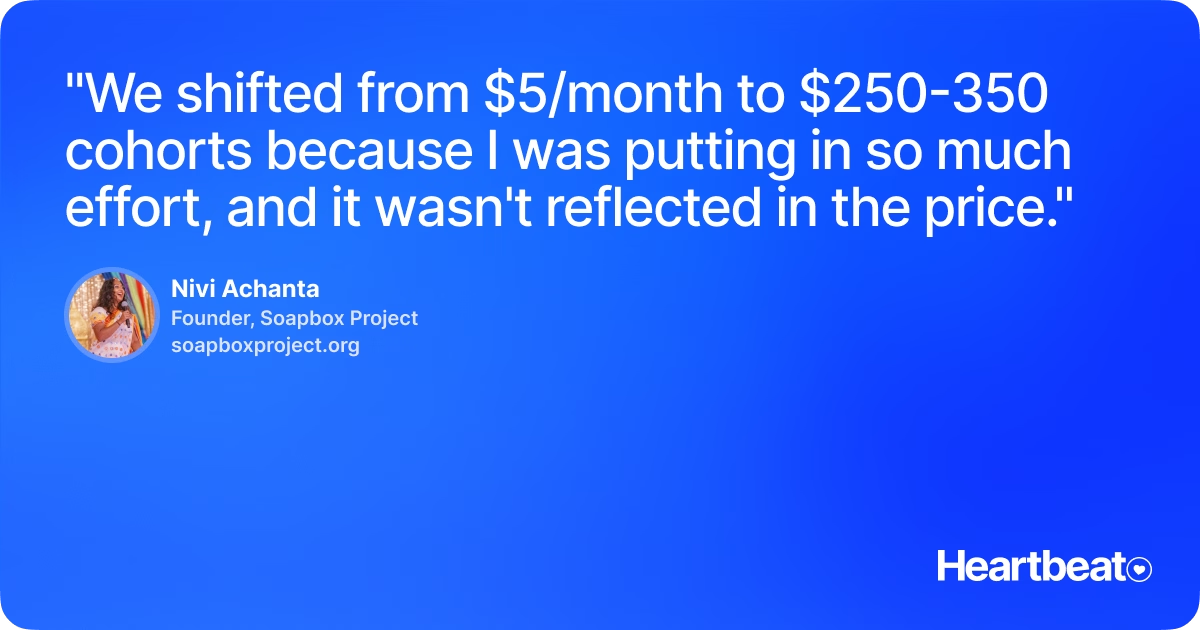
The community builders who make this work, the ones earning $100K, $200K, $500K+ per year, almost all went through the same realization. Nivi Achanta went from $5/month to $250+ cohorts. Drew found that $9 performed worse than $29. Lisa's most engaged clients were the ones paying the most. The pattern is universal: they were charging too little, not too much. The ones who raised their prices didn't lose their community. They found it.
Faqs
Won't I alienate potential members by charging more?
You'll lose some people, yes. But the people you lose are the ones who weren't committed enough to succeed in your community anyway. The people who stay (or who newly join at the higher price) will be more engaged, more likely to get results, and more likely to tell others. You're trading volume for quality, and quality is what makes communities compound.
How much should I raise my price by?
If you're significantly underpriced, don't do a 10% bump. That won't change your economics or your member behavior. Go to the price you actually believe the community is worth. For many community builders, that means doubling or tripling. Use a founding member or grandfathered rate for existing members to smooth the transition.
What if my niche can't afford higher prices?
This is usually a sign you need to redefine your niche, not lower your price. If the people you're serving genuinely can't pay, you're either building a nonprofit (which has different funding models) or you haven't found the segment within your niche that has both the problem and the resources. There's usually a subset of your audience that can and will pay more. Serve them specifically.
Does this advice apply to brand-new communities with no track record?
Yes, but with a modifier. Launch at a beta price that's lower than your eventual target (say, 40-50% off) but not at the lowest price in your market. This signals that the community is premium and you're offering early access at a discount. It's a founding member rate, not a clearance sale. Then raise to full price once you have 20-30 members and initial testimonials.
What if I raise my price and engagement drops?
You're almost always going to see a jump in engagement after a price increase, not a drop. The worry that "I'll lose too many members and engagement will crater" is one of the most common fears community builders have, and it's insanely rare in practice. What actually happens: some members leave, the ones who stay are more invested, engagement per member goes up, and the community feels more alive. If you raise the price and engagement genuinely drops, the value wasn't matching the price. But that's a delivery problem, not a pricing problem, and it's the exception, not the rule.