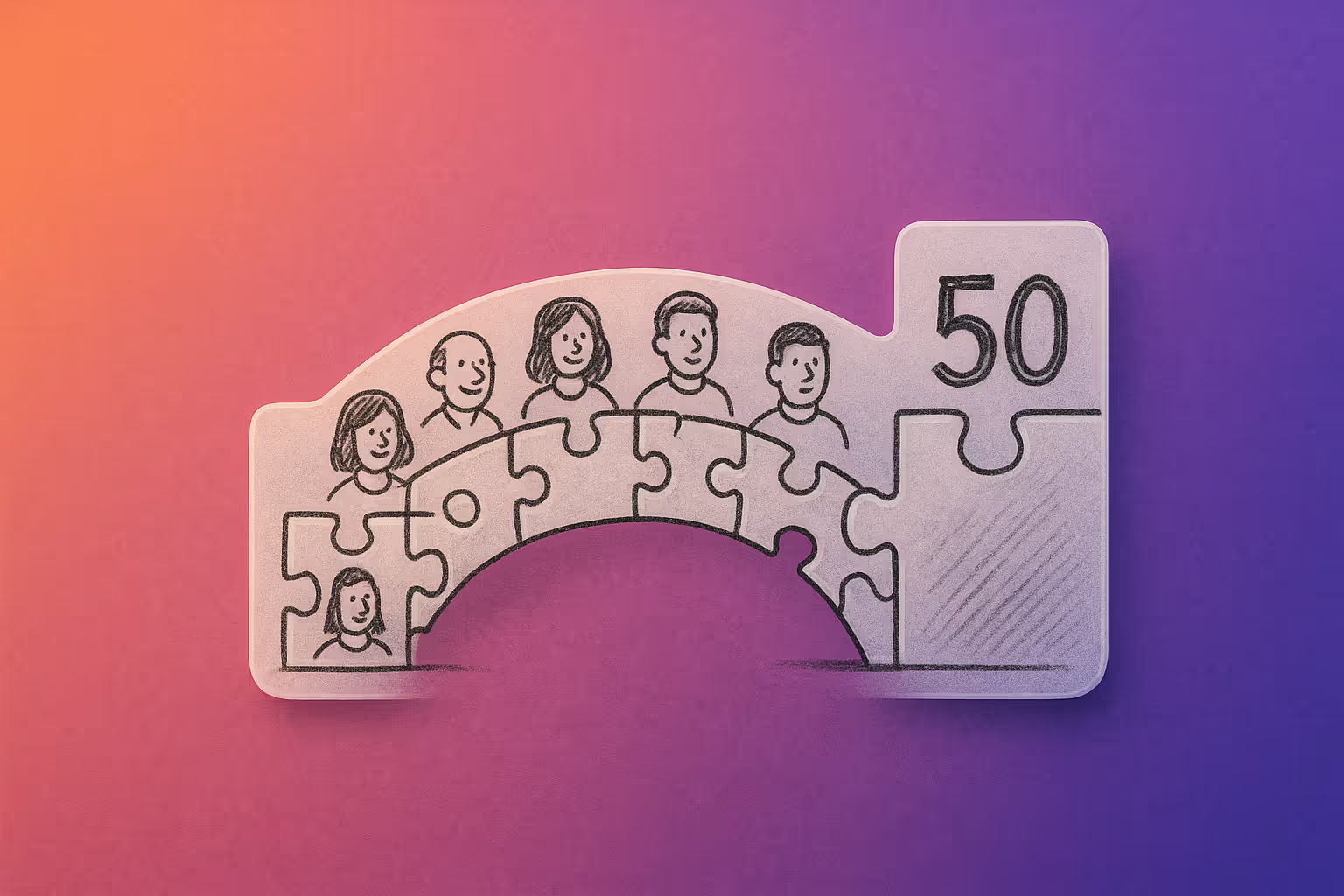

The communities that grow fastest share one thing: documented member transformations. Referrals, content, partnerships, and paid ads all perform better when they carry a real story. Most communities don't have any yet.
That's the root cause of most community growth stalls. A story problem.
The story problem
Most community marketing sounds like this: weekly events, active discussions, expert guests, a supportive environment. This is a features list. It answers "what is in this community?" when the reader is asking "what will happen to me if I join?"
Compare that to: Sarah joined as a freelancer charging $75/hour. Eighteen months later she runs a $15K/month retained agency. She credits a specific feedback session in month three (one conversation that reframed how she was positioning herself) as the turning point.
One of those converts. The other doesn't. The difference is whether the copy gives the reader a self-image to step into.
Bri Leever, a community strategist who has built and scaled communities across multiple niches, teaches this as the engine of organic growth: member transformations become your content, your word-of-mouth, your sales page, and your referral trigger. Everything downstream runs on them.
The challenge: those stories exist in every community. Most founders never find out about them.
How to collect member stories
The biggest mistake is waiting for members to volunteer their wins. They won't do it on their own. Most members have breakthroughs they never mention because they don't know you're collecting them and haven't thought to frame a personal shift as a "win" worth sharing. You have to ask, specifically, at the right moment.
Three mechanics that work:
Weekly wins thread. A recurring prompt in your community discussion channels: "What's your biggest win this week, even if it's small?" This conditions members to articulate progress publicly and surfaces breakthroughs you'd otherwise miss. The wins thread also shows prospective members exactly what's possible, turning passive browsers into active joiners.
Milestone check-ins. At 30, 90, and 180 days, send each member a direct message asking three questions: What's the biggest thing that's changed for you since joining? What was a specific moment inside the community that contributed to that? Who else in your life is dealing with the problem you joined to solve? The last question is the referral unlock. You earn it by asking the first two.
The post-breakthrough ask. The highest-converting moment for collecting a story is 48 to 72 hours after a member has a public win. They're still in the excitement of it. A DM at that moment ("I saw your update in the wins thread. Would you be up for sharing more of that story so I can write it up properly?") lands completely differently than a cold ask three months later.
What to capture: the before state (specific circumstances, not vague feelings), the turning point (the moment, the conversation, the resource), the after state (concrete and measurable where possible), and what they'd tell someone considering joining.
Once you have the story, format it in writing even if it started as a voice note or a DM. A written story is quotable in articles, on your sales page, in referral materials, in ads. The Loom version is for your sales page. The tweet version is for your content. The one-paragraph version is for a referral follow-up email. The story does more work the more places it lives.
Where stories go
A documented transformation story is the most valuable asset a community can own. Here's what it unlocks across channels:
Your landing page. Most community landing pages open with features. The ones that convert well open with outcomes. Replace your first paragraph with the clearest member story you have and put it in the hero, framed as what the reader can expect for themselves. This is where the 1% conversion benchmark actually moves.
Referrals. Matt McWilliams, who has run referral programs for Tony Robbins, Dean Graziosi, and Stu McLaren, teaches that the most effective referrers are members mid-transformation. The 90-day member who just had a breakthrough is the most powerful ambassador you'll find. Skip "can you share our referral link?" and instead ask: "Who do you know who was where you were six months ago?" That question lands because it's specific and empathetic.
The timing matters more than the mechanics. A referral ask sent to your full list converts at a fraction of one sent to a member 48 hours after their win. Build both: an always-on referral program for passive sharing, and a triggered personal ask for active moments.
Content. Bri Leever and Laura Zug teach the community marketing flywheel: member conversations and breakthroughs generate insights that become public content, which attracts new members with the same profile, who generate new breakthroughs. The engine powering that flywheel is documented member stories. A specific member breakthrough becomes a LinkedIn post, a newsletter issue, a podcast episode angle. Specific and true outperforms polished and generic every time.
KP (Karthik Puvvada), who built a community of 500+ founders through building in public, recommends the reply strategy for distribution: post substantive replies under larger accounts in your niche rather than creating original content to a small audience. Replies grounded in specific member outcomes get traction in a way that generic insights don't. One well-sourced reply under a post with 5,000 likes reaches more relevant people than a month of original posts on a 200-follower account.
Partnership pitches. Whether you're pitching a podcast guest spot, a co-hosted event, or a cross-promotion with an adjacent community, the pitch is always the same. Show the host something specific and real that happened to one of your members. "Our community helps people build better businesses" gets a pass. "One of our members went from $75/hour freelance to a $15K/month agency in 18 months, and I can tell you exactly what happened inside the community" gets a booking.
Lead magnets. Drew Donaldson teaches that the best lead magnets for community builders solve one specific problem for one specific person and end with a natural invitation to join. A member story embedded in the lead magnet (for example: "here's how one of our members solved this exact problem") makes the invitation feel earned. The lead magnet selects for the exact person who will get the best results from your community. That person refers more.
Paid ads. If and when you run paid ads, story-led creative outperforms feature-led creative. The ad amplifies the story. It doesn't replace it.
Building the system on Heartbeat
Collecting stories manually works early on. At scale, the system has to run without you.
The setup: a wins channel with a recurring weekly prompt posted automatically every Monday morning. A workflow that fires at day 30, day 90, and day 180 after a member joins, sending a personal DM with the three check-in questions. A separate workflow that triggers when a member posts in the wins channel, sending a follow-up DM 48 hours later asking if they'd be willing to share more of their story.
None of this requires ongoing attention once it's built. The stories surface on their own.
Once you have a library of stories, each member also gets a unique referral link that tracks conversions back to them automatically. In Heartbeat, you can configure that link to activate once a member hits a milestone threshold (say, 90 days and one public win posted). A successful referral earns a reward: a month free, a badge, access to a bonus session. The mechanics matter less than the timing. The referral program provides the link. The milestone workflow creates the moment to use it.
FAQ
When do I have enough transformation stories to start using them?
One. You need one good, specific, true story to start. If you have one member who went from a clear before state to a meaningfully better after state, you have enough to rewrite your landing page, pitch a podcast, and frame your next referral ask. Start collecting systematically now, but deploy what you have immediately.
How do I get a member story if my community is new?
Book a call with each of your three most engaged members this week. A ten-minute conversation will surface more than any survey. Ask what's changed for them since joining, what specifically contributed to it, and what they'd tell someone on the fence. You'll find at least one story worth telling. Then build the automated system so you never have to hunt manually again.
Should I ask members before using their story publicly?
Yes, always. Most members are glad to have their story told, especially when it positions them as someone who achieved something real. For members who prefer privacy, you can anonymize the specifics without losing the impact. "A member who joined as a freelancer" works almost as well as a named case study. The emotional truth of the story is what converts. The name adds credibility.
Is building in public worth it if I have a small following?
The reply strategy answers this: you don't need a big following to distribute member stories. One substantive reply grounded in a specific member outcome, under a post with 10,000 likes, reaches more relevant people than 100 original posts on a 200-follower account.
When should I add paid ads?
When your landing page converts above 1% from warm traffic and you have at least two member stories in the hero section. Paid ads send cold traffic to that page. If it isn't converting warm traffic with real stories, paid traffic won't change the math. Fix the story first, then amplify with budget.