How to solve the cold-start problem with a paid waitlist
Never open an empty community. The cold-start problem is structural: communities derive their value from the people inside them, but the people aren't there yet when you need to sell the membership. A potential member looks at an empty community and sees risk, not opportunity. No amount of clever marketing changes that math.
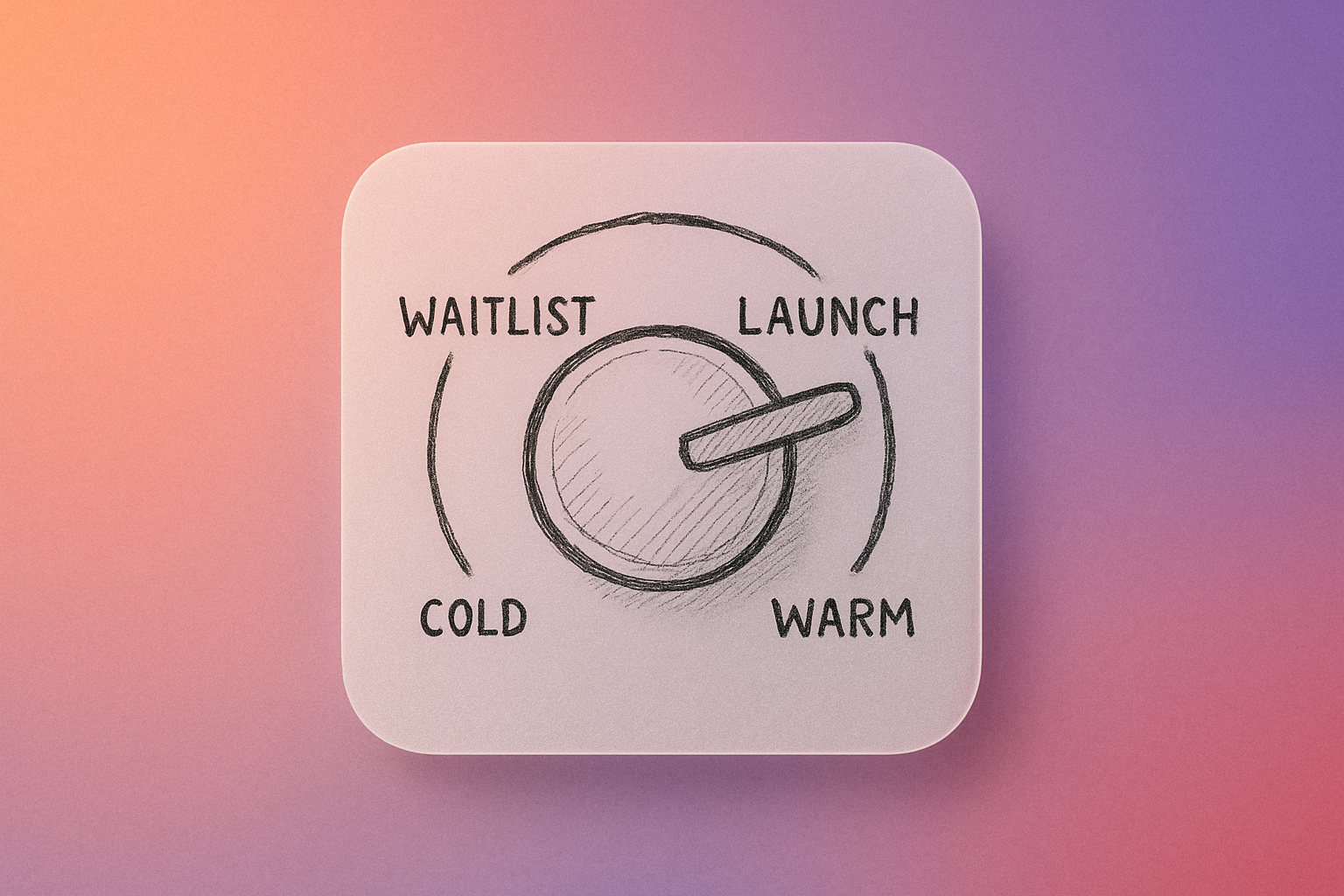
The solution isn't to open an empty community and hope the first few members don't notice. The solution is to run a paid waitlist before you open: collect founding member commitments, build the referral loop, and send a launch email sequence that keeps signups warm. By the time the community opens, you don't have a cold-start problem. You have a warm room of people who already paid.
Why the empty community is a harder sell than it looks
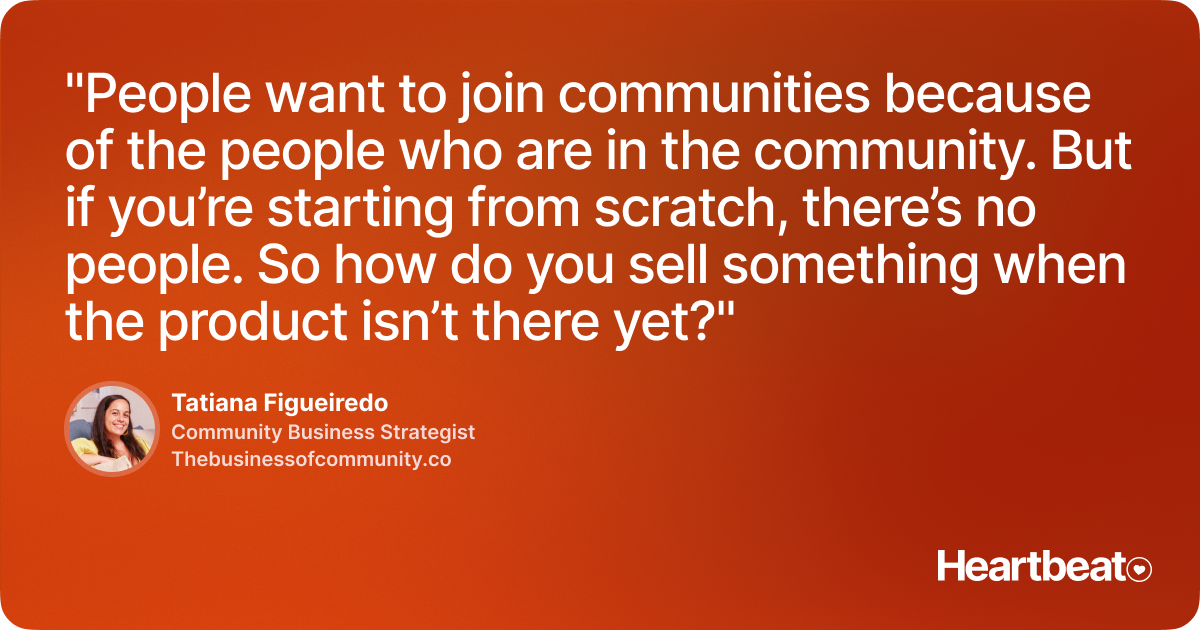
Tatiana Figueiredo, Community Business Strategist, names the problem precisely: "People want to join communities because of the people who are in the community. But if you're starting from scratch, there's no people. So how do you sell something when the product isn't there yet?"
The answer to that question determines everything. You can't sell the community as a community when it's empty. You have to sell something else.
What you can sell is access to the founding cohort, a chance to be in the first group, at the locked-in price, before the doors open to the public. That's a completely different purchase decision than "join an ongoing membership." It's a commitment based on the founder's credibility and vision, not on social proof that doesn't exist yet.
Use a paid waitlist to collect founding members before you open
The waitlist is the first move. Before the cohort runs, before the community opens, before you have a single member, you run a paid waitlist that collects founding member commitments.
A Heartbeat paid waitlist does three things at once. It collects signups from people interested in joining through a waitlist landing page. It lets you charge an upfront founding member payment before you go live, validating demand with real money instead of email addresses. And it runs a built-in referral system where each waitlist member gets their own referral link, so the list grows itself.
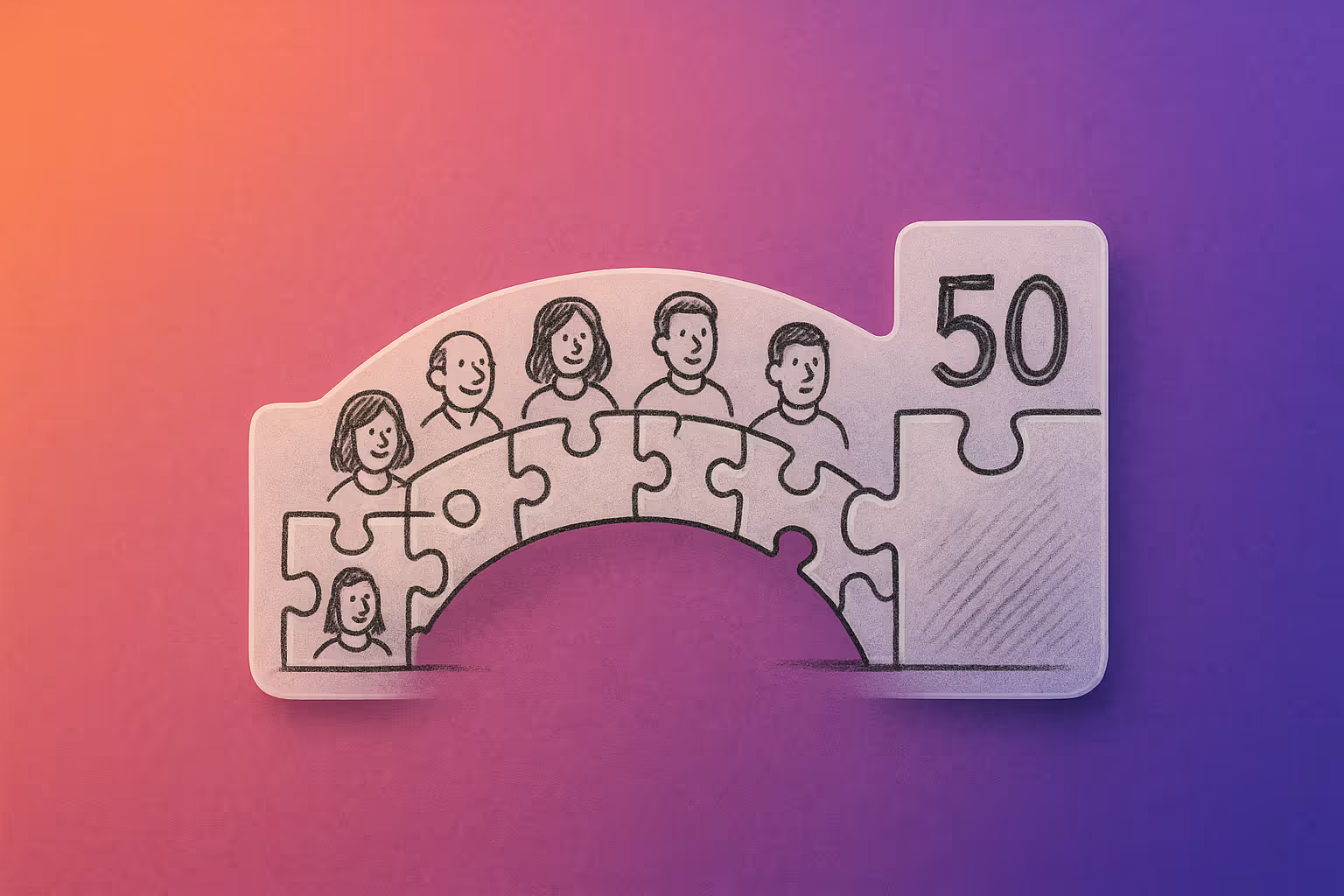
By the time you open the waitlist to the founding cohort, two things have already happened: you know the demand is real (people paid), and the waitlist members already have social connections to each other (they referred their networks in). The cold-start problem is halfway solved before the first live call.
When the waitlist closes, Heartbeat converts it into a live offer. Waitlist members get access. The community opens not to strangers drifting into an empty room, but to a group of people who committed early, referred their networks, and have been receiving your launch emails for weeks. That is not a cold start. That is a warm room.
The paid waitlist is available on every Heartbeat plan: Build, Grow, and Scale. There's no plan upgrade required to run one before your first launch.
Converting a waitlist to cohort
A paid waitlist captures the commitment, while a contained cohort makes good on it.
Once the waitlist closes and the community opens, the founding cohort needs a structured experience, not an open-ended membership that asks new members to figure out where to engage. In Heartbeat, this is a private group with a fixed 30-day duration, pre-scheduled posts, and a live event cadence that creates a real community experience during the cohort period.
Members know they joined something time-bounded. That changes the psychology in two ways. The decision to continue is easier, because they've already had the experience and know the people. And the experience itself is more focused. Members show up to something specific rather than drifting in and out of an always-on membership.
The founder's facilitation time becomes predictable too. Not "I need to be available all the time" but "I need to show up for these specific events and respond to these scheduled prompts." For most founders running their first community, the contained experience is more sustainable than jumping straight into the operational complexity of an ongoing membership.
At the end of 30 days, members are invited to continue as founding members of the ongoing community at their locked-in rate. Most do, because they've had the experience, they know other members personally, and leaving means giving up relationships they've built inside the cohort. The cold-start problem disappears because the community isn't starting cold anymore: it's already warm.
Building the audience that fills your waitlist
The paid waitlist solves the empty community problem. But without an audience, you may have an empty waitlist problem instead.
Karthik Puvvada (KP), founder of Build in Public Fellowship, has supported 500+ founders through community launches. His method: start sharing what you're building before you build it. Document the process, your assumptions, your early conversations with potential members, your pricing and positioning decisions. The people who follow the story become your first waitlist signups before the waitlist exists, because they've been watching you build it.
KP's most underrated tactical recommendation: don't try to build a following from scratch with original content. Instead, contribute substantive replies under larger accounts posting about your niche. The people you're trying to reach are already engaging with that content. One genuinely useful reply under a post with thousands of views exposes you to more potential members than a month of original posts on an account with a small following.
The goal isn't a massive audience before launch. It's 100-500 people who know exactly what you're building and have been following along. That's more than enough to fill a 10-15 person founding cohort waitlist. Building in public creates that audience. The paid waitlist converts them.
Selling before you're ready
I sold Heartbeat using Figma wireframes before we wrote a single line of code. The product didn't exist. What people bought was conviction: founders that clearly understood the problem, had a plan, and were obviously the right people to solve it. That's what good pre-product selling looks like.
The same principle applies to community cold-start. When you don't have an existing community to show, you're selling the founder's expertise, vision, and commitment. A potential member who can see the transformation clearly, believes you understand their problem deeply, and trusts you're committed to delivering it doesn't need to see a full community. They're buying access to you, your judgment, your curation, your ability to assemble a group of the right people.
This is why the founding member framing works. "You're not buying a finished product" is honest. "You're getting the locked-in founding member rate forever, plus direct access to me during the first cohort, in exchange for joining before we have social proof" is a genuine value proposition. Some members prefer being early. It's a privilege, not a consolation prize.
FAQ
How many waitlist signups do I need before I open?
Enough to fill a 10-15 person founding cohort, which means you need at least 30-50 signups to account for people who don't convert. If your waitlist has 30 genuinely interested people, open the cohort. Waiting for 500 signups before converting any of them is how waitlists go cold.
Should I charge upfront on the waitlist or wait until launch?
Charge upfront. An email address is easy to give; money is a commitment. Founders who collect upfront payments on their waitlist consistently see higher cohort show-up rates, less ghosting on launch day, and faster founding member retention decisions. The people who paid are the people who are serious.
What if trial members see the empty community and leave?
The contained experience prevents this. If members are joining a 4-week cohort converted from a paid waitlist, they're not evaluating an empty room. They're joining a structured program with other founding members. The "empty community" problem only exists if you open an ongoing membership without solving the cold-start problem first.
Can I launch with no existing audience at all?
Yes, through direct outreach. Identify 20-30 specific people who have the problem you're solving (on LinkedIn, in communities you're already part of, through direct referrals) and reach out personally with a specific message about the founding cohort and why you thought of them. You don't need a platform audience to fill a 10-person waitlist. You need the discipline to have 30 conversations.
How many members do I need before a community feels "real" to new joiners?
Activity becomes visibly self-sustaining at around 15-20 active members, enough that someone scrolling sees multiple voices, recent conversations, and genuine interaction happening without the founder's constant involvement. Below that number, the founder carries the energy manually. Above it, the community starts to carry itself. A paid waitlist that converts 12-15 people into a founding cohort gets you there on day one.