

Most communities that stop growing are stuck for a reason the founder hasn't named yet. Before you change a single tactic, run the four questions I ask every builder who tells me their community has stalled: are your members happy, who is this actually for, what already works to get people in, and are you charging enough. The answers point to the one thing to fix. Almost every stalled community I see is working on all four at 25% each instead of the one that is actually holding everything back.
I run open office hours with community builders every couple of weeks, and the same conversation comes up constantly. Someone has a handful of paying members, growth has flatlined, and they are convinced they are bad at this. They are usually not. They are working on the wrong problem. Here is the diagnosis I walk them through, and how to tell which problem is yours.
| The question | What to do |
|---|---|
| Are your members happy? | If not, fix retention before you spend a dollar on growth |
| Who is this for? | Niche down until the right person reads it and thinks "that's me" |
| What already works? | Do more of the one channel that already got you members |
| Are you charging enough? | Raise the price to match the value, then attract people who commit |
Start with what already works
The first question is the one people skip: Are your existing members actually getting value?
This matters because it decides which problem you are even allowed to work on. If members are unhappy, growth is the wrong focus, because pouring new people into a leaky community just means more people churn out the other side. If members love it, growth is the entire job and you should stop staring at engagement.
Here is how to tell the difference fast: ask the people who leave why they left, and listen to the shape of the answer. If they say "I loved it, I just got too busy," that is an onboarding and habit problem inside the community. If they say "I loved it, I just couldn't justify the cost," that is a pricing and audience problem. If they say "it wasn't quite what I needed," that is a fit problem, which is really a niche problem. I talked with a builder running a women's leadership membership who was frustrated that people weren't posting every day. When I asked whether her members were happy, she said they described it as being transported to a different world. That community was not broken. She was staring at engagement when her actual problem was that not enough new people knew it existed.
So answer this honestly first. If the core experience works, give yourself permission to ignore engagement and put every hour into growth.
Get specific about who
The second question: who is this community for? And I mean uncomfortably specific, because a vague audience is the single most common reason growth stalls. You cannot write a message that makes someone feel seen when you are writing to everyone.
You can build everything for one group of people, or one thing for everyone. The moment you try to build everything for everyone, you get pulled in eight directions and nothing lands. Getting specific is not a tagline exercise. It is naming the exact person, the stage they are at, and the outcome they want badly enough to pay for.
Emily Claire Hughes shows what that actually looks like. Her first version, the Copy Club, was a $1,000 a month offer she launched to an email list of people who were just starting out. Zero signups. She had pitched a premium product to an audience that was not ready for it. So she got specific. Not "women entrepreneurs," but earlier-stage female founders who want to turn their email newsletter into a six-figure channel, delivered done-with-you instead of done-for-you: members draft their emails, and Emily's team edits them in Google Docs. That precision is what let the 10K Email Club grow to roughly $160,000 a year at $1,500 a month. Same founder, same skill. The difference was knowing exactly who it was for.
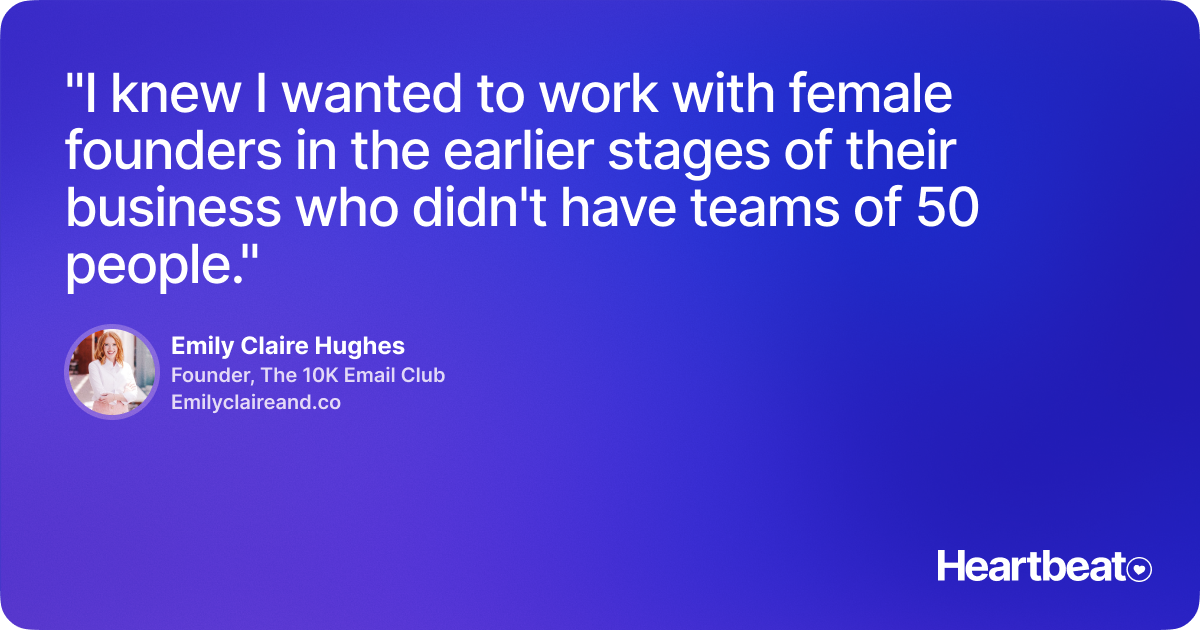
If you cannot describe your member in a full sentence with a stage and an outcome, that is your red flag. Here is how specific your community niche needs to be.
Pick one channel and go deep
The third question: what has already worked to get the members you have? Most people can answer this and then ignore the answer. They got their first members from personal posts on one platform, then went hunting for a clever new channel instead of doing more of what already worked. Tatiana Figueiredo, founder of Friendly Nooks, puts a number on it: spend 80 to 90% of your acquisition effort on a single channel. Spreading thin across many is how growth stalls.
Going deep on a channel is a system, not a vibe. Say your members came from LinkedIn. Deep looks like this. Commit to three posts a week, and build a machine so you never face a blank page. Record every member call and every event with a transcript tool. At the start of each week, pull one real question a member actually asked, strip out anything identifying, and write the answer as a post. If writing from scratch is what stops you, have an AI tool draft it from the transcript first, then rewrite it in your own voice, because reacting to a draft is far easier than creating from nothing. Ship it. Repeat next week.
Then hold the line long enough to let it compound, because this is where most people quit. The first post gets a small bump. Posts two through four feel flat, and you will be convinced it is not working. Around post five it starts to climb. By post 10 you are pulling in more of the right people than you did in week one. Picking a second channel before the first one plateaus just splits your effort in half and resets that clock. One channel, run like a machine, beats four channels run on vibes every time.
Charge for the value you give
The fourth question: are you charging enough for the value? Underpricing is usually a symptom of a fuzzy audience. When you do not know exactly who you serve, you default to a low price to soften the fear of asking, and you fill the room with people for whom price was the whole decision.
Price signals who the community is for. I talked with a builder charging $27 a month whose members were chief HR officers and compliance leaders at real companies. That is a corporate learning expense, and at $27 she was working against herself. The move was to raise her price from $27 to somewhere around $250 a month, not to go find more people. A community teaching senior executives how to use AI in their jobs is worth that easily, and the higher price would have attracted people who take it seriously instead of people shopping on cost. The members who pay the most are consistently the ones who show up, do the work, and push your community to be better.
Kat Weaver built Power to Pitch on exactly this. She keeps zero free spots and has crossed $1M in lifetime sales, profitable every single month. When she tested giving away $10,000 of free coaching, only 20% of people showed up. The price is what makes people pay attention.
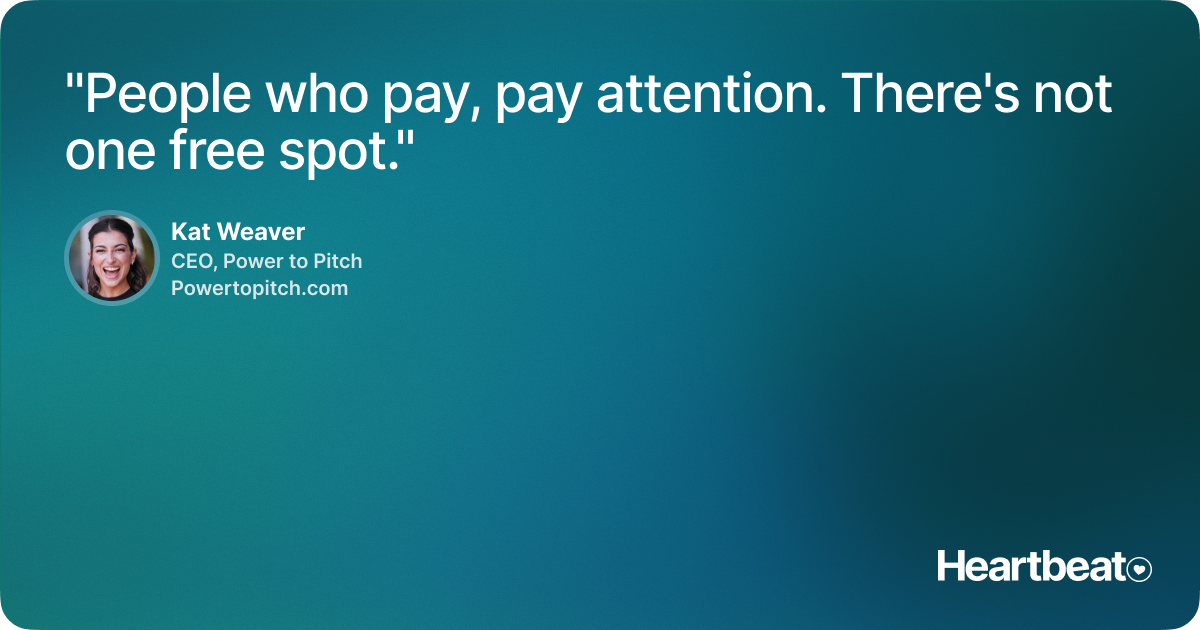
If your price feels low and the work feels heavy, that is the signal. Here is how to make a small community profitable.
Free events are your engine
Once the diagnosis is clear, growth almost always comes down to one repeatable motion: give people a real taste of the community before you ask them to join. The tool that does this best is a free public event.
The pattern that works: run your normal events for members, then make one out of every three or four open to the public. People outside the community get one hour to feel what it is like, and in the last 10 minutes you tell them where to sign up. No hard sell. You just gave them value, so the invitation lands. In Heartbeat you set an event's visibility to public, which gives you a shareable link anyone can RSVP to without getting access to the rest of the community. Post that link everywhere you show up, and ask your happy members to share it too.
Bri Leever, community strategist and founder of Ember, calls events the magical incentive that creates action in a community. For growth, that action is a stranger experiencing what you offer before they ever have to decide.
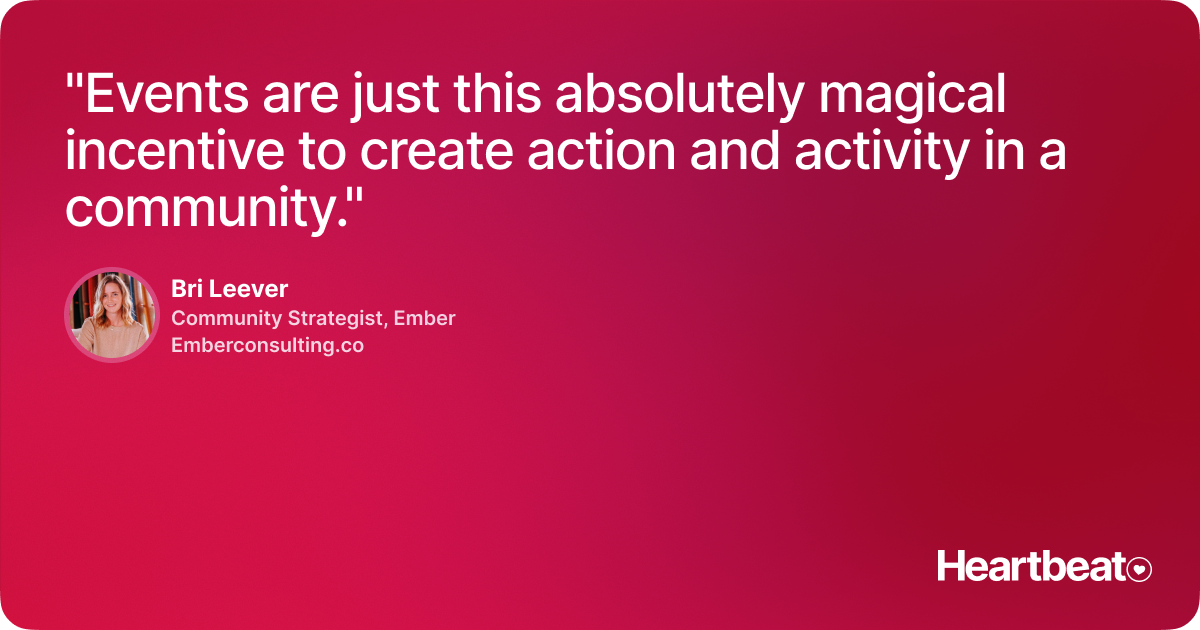
A public event turns the vague ask of "join my community" into a concrete hour of value someone can try before they commit. It is the single most repeated growth move I recommend.
Build a system to check in
The second piece is making the value compound without you having to remember everyone by hand. The members getting the most out of your community are your best source of new members, if you can find them before they quietly drift.
Set up automated workflows that send a personal check-in from you at 7 days, 30 days, and 2 months after someone joins, asking what is working and what is missing. The replies tell you who is thrilled, who is stuck, and who is ready to advocate, without you guessing. The thrilled ones are exactly who you ask to share your next public event.
Fix one problem, not four
Run the four questions and you will almost always find that only one of them is red. Members happy but nobody knows you exist means the whole job is a public-event growth loop. Members happy and growing but you are exhausted for the money means you are underpriced. Nobody sticking around means retention comes before any growth work at all.
Communities feel stuck because the founder is working on four problems at 25% each. Find the red one. Put everything there.
FAQ
Why has my community stopped growing even though members are happy?
Happy members and flat growth almost always means a lead generation problem, not a product problem. You have proof the experience works, so the job is getting more of the right people to try it. Run one free public event a month, share it everywhere, and close softly in the last 10 minutes.
Should I focus on engagement or growth when my community is small?
If your existing members are getting real value, focus on growth and stop optimizing engagement. Engagement work only comes first when members are unhappy or churning. Diagnose which one is true before spending a single hour.
Will lowering my price help my community grow?
Usually the opposite. A low price signals a low-stakes community and attracts people for whom price is the whole decision. If your members are getting meaningful outcomes, raising the price often improves both revenue and commitment. The people who pay the most tend to be your most engaged members.
How do I get people to join without hard selling?
Give them a taste first. A free public event lets someone experience an hour of the community before deciding, so the invitation at the end feels earned instead of pushy. Let members who love the community share it, and their word does the selling for you.