

Members go quiet when posting isn't connected to the reason they joined. People don't join a community to chat. They join to make progress on something they care about, and they participate when participating moves them toward it. If your members like the community but nobody posts, the fix is to tie every prompt to a real outcome they want, make the first ask small enough that anyone will do it, and recognize people publicly the moment they contribute. Begging for posts does the opposite. Here is the whole diagnosis and the specific plays that turn a quiet room around.
First, are your members happy?
Start here, because it changes which problem you are solving. If members are unhappy, quiet is a symptom and retention is the real work. If members love the community and simply are not posting, this is a design problem, and it is very fixable.
Here is how to tell, concretely. Ask a few members, or look at what happens after your live sessions and events. If people show up to calls, tell you the community is valuable, and renew, but the channels are silent, the experience is good and the design is off. That is the common case. If instead people are drifting, not renewing, and going dark, the problem is upstream in onboarding or value delivery, and no amount of clever prompting fixes it. What "good" looks like once you fix the design: a handful of members posting each week without you asking, wins showing up on their own, and members answering each other instead of routing everything through you. That is the target. If your members are happy, assume the design is the gap and keep reading.
They came with a goal
The deepest reason members do not post is that we ask them to "engage" when what they actually want is to get somewhere. Rosie Sherry, founder of Rosieland and Ministry of Testing, puts it bluntly: people do not come to communities to talk.
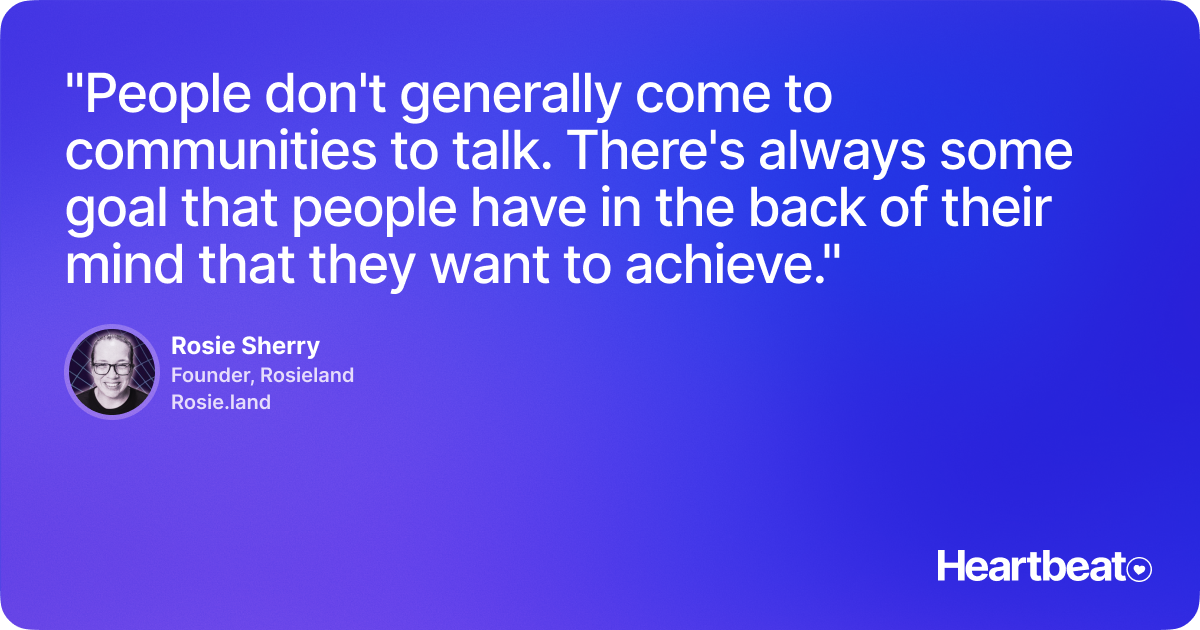
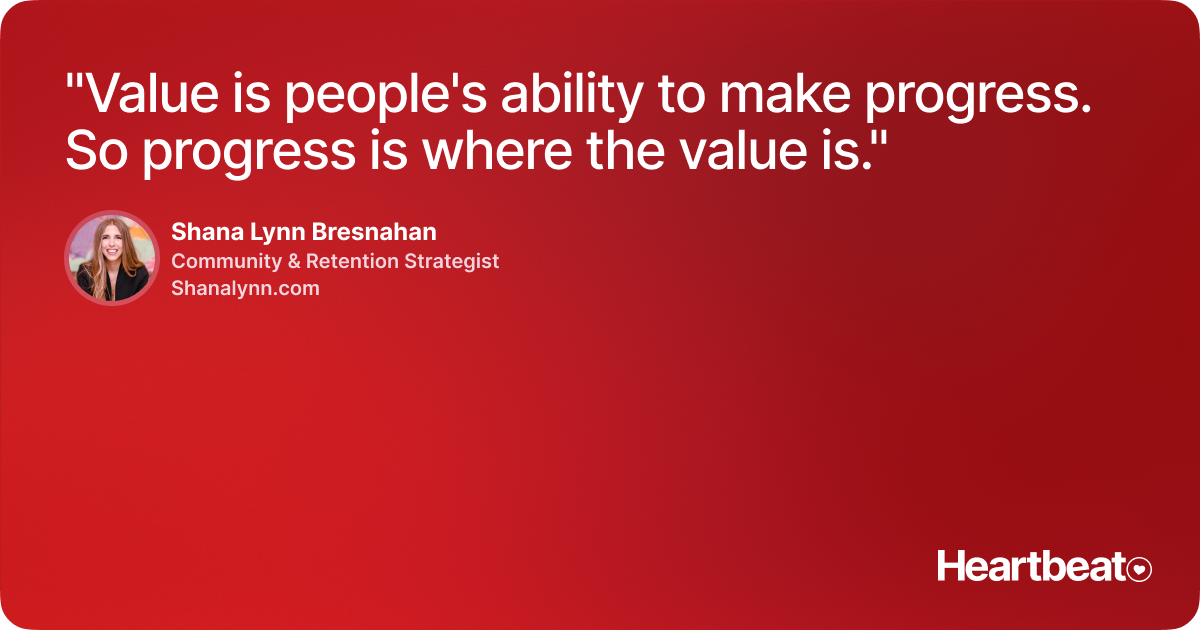
That reframes the whole job. Stop asking for engagement and start designing for progress. Shana Lynn Bresnahan, a community and retention strategist, gets it down to one line: value is people's ability to make progress. So every prompt should move a member one step toward the outcome they came for. Instead of "introduce yourself," ask "what are you trying to accomplish this month, and where are you stuck." Instead of "share your thoughts," ask "post the one thing you're working on this week so the group can help." A prompt tied to a goal gets answered. A prompt asking for generic participation gets skipped.
Stop being a megaphone
Once you accept that members come for progress, over-posting reveals itself as the problem it is. When you post three, five, seven times a week, you train members to sit back and watch, and you drown out the space where they would have spoken. Rosie is direct about this too: too much engagement is bad for a community, because conversations are tiring when everyone is talking and no one is taking action.
So post less and prompt better. Your job is not to fill the feed. It is to ask a question tied to a member's goal, then get out of the way so they can answer it and help each other. When you do show up, show up inside the conversation as a person, not above it as a broadcaster. A quieter feed with sharper, goal-tied prompts beats a busy one full of your own announcements.
Make the first ask tiny
Even a perfect prompt fails if the action feels big. The move is to shrink the first ask until it is almost impossible to refuse. Bri Leever, community strategist and founder of Ember, teaches this precisely: do not say "attend the event," say "click RSVP." The shift in language is tiny, and it trains people to take the 30-second action instead of the daunting one.
Apply that everywhere. The first post a new member makes should be one sentence, not an essay. Ask them to drop a single emoji, answer one question, or share one win. Once someone has posted once, the second post is far easier, and the third becomes a habit. Design the on-ramp so the first contribution costs almost nothing, and set it up so it happens in their first few minutes, while their intent is highest.
Recognition drives engagement
The highest-leverage engagement tool is recognition, and most builders underuse it. Bri, drawing on years of community data, is emphatic that the number one motivator, year after year, is recognition, not money. When a member contributes and gets celebrated for it, they do it again, and everyone watching learns that this is a place where showing up gets noticed.
So build recognition in on purpose. Run a weekly wins ritual where members share what they accomplished, and make a point of celebrating each one. Give a badge when someone hits a milestone, and announce it. Emily Claire Hughes built exactly this into the 10K Email Club with a dedicated wins channel, and it now carries itself.
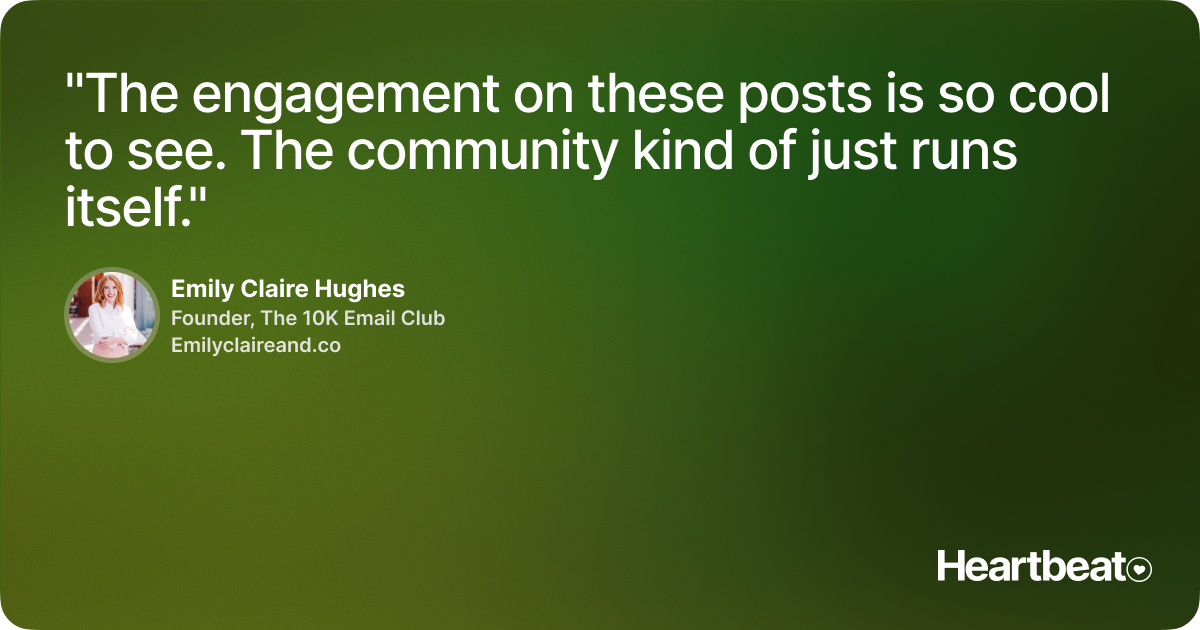
You can automate the recognition so it never gets dropped. A workflow can watch for a milestone, award a badge, and fire a celebration the moment a member earns it.
Move private questions public
Your members are already engaging, just privately. Every DM and email you get is a public post that has not happened yet. When a member sends you a good question one to one, the play is to say, this is a great question, would you post it in the channel so I can answer it there for everyone. Most people happily do it, and now the answer helps the whole community instead of one person, and others see that this is a place where questions get real answers. Doing this a few times a week seeds the visible activity that makes the next member comfortable posting.
Depth beats volume
One last reframe, so you measure the right thing. A healthy community is not one where everyone posts daily. Rosie's point holds: every community is carried by a small core of members at its heart, and depth is more powerful than chasing volume. If you serve busy executives, they will check in weekly, not hourly, and that is fine. Judge engagement by whether members are making progress and whether a committed core is active, not by a fantasy of a feed buzzing at 2am. Design for goals, shrink the first ask, recognize contribution, and pull private questions into the open, and the right people will carry the room. If growth is the deeper issue, start with why your community isn't growing.
FAQ
Why won't my members post even though they like the community?
Because posting isn't tied to what they came for. People join to make progress on a goal, not to chat, so generic "share your thoughts" prompts get skipped. Ask questions tied to a member's specific outcome ("what are you working on this week, where are you stuck"), make the first post a single sentence, and recognize people when they contribute.
Am I posting too much in my community?
Probably. Posting several times a week trains members to watch instead of participate, and drowns out the space where they'd speak. Post less, prompt more, and tie each prompt to a member goal. A quieter feed with sharper prompts beats a busy one full of your announcements.
What's the best way to increase engagement in a small community?
Recognition. Community data shows recognition is the number one motivator, above money. Run a weekly wins ritual, celebrate every contribution, and award badges at milestones. Pair it with tiny first asks so participating costs almost nothing, and members will keep coming back.
How do I get members to post publicly instead of DMing me?
When a member sends a good question privately, ask them to post it in a channel so you can answer it there for everyone. It turns a one-to-one reply into visible value, and it shows other members the space is active and worth posting in.