
More specific than feels comfortable. The single most common reason a community struggles to grow is a niche so broad that no one who reads the pitch thinks "that is built for me." You want to get narrow enough that your exact person feels the community was made for them, while the market is still big enough to reach. That trade sounds risky and it is almost always the unlock, because specificity is what earns higher prices, sharper messaging, and an engaged room where the right people recognize each other.
One group or one thing
Here is the rule I come back to constantly: you can build everything for one group of people, or one thing for everyone. The moment you try to build everything for everyone, you get pulled in eight directions and nothing lands.
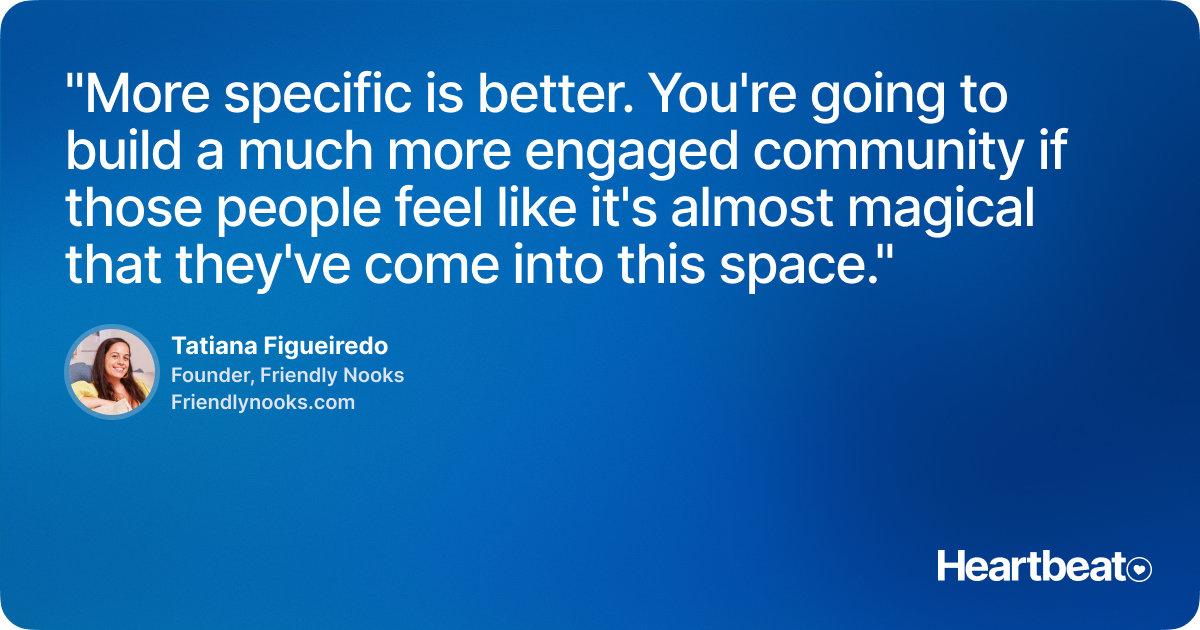
This is not just a marketing preference, it is how engagement gets built. Tatiana Figueiredo, founder of Friendly Nooks, ties specificity directly to how alive your community discussions feel.
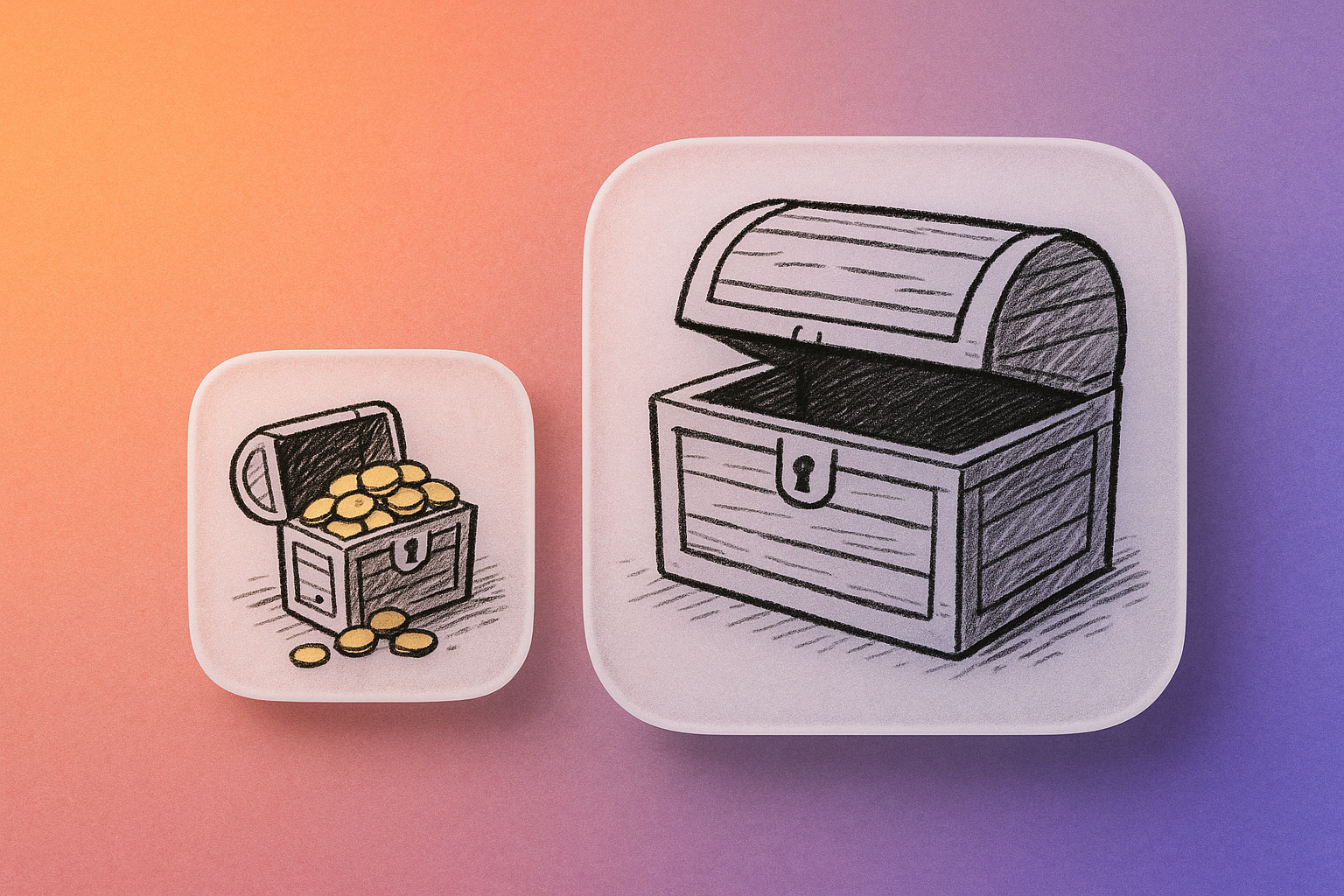
That magical feeling is the goal. Picture a builder launching a community around personal finance. Personal finance is an ocean. Nobody searching for help knows which of the thousand options is for them, so none of them feel like theirs. Now picture the same expertise aimed at one group: how surgeons should manage their money. A surgeon has a high income, no time to watch the market, and a specific set of decisions a general "personal finance" community will never speak to. Same knowledge, radically different pull. The surgeon reads that and thinks, finally, someone who gets my exact situation.
Name the exact person
The bar for "specific enough" is higher than most people think. You should be able to name your member down to their stage and the decision in front of them this week. I once knew a founder selling software to college soccer coaches who could tell you that on a Saturday morning one team is halfway through training and hits a 15-minute break at 10:35, the precise window to reach that coach. He knew his customer down to the hour of the week they were free. That is the fidelity to aim for.
So do not stop at "IT professionals," because there are 30 million kinds. Which ones, at what career stage, facing which decision this quarter? Do not stop at "people who want to invest," because someone with $200 to their name needs something entirely different from someone with $40,000 deciding whether to buy a house.
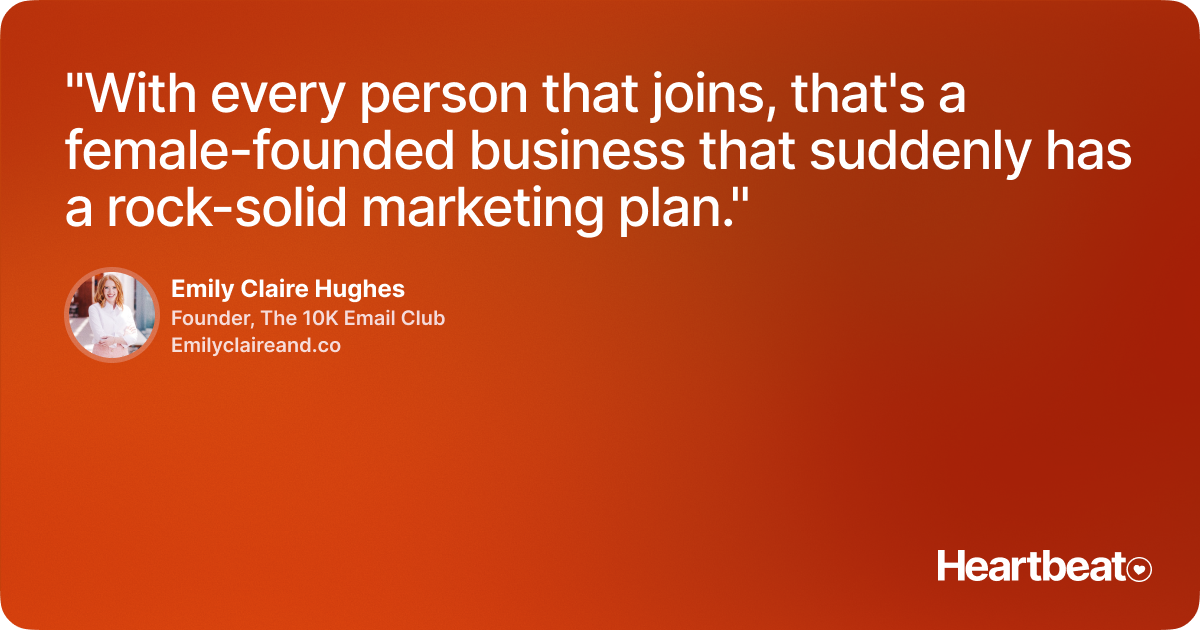
Emily Claire Hughes is a clean example of drawing the line this precisely. She did not build for "women entrepreneurs." She built the 10K Email Club for earlier-stage female founders who want to turn their email newsletter into a six-figure channel, and she delivers it done-with-you: members draft their emails and her professional team edits them. She knows that person cold, right down to what they are trying to build and where they get stuck. That precision is what took the club to roughly $160,000 a year at $1,500 a month.
Specificity raises your price
A precise niche is also what lets you charge more, because a message built for one person's exact situation is worth far more to them than a general one. When you know your member's background, their timing, and the problem they are staring at this week, you can describe their life back to them so accurately that paying feels obvious. That is the difference between chasing 100 lukewarm leads and having most conversations end in a yes.
The reverse traps people at a low price. A vague niche forces you to compete on being cheap, because when you cannot say precisely why this is for someone, the only lever left is cost. Narrow the audience and the price problem often solves itself, which is why the niche question and the profitability question are really the same question.
How narrow is too narrow
The fear is always the same: if I get this specific, my market will be too small. In practice that is rarely the real risk, and here is how to check it concretely. Estimate roughly how many people fit your exact description, and whether you can actually reach them through a channel you already have. A market of 1,000, 10,000, or 20,000 people is plenty for a paid community, as long as those people are reachable and they feel perfectly matched when they land. A small, reachable, exactly-right audience beats a huge, vague one every time.
Too narrow only becomes a real problem in two specific cases: when you genuinely cannot find enough of the person you described to sustain the community, or when the trait that defines them is so rare there is no channel to reach them at scale. Short of those two failures, almost everyone errs toward too broad. If you are unsure which way you are erring, assume broad and cut. You can always widen later once you own the core, and widening from a strong, specific base is far easier than trying to find your niche after launching to everyone.
Test the line, don't guess
You do not have to get the niche perfect on paper. The fastest way to know whether a niche lands is to put a specific message in front of the exact person and watch what happens. Build a simple page that speaks directly to one narrow audience, name their exact situation and the outcome they want, and see if they respond.
If the specific message pulls better than the broad one, you have your answer. Real responses beat any amount of guessing about how narrow to go, and every response teaches you how to describe your person even more precisely next time.
FAQ
How niche should my community be?
Narrow enough that your ideal member reads the pitch and feels it was built for them, while the market is still reachable. Most builders are far too broad. A community for "surgeons managing their money" will out-pull one for "personal finance" every time, and it will feel more alive because the right people recognize each other.
Will a narrow niche make my market too small?
Rarely. A reachable audience of a few thousand who feel perfectly matched is more valuable than a huge audience who feel vaguely addressed. Too narrow is only a problem when you genuinely cannot find or reach enough of that person, or the defining trait is so rare no channel reaches them.
Does a tighter niche let me charge more?
Yes. When your message is built for one person's exact situation, it is worth far more to them than a general one, and you stop competing on price. Specificity is one of the most reliable ways to raise what a community can charge.
How do I know if my niche is specific enough?
You should be able to name your member's stage, their constraints, and the decision they are facing this week. If your description could apply to millions of people, it is still too broad. Aim to know them down to the hour of the week they are free.