

If your community feels too small to be worth the effort, the problem is almost never the number of members. It is the price. A community of 20 people at the right price out-earns a community of 200 at the wrong one, and it is far less work to run. The path to profitable is to raise your price to match the value you deliver, get specific enough about who you serve that the price makes sense, and stop measuring success by headcount.
I hear a version of this every couple of weeks in office hours. Someone is doing real, high-touch work every week, and the revenue does not cover the electric bill. One builder told me her community was bringing in $200 to $300 a month and she was ready to shut it down. She did not have a member problem. She had a $27 price on a product worth 10 times that.
Small isn't the problem
Start by separating two things people blur together: how many members you have, and how much money the community makes. They are not the same lever, and for a small community the money lever is almost always price.
Do the quick version of the math. 20 members at $250 a month is $60,000 a year. 200 members at $25 a month is the same number, except now you are supporting 10 times the people, answering 10 times the questions, and running a community that has to feel busy to work. Small and premium is a calmer, more profitable business than big and cheap. If you are exhausted and broke, adding members is the last thing you should do. Fixing the price comes first.
Do the pricing math
Small communities stay unprofitable because the price was set to reduce the fear of asking, not to reflect the value delivered. The experts who have lived this name the fix directly. Nivi Achanta, founder of Soapbox Project, reframes what a price even is.
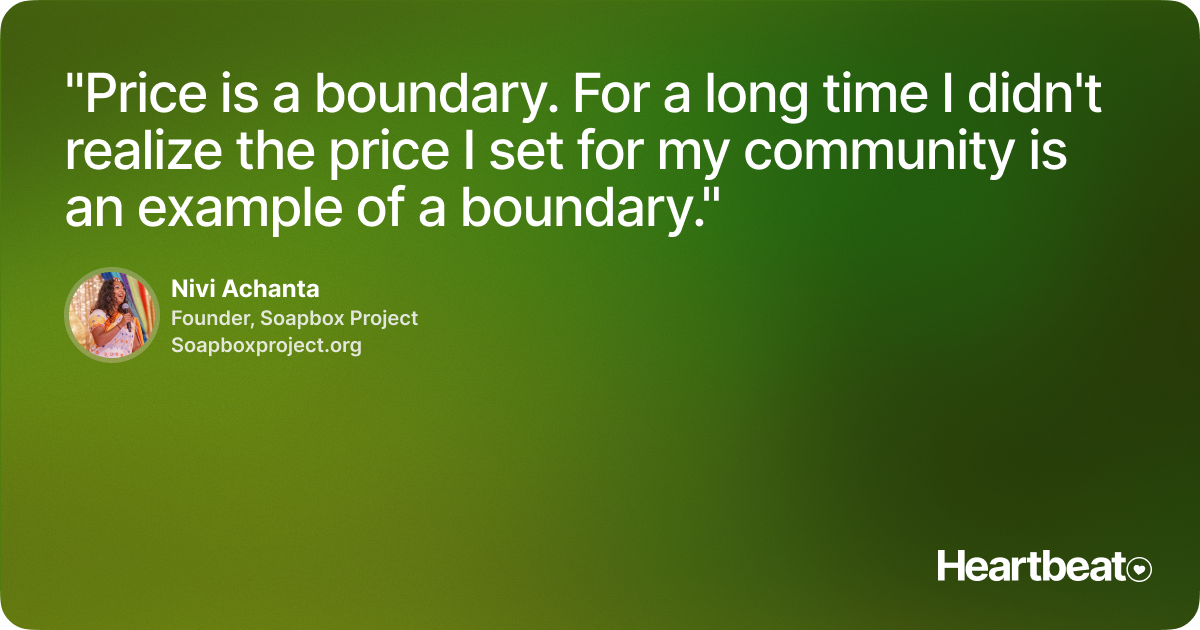
Nivi lived the exact trap. She started at $5 a month and eventually moved to $250 to $350 cohorts, because she realized the effort she was pouring in was not reflected in what people paid her. That is the tell. Add up the real hours you put in each week, the tools you pay for, and any help you bring on. If the revenue does not cover that with room to breathe, you are subsidizing your own community, and the number needs to move.
Emily Claire Hughes ran the same play from the other direction. She launched a $99 low-ticket version of her offer, found the margins so thin she was straining the person she hired to run it, cut it, and doubled down on the premium version at $1,500 a month. The 10K Email Club now generates around $160,000 a year. Same founder, same skill, a price that finally matched the work.
Raise the price on purpose
Once the math is clear, the move is to raise the price, and to raise it more than feels comfortable. The builder charging $27 a month was serving chief HR officers and compliance leaders. That is a corporate learning expense. The right number was somewhere around $250, not $27, and the higher price would have filtered for people who take it seriously instead of people shopping on cost.
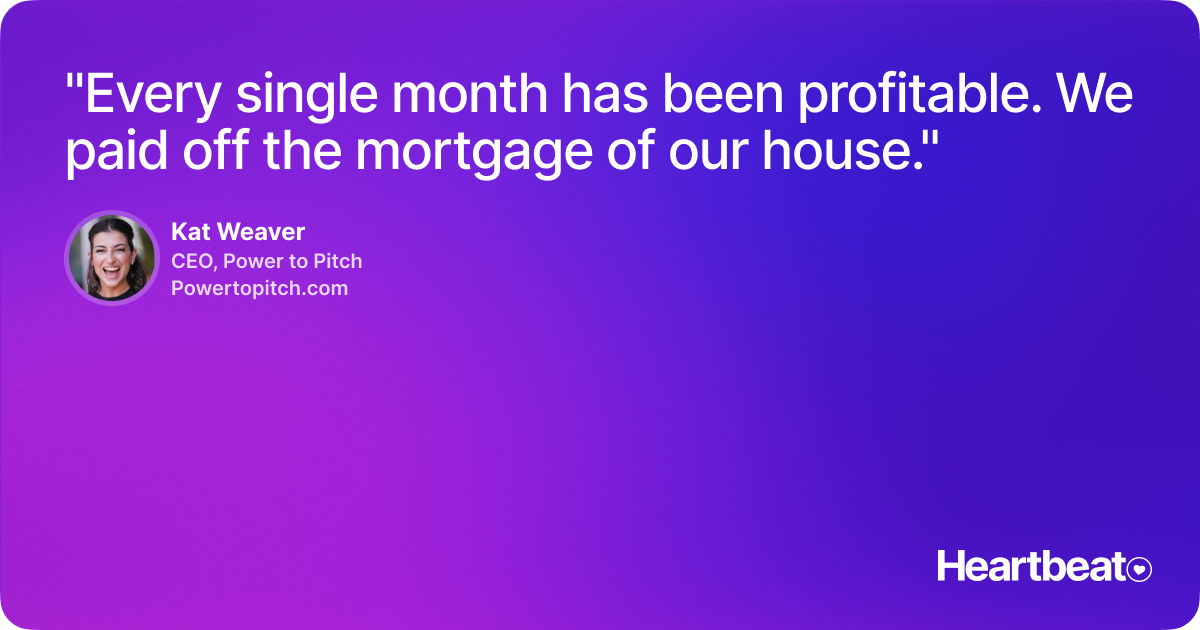
The block is rarely the market. It is your own confidence in the number. Doc Williams, CEO and founder of Brand Factory, is blunt that hesitation is what sinks you: if you are not confident in your price, you undermine the whole thing, and people can smell it. His reframe is that money is just a representation of value, so charge accordingly and be honest about it. The members who pay the most are consistently your best members. They show up, they do the work, and they push the community to be better. Kat Weaver built Power to Pitch on premium pricing, programs from $2,000 to $15,000, profitable every single month since it started.
The low price and the small size usually share one root cause: a fuzzy sense of who the community is for. Tightening that is what makes a higher price feel obvious. Here is how specific your niche needs to be.
Keep members on legacy pricing
The reason most people never raise their price is fear of losing the members they have. Heartbeat removes that risk. When you update the price on a tier, it asks whether to keep existing members on their current price or move everyone to the new one. Keep current members on legacy pricing, and new signups pay the higher rate while your loyal early members stay exactly where they are.
That turns a raise from a scary, all-or-nothing decision into a routine setting. You lift the price for everyone new and protect the people who joined early.
Layer a higher tier
You do not have to move existing members at all to make more money. You can add a higher tier for the people who want more of you. A premium tier with direct access, a monthly small-group call, or a done-with-you element gives your most committed members a way to pay you more, and it raises the ceiling on the whole community without touching anyone's current plan.
The pattern keeps repeating: a low-ticket offer is more work for less money than a premium one. Alex from NoCodeHackers found the same thing when a cheap subscription failed and a focused $349 cohort sold 50 seats in two days. Fewer people, higher price, better business.
Watch revenue, not headcount
Stop watching member count. Watch revenue per member and how you feel at the end of the week. A community where 20 committed people pay a real price is a business. A community where 200 people pay pocket change is a job you are losing money on.
Raise the price to match the value, protect your early members with legacy pricing, and let headcount be the thing that grows last, after the economics already work.
FAQ
Can a small community actually be profitable?
Yes, and small communities are often more profitable than large ones, because a premium price on a focused group beats a cheap price on a crowd. 20 members at $250 a month is $60,000 a year with a fraction of the support load of 200 members at $25.
Should I lower my price to get more members?
Usually not. A low price attracts people for whom cost is the whole decision, and they tend to be your least engaged members. If your community delivers real outcomes, raising the price improves both revenue and commitment.
How do I raise prices without losing my current members?
In Heartbeat, updating a tier price prompts you to keep existing members on their current legacy price while new signups pay the new rate. Your early members stay protected, so a raise stops being an all-or-nothing gamble.
What if my members say it's too expensive?
Some people will always find a price too high, and that is a sign they are not your target member, not that the price is wrong. Get specific about who genuinely gets value, price for them, and let the rest self-select out.