

By the time a member cancels, you've already lost them. The cancellation is paperwork. The real decision happened quietly, weeks earlier, when they stopped logging in, stopped attending events, stopped feeling like the community was producing anything for them. Cancellation flows and exit surveys can capture that final moment. Heartbeat is one of the only platforms that lets you build them natively. But they're late. The work that actually reduces churn happens in week two.
Here's the pattern: members who churn do so at three predictable moments. Under 30 days, they never activated. Days 30-90, engagement stalled after the initial burst. At renewal, they can't articulate what they got. Each moment has a different cause, but they share a common root: no one caught the signal early enough to intervene.
The communities with the lowest churn don't have better cancellation flows. They have better early warning systems.
Where churn actually starts
The highest-risk period isn't month three or renewal. It's week two.
Bri Leever, community consultant and community growth specialist, maps a five-stage member journey:
| Stage | Name | What's happening |
|---|---|---|
| 1 | Discovery | Member finds the community and evaluates whether to join |
| 2 | Onboarding | Member has paid and is deciding if it was the right call: highest churn risk |
| 3 | Active Member | Member participates regularly and gets consistent value |
| 4 | Supportive Member | Member helps others and becomes a reliable contributor |
| 5 | Leader | Member shapes community direction and takes on real ownership |
Churn almost never happens in Stages 3, 4, or 5. It happens in Stage 2, during onboarding, when the member is still deciding whether this was the right call.
In Stage 2, the member has paid, they've looked around, and now they're evaluating. If nothing specifically valuable happened in the first two weeks (no connection made, no insight that changed something, no moment where the community felt like it was built for them), the decision calculus shifts. They don't cancel yet. They just stop logging in. And the member who stops logging in in week two is the member who cancels at month two without warning.
The practical implication is that your churn intervention system should be designed for week two, not for the cancellation moment. The question to ask isn't "why are they canceling?" It's "who stopped logging in this week?"
The signal that predicts churn
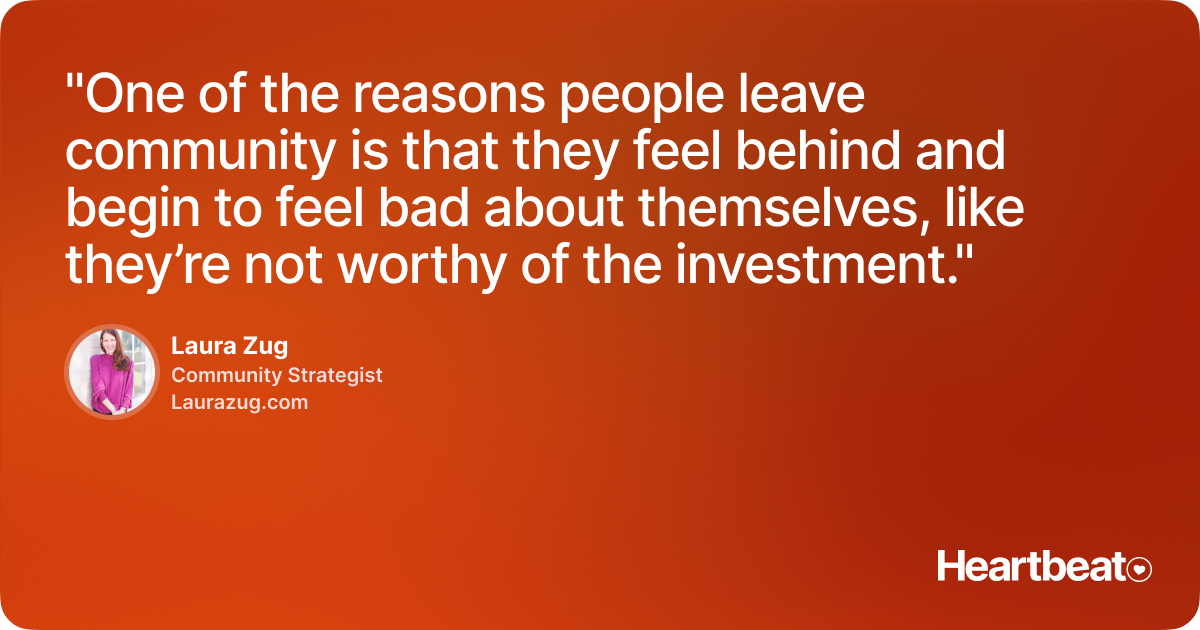
Laura Zug, Community Strategist, identifies an underrated churn trigger that rarely appears in exit surveys: the feeling of being behind.
When a new member joins an established community, they see months of conversations without context, relationships they're not part of, and an in-group vocabulary they don't understand yet. The rational response is to lurk and observe before contributing. But most members don't stay in lurk mode long enough to belong. They feel the gap between where everyone else seems to be and where they are, and they quietly decide the investment doesn't make sense for someone at their stage.
They don't write "I felt behind" in the cancellation survey. They write "it wasn't the right time" or "I wasn't getting enough value." The underlying cause is invisible to the builder. Which is why the intervention can't happen at cancellation, it has to happen while the member is still lurking.
The fix Laura recommends isn't simplifying the community. It's creating deliberate entry points where any new member, regardless of when they joined, can start fresh without needing context from prior conversations. A monthly new member hour. A "start here" space updated quarterly. Welcome threads that don't assume shared history. These give late joiners a current place to begin.
The two automations that matter
Understanding where churn starts and what signal predicts it narrows your intervention to two specific automations. Not a full re-engagement campaign. Not a win-back sequence. Two automations, running for every member, all the time.
The 14-day inactivity trigger. If a member hasn't logged in for 14 days, a DM fires: "Hey, haven't seen you in a bit. Everything okay? Is there something you've been looking for that you haven't found?" This is not a promotional message. It's a check-in. The member who receives it knows you noticed they were gone. That recognition changes the emotional math of canceling.
This trigger catches the week-two churn signal before it becomes a week-six cancellation. A member who gets that DM and replies, even to say they've been busy, is significantly more likely to come back than one who slips away silently.
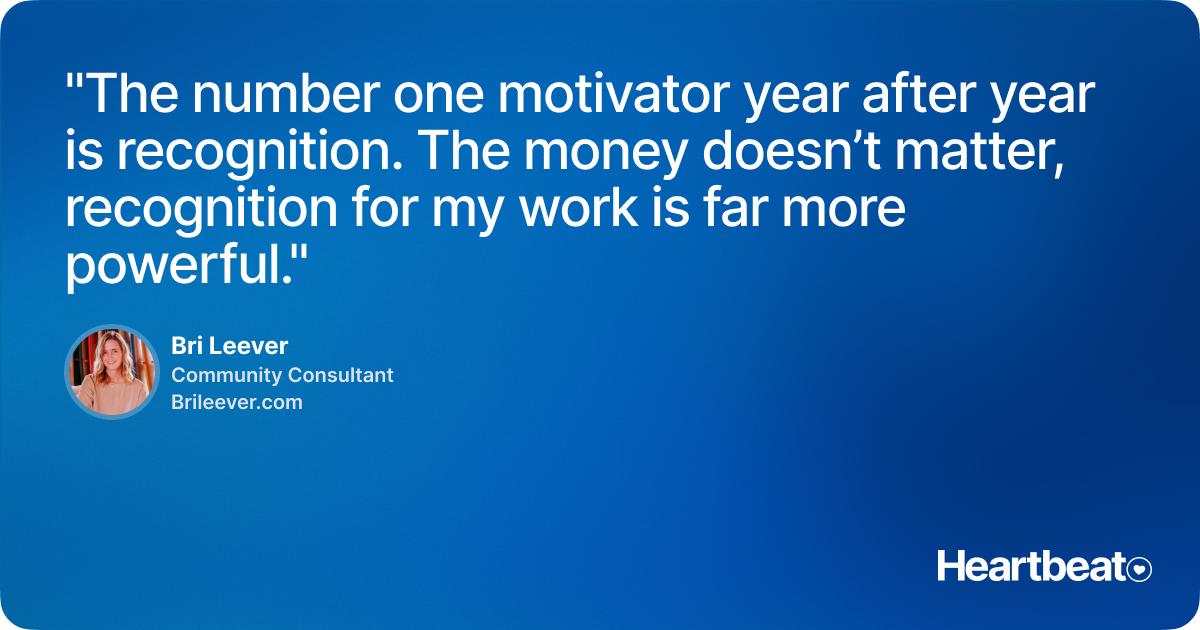
The milestone recognition trigger. When a member completes a course, reaches a post count, or crosses any threshold you define, an automated DM fires celebrating that specific achievement. Bri's research is consistent: the number one retention motivator across community types is recognition. A member who gets publicly acknowledged for something real is much harder to lose, because leaving means giving up the context that makes that recognition meaningful.
In Heartbeat, both automations are native workflow chains. The inactivity trigger monitors login recency and fires a DM from you when the threshold is crossed. The milestone trigger fires on the specific action (course completion, post count, event attendance), with a message that acknowledges what they did, not just that they did something.
When a member does cancel
If a member reaches the cancellation point, you still have one more window. Heartbeat's cancel flow lets you configure up to three save steps before the cancellation completes: offer a pause, suggest a lower-priced tier, or surface a summary of what the member has done inside the community: course completions, connections made, milestones reached. That last option is the most effective, because it reframes the cancellation question from "what am I paying for?" to "what would I be giving up?"
After the cancellation, the exit survey data is your most valuable asset. Segment cancellations by tenure (under 30 days, 30-90 days, at renewal) and read the free-text responses from each group. The patterns will tell you exactly which part of the experience failed. Under 30-day churners are almost always describing an onboarding failure. Ninety-day churners are usually describing a connection failure. Renewal churners are usually describing an outcome failure. Fix the failing system, not the cancellation flow.
FAQ
What's the best metric to track for churn risk?
Day-14 login rate. If a member hasn't logged in by day 14, they're at high risk of canceling before renewal. Track this cohort by cohort, members who joined in January vs. February, so you can see whether your onboarding improvements are moving the number over time. Monthly retention rate is the primary metric; day-14 login rate is the leading indicator.
How do I handle a wave of cancellations?
Segment by tenure first. Under 30-day churners: onboarding problem. Three-to-six-month churners: connection or content problem. Across all tenures: revisit your community's core purpose. Then personally reach out to the last five to ten people who canceled and ask one question: "What made you decide to leave?" One honest conversation is worth more than a hundred survey responses.
Should I offer a pause option?
Yes. Heartbeat's cancel flow supports a pause suggestion before cancellation completes. Most members who pause come back. Most who cancel don't. A pause is the lowest-friction save available, and it addresses the most common real reason for cancellation: timing, not value.
How do I re-engage a member who's gone quiet?
Don't send a broadcast message. Send a personal DM asking one specific question tied to something they mentioned when they joined. "Last time we talked, you were working on X, how did that go?" It shows you remember them. It's easy to respond to. And it restarts the habit without requiring them to catch up on everything they've missed.
What if content is the problem but I don't have time to produce more?
The problem is almost never volume. Survey your active members on the two or three problems they're wrestling with right now, then run one live session specifically on those problems. Members don't cancel because there's not enough content. They cancel because the content doesn't solve today's problem.