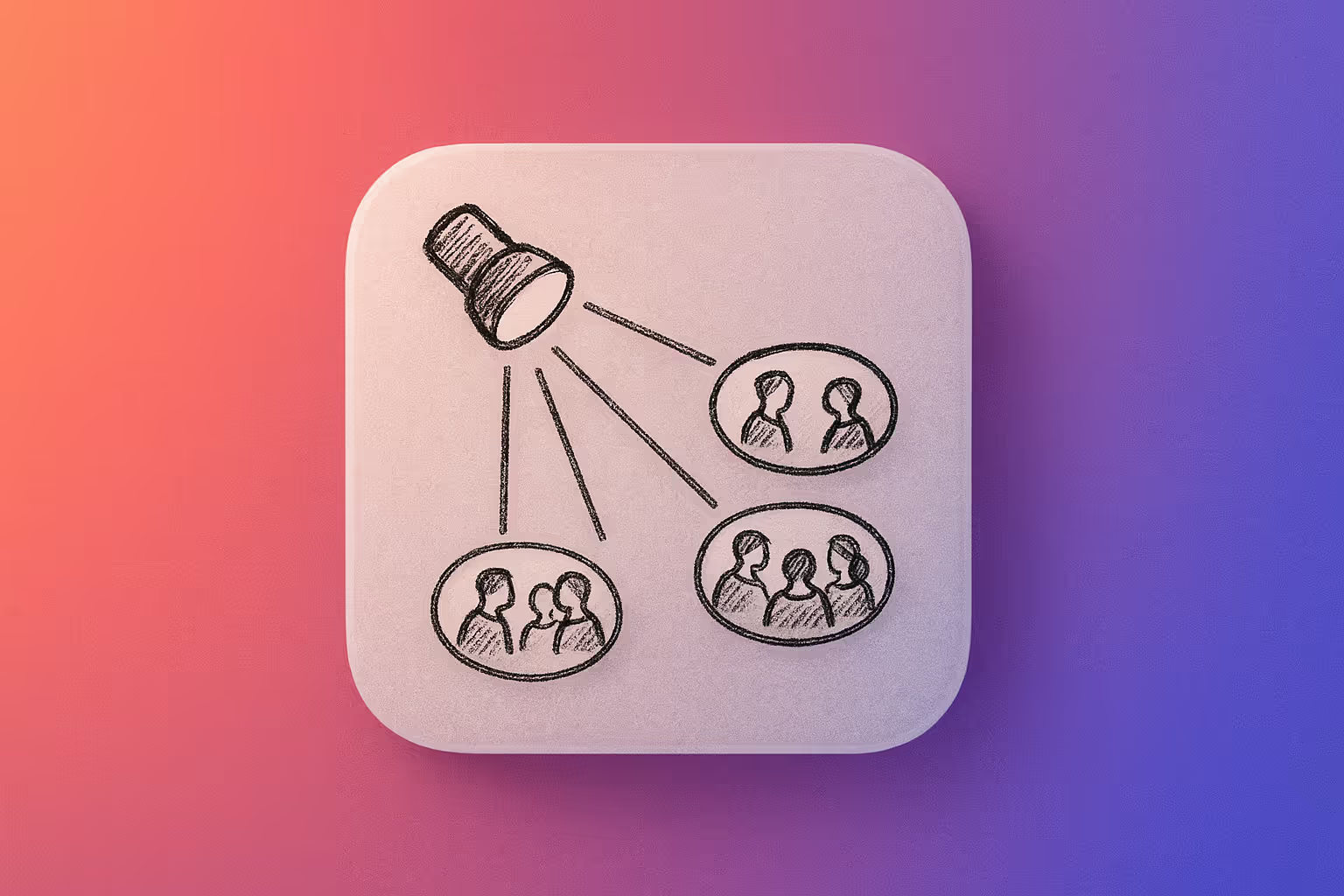
Retention is a progress problem. Members leave when they stop making progress toward something they care about. Not when content runs out, not when the community gets boring, not when a competitor launches cheaper. If your members can answer "what specifically changed for me because I'm in this community?" they stay. If they can't, they leave, often without consciously deciding to.
This reframes everything. Content doesn't retain members. A busier events calendar doesn't retain them. A larger resource library doesn't retain them. What retains members is the experience of moving forward, of getting somewhere specific, of being able to point to a real outcome and trace it back to their membership.
Shana Lynn Bresnahan, Community and Retention Strategist at Community Cultivated, has worked behind 7- and 8-figure brands since 2008. Her read on this is direct: "Value is people's ability to make progress. So progress is where the value is."
What progress requires
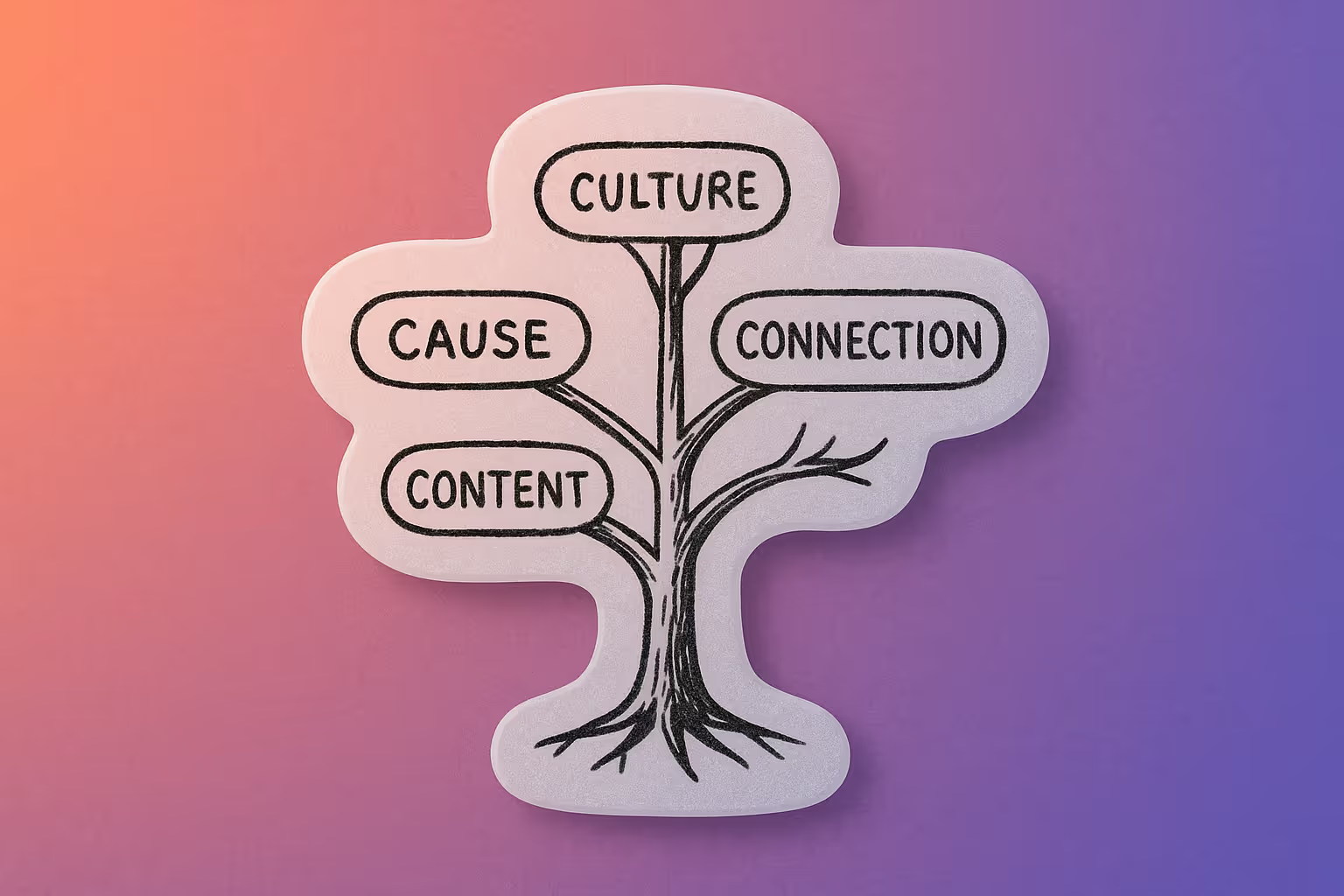
Progress doesn't happen automatically when you have good content and a clear purpose. It requires four conditions, all present simultaneously. Shana maps them as Cause, Culture, Connection, and Content.
Cause is a specific path from where members start to where they want to get, with milestones visible along the way. Not "a community for freelancers" but "a path that takes you from inconsistent income to your first $10K month." Without the path, members have nowhere to go. They enjoy the conversations, but progress stays invisible, and members who don't feel progress eventually leave.
Culture is what keeps people on the path together. Shana defines it as beliefs plus behaviors plus boundaries: what the community believes, what behavior is expected, and what lines won't be crossed. Communities that retain long-term are the ones where any member can answer these three questions without checking a pinned post. When culture is vague, the wrong members stay and the right ones drift out.
Connection is where most community builders underinvest. Real connection means members have relationships with each other, not just with the founder. A community where every conversation runs through the founder isn't a community. It's a broadcast channel with a comment section.
Content is the delivery mechanism for progress, not the goal. Content that retains is specific to where members are on the path, actionable in the next seven days, and designed to produce a result the member can report back on.
All four must be present. In practice, one pillar is almost always weaker than the others, and it's almost never the one founders expect.
The connection gap
The weakest pillar in most communities isn't Cause or Content. It's Connection. Not because founders don't value it, but because the default structure of online communities creates the wrong dynamic.
Jade Olivia, Community Strategist and Automation Expert, names the structural problem: most communities are designed like concerts when they should be designed like conferences. At a concert, everyone faces one stage. The performer performs, everyone else watches. At a conference, people mingle, break into smaller group discussions, and find someone with the exact same problem to solve together. The host facilitates. The host is not the show.
When the founder is the show, members who stop finding the founder's content compelling have no other reason to stay. But members who have built real relationships with other members have something stickier than content. Leaving means losing those relationships.
The data on this is striking. Doc Williams, community strategist for ESPN, VaynerMedia, and the NBA's Summer League, references NBA research showing that players who made just two meaningful connections inside the league were 70% more likely to keep working in it. The same dynamic applies to paid communities. Connection isn't a retention bonus. It's the structural reason members stay.
The practical implication: when a member asks you a question, don't answer it. Tag the member who solved that same problem last month and let them answer. Every time two members connect without you in the middle, the community gets stickier and you become less of a single point of failure.
Making progress visible
Once members are connecting and moving forward, the remaining piece is making progress legible to the member, and to everyone around them.
Rosie Sherry, Founder of Rosieland and CEO of Ministry of Testing, is direct about what separates communities that retain from ones that don't: "People don't generally come to communities to talk. There's always some goal that people have in the back of their mind that they want to achieve." Activity that doesn't lead to outcomes doesn't feel like progress. It feels like a treadmill, and members eventually step off.
Build your community so members have a place to register progress publicly. A wins thread. A milestone celebration when someone completes a course. An automated DM when a member crosses a threshold they've been working toward. These aren't engagement tactics. They're proof mechanisms. When members see their own progress reflected back to them and see other members' progress alongside theirs, the community stops feeling like a subscription and starts feeling like the place their growth is actually happening.
In Heartbeat, this looks like badges visible on member profiles when they complete courses or reach post counts, celebration popups when milestones are hit, and automated DMs that acknowledge each member's specific achievement.
The monthly progress check
Run this once a month: pick five members at random and ask yourself: can you name one specific thing that changed for each of them because they're in your community?
If the answer is yes for four or five, your community is producing progress. If the answer is "I know they're enjoying it," you have an activity problem masquerading as an engagement problem. The fix is not more content. It's going back to the Connection and Cause pillars, building clearer paths and stronger member-to-member relationships that actually move people.
Members who can point to a specific outcome trace that outcome back to the community. When budgets tighten, that community is the last thing they cut. When a friend asks what's made a difference, they name the community. Progress is the retention strategy. Build the infrastructure to deliver it, measure it, and make it visible. Retention takes care of itself.
In Heartbeat, the workflow chain that powers this looks like: join trigger fires a welcome DM, a 14-day inactivity check surfaces members who've gone quiet before they cancel, and milestone celebrations make progress visible automatically without manual tracking.
Members who make measurable progress don't just stay. They recruit. A member who can name exactly what changed for them knows other people who need the same change, and that referral is more credible than any ad. Most communities get their first 50 paying members through that dynamic, not through paid acquisition. Build the retention infrastructure right, and growing without paid ads becomes a natural outcome, not a goal you have to chase separately.