
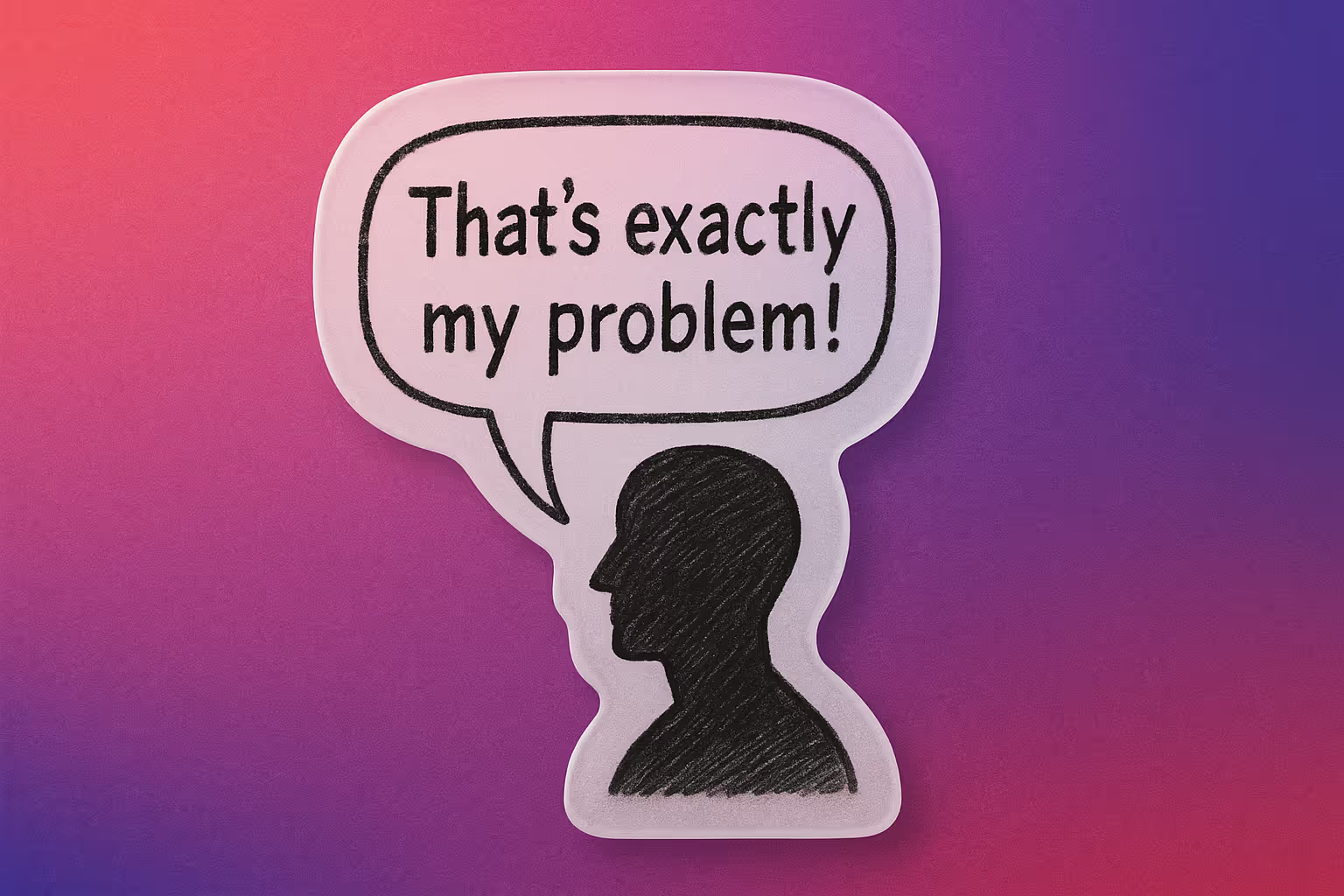
A landing page converts when the first sentence makes a potential member say "that's exactly my problem." Not "that sounds interesting" or "this looks relevant to me", exactly my problem, in language that sounds like it came from inside their head. Everything else on the page is either proving you can solve it or removing the barriers to saying yes.
Most community landing pages fail before the end of the first sentence. They open with the community name, a vague tagline, and a list of features. The potential member reads "a supportive community for entrepreneurs" and immediately begins evaluating whether this is worth their time, without ever having been given a reason to care. They're gone in eight seconds.
Write the first sentence for the specific person with the specific problem. The rest of the page flows from there.
The formula for every section
Matt Cici, web designer and educator who has created content for Wix, Block, and Apple, teaches a three-step formula that structures every section of a community landing page: What, So What, Now What.
What is a benefit-driven statement, in plain language, that a potential member can read and immediately know if it's relevant to them. Not "a community for independent consultants." "A community for independent consultants who've been stuck under $10K/month for more than a year and want a peer group who's made it to the other side." The What creates instant recognition or instant self-exclusion. Both are good. The wrong person excluded from the top of the page is a member who won't churn later.
So What is why this matters for this specific person right now. What's at stake if they don't solve this problem? What have they already tried that hasn't worked? This is where most landing pages are weakest, they state a benefit and jump straight to a call to action, skipping the part where they demonstrate they understand the member's situation well enough to have earned trust. "So What" is the work that makes the rest of the page credible.
Now What is a specific action with a specific reason to take it now. "Become a Founding Member" instead of "Learn More." "Reserve your spot at founding pricing before the cohort fills" instead of "Join the Waitlist." The Now What should describe exactly what happens when the visitor clicks, and feel like a commitment rather than an information request.
Apply this formula to every major section. The hero, the "who this is for" section, each benefit or feature claim, the pricing section. Every section tells its own three-part story.
Five sections that do the work
A converting community landing page doesn't need to be long. It needs five specific sections that each answer a question the potential member is asking as they scroll.
Hero. The What, one sentence that creates recognition. Followed by a single CTA button. No explanation, no feature list, no paragraph of context. If someone reads the hero and knows whether they're in the right place, the hero is working.
Who this is for. An explicit description of the specific person this community is designed for. "This is for you if..." followed by specific, recognizable statements. This section does as much filtering as selling, the right person reads it and feels seen, the wrong person finds an exit before they join and churn.
What changes. The transformation, not the features. "Access to weekly live sessions" is a feature. "You stop spending Sunday nights dreading the week because you know exactly what you're working on and why" is a transformation. Members care about what their life or business looks like after joining, not about the platform capabilities.
Social proof. Testimonials that describe a problem the member had before joining and a specific result after. "I've tried four other communities and nothing stuck, this one is different because X" is more valuable than "this community is amazing." One genuinely specific testimonial outperforms five generic ones.
Pricing and CTA. State the price clearly. Show the payment plan at the same total price, monthly payments are not a discount, they're accessibility. Don't mention other communities' prices. Pointing out comparisons invites comparisons. State what you charge and why the member is getting more than their money's worth.
The 1% benchmark
Lisa Princic, membership strategist and founder of Scaling Deep, teaches the metric that tells you whether your landing page is working: at least 1% of warm-traffic visitors should convert to paid members.
Warm traffic is people who already know who you are, email subscribers, social media followers, past clients. If you're sending 1,000 warm subscribers to your landing page and getting fewer than 10 paid conversions, the page isn't the problem. It's usually the offer clarity or the audience fit. Sharpen the "who this is for" section and the transformation statement before changing anything else.
Above 1% on warm traffic, the page is working and you have something worth putting paid traffic behind. Below 1%, fix the page, specifically the first sentence, before spending money on acquisition.
In Heartbeat, your community's public join page is the landing page members see before they pay. The cleaner and more benefit-driven your copy here, the higher the conversion from someone who clicks your join link to someone who enters their payment information.
The copy mistakes that kill conversion
Four patterns appear consistently on community landing pages that don't convert.
Leading with the community name. The name means nothing to someone who's never heard of it. Lead with the problem or the transformation. The name goes at the top as a brand mark, not as the first thing they read.
Listing features as benefits. "Weekly live Q&A calls" is a feature. The benefit is what the Q&A produces, never struggling alone with a hard problem again. Every feature has a corresponding benefit. Find the benefit and lead with it.
Discounting to create urgency. Discounting trains members to wait for better pricing and conditions them to see the full price as inflated. Create urgency with limited availability (founding member spots), access-based differentiation (founding members get locked-in rate), or time-limited bonuses. Never with price reductions.
Writing before you have testimonials. A landing page with two genuine, specific testimonials consistently outperforms one with no testimonials. If you're launching without members, build the page with placeholder slots and fill them with your first beta cohort's feedback before public launch. The order matters: testimonials before public launch, not six months after.
FAQ
How long should a community landing page be?
As long as it needs to answer every objection a potential member has before committing, and no longer. Short pages work when the audience already trusts you and the price is low. Longer pages work when the audience is new or the price requires deliberation. Test both. The fastest test is comparing conversion rates from a short and a long version on the same traffic source.
Should I have a video on my landing page?
Yes, if the video is under three minutes and benefit-driven: who this is for, what changes, what to do next. A welcome video converts better than text-only pages for many audiences. It doesn't replace the text, some people watch, some read. Serve both.
What's the best call to action?
Specific beats generic. "Join [Community Name]" beats "Learn More." "Reserve your founding member spot" beats "Get started." "Start your free trial" beats "Sign up." The CTA should describe the next step precisely enough that clicking it feels like a commitment.
Should I show pricing?
Yes. Hiding the price creates friction, the potential member has to click through to find out if they can afford it, which filters out people who are ready to buy but don't trust ambiguous pricing. Show the price, show the payment plan, be clear about what's included. Transparency builds trust faster than price hiding.
How do I write a landing page when I don't have testimonials yet?
Run a beta cohort of 5-10 people at a reduced price and collect specific testimonials at the end. Ask for the transformation: "What was your specific situation before you joined? What changed?" The answers to those two questions are your testimonials. Build the page around them and launch publicly with them in place.