Life Coach Websites: 20 Examples and What to Put on Yours
What 95 real coaching websites get right and wrong, 20 examples worth copying, and a page-by-page checklist for building your own
Guides

A life coach website has one main job: turning a visitor who's curious about coaching into someone who books a call with you. A site can have a beautiful design and good photos and still bring in no work, if visitors can't tell what you offer, what it costs, or how to talk to you. (For the wider question of where clients come from, see how to get coaching clients.)
Most coaches who've thought about this land in the same place: the site should make the next step obvious. One coach on Reddit put it this way: "the best are glorified business cards." Yet when we reviewed 95 working coaches' websites, 40 of them had no booking link or scheduler we could find within two clicks of the homepage.1
This guide covers what to put on a coaching website (and what to leave off), with 20 examples from coaches already doing it well. By "life coaches" we mean coaches who work with people on life, career, health or mindset goals.
What makes a good coaching website
A good coaching website answers a visitor's questions in the order they ask them: is this for someone like me, what do I get, what does it cost, and how do I start? Across the 95 sites, the ones that answered all four quickly had five things in common.
An outcome headline that names the client's result
Visitors decide quickly whether to keep reading, so the headline should describe the result a client wants, in words they'd use themselves. Nielsen Norman Group's research found that "to gain several minutes of user attention, you must clearly communicate your value proposition within 10 seconds."2 Jess Baldenhofer's headline, "Calm, connected parenting is possible," is a good example.
A label like "Confidence Coaching" tells the visitor what the coach does, but not what will be different for them afterward (speaking up in meetings, say, or asking for the raise). A label can carry a search keyword, which helps people find the page, but the visitor still has to guess whether it's for them.
A clear offer with a visible price
Many coaches worry that a price on the site scares people away. Usability research points the other way: when a site hides its prices, "if pricing information can be found elsewhere, that's where users will be."3 That doesn't mean you need a full rate card. A starting price or a package range lets visitors check that you're within their budget, and you can still give the final quote after the discovery call, once you know what they need. Our guide to coaching packages covers how to structure and price them.
Testimonials with real names and results
82 of the 95 sites showed testimonials.1 The strongest ones give the client's name, photo, problem and a specific result. Northwestern's Spiegel Research Center found that a product with five reviews was 270% more likely to be bought than one with none, and that reviews moved higher-priced products even more.4 Coaching packages often cost hundreds or thousands of dollars, so specific, named testimonials are worth more on a coaching site than almost anywhere else.
A booking link one click from the homepage
A visitor who's ready to talk should be able to book from the homepage, without going through a contact form and waiting for an email back. In our review:1
- 3 sites embedded a scheduler on the homepage, and 41 linked to a booking page from it.
- 11 put the booking page two clicks deep.
- 40 had no booking link or scheduler within two clicks, and most of those relied on a contact form instead.
Calendly was the most common booking tool, on 29 sites.
A free resource beyond the discovery call
Almost every coach offers a free call, but plenty of visitors aren't ready to get on the phone with a stranger yet. A free resource gives them something useful now and gives you their email address, so you can stay in touch until they are ready. Across the sites we reviewed, coaches used these:
- Long-form guides
- Quizzes
- Webinars
- Email courses
20 life coach website examples
We picked these 20 from the 95 sites we reviewed, each for one thing it does better than most.
1. Marla Williams, life coach
What stands out: a full free-resource funnel
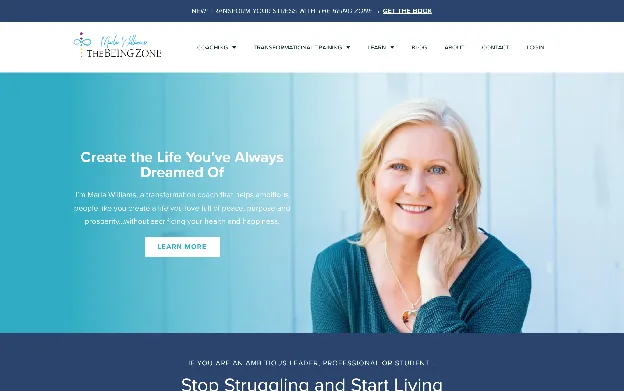
Marla Williams gives every visitor several next steps: a blog, free guides, a contact page and a $99 course. A visitor who isn't ready to book a call still leaves with something useful.
Takeaway: give visitors who aren't ready to book something free to take with them, like a guide or a short course.
2. Katya Kuhns, life transitions coach
What stands out: one offer, one price
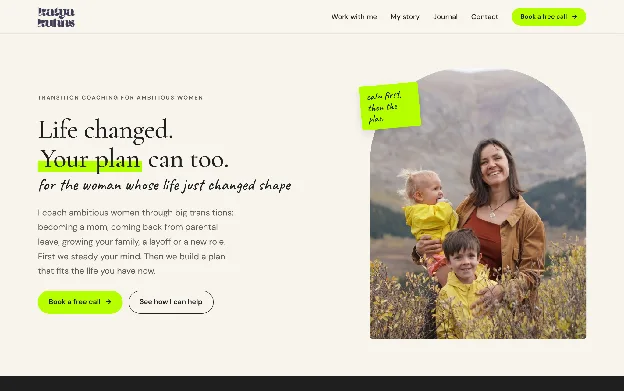
Katya Kuhns lists one program: 12 weekly sessions at a $997 founding-client price, with payment plans available. Visitors only have to decide whether they want it, not which of several tiers fits them.
Takeaway: if you're starting out, one clearly described program is easier for clients to say yes to than a menu of options.
3. Helen Bennett, midlife transition coach
What stands out: a dedicated pricing page
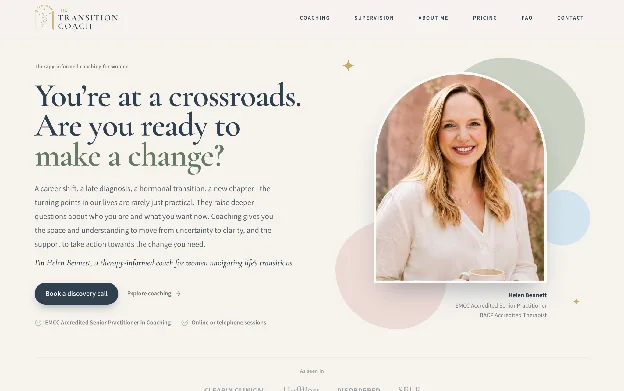
Helen Bennett's site opens with a question about being at a crossroads. Her pricing page shows two rates for each session length, one for self-funded clients and one for clients whose employer pays: £165 and £250 for an hour.
Takeaway: if employers pay for some clients, show both rates.
4. Lydia McDowall, confidence coach
What stands out: booking on the homepage
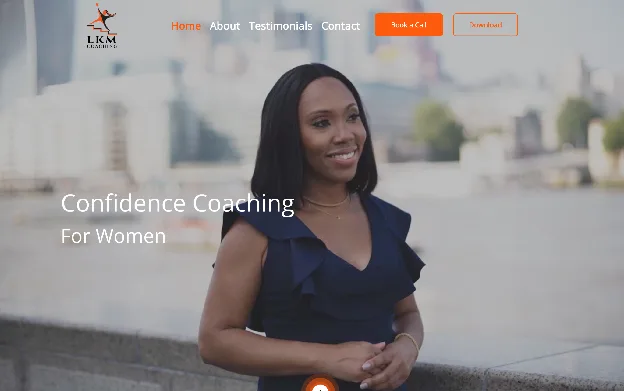
Lydia McDowall embeds her Calendly scheduler on the homepage, under 22 testimonials with full names and photos, one of the largest sets we saw. The headline is a plain label, and the page below it does the selling.
Takeaway: put your booking calendar right after your testimonials, so visitors can book while they're reading what past clients say.
5. Nicole Haley, dating coach
What stands out: a headline in the client's words
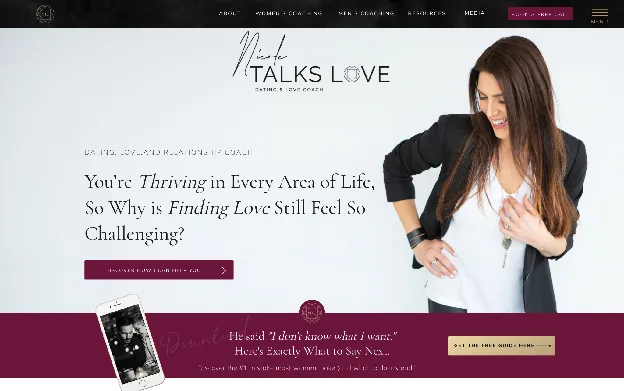
Nicole Haley's headline asks the question her clients ask themselves: why is love still hard when everything else is going well? Client stories, a free guide and a homepage video follow.
Takeaway: write the headline as the question your clients are already asking themselves.
6. Irina Iashvili, relationship coach
What stands out: a quiz that leads to a free session

Irina Iashvili works with women who have successful careers and struggle in love. A quiz draws visitors in, and a free 30-minute session is one click away.
Takeaway: a short quiz is an easy first step for visitors who aren't sure what they need yet.
7. Jess Baldenhofer, parenting coach
What stands out: clear payment options
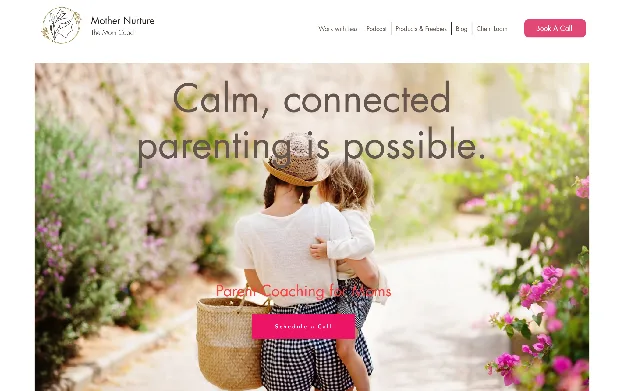
Jess Baldenhofer shows two ways to pay for her program: $1,850 in full, or 3 payments of $635.
Takeaway: show a payment plan next to the full price.
8. Michael Ross, ADHD coach
What stands out: audience and result in one headline

Michael Ross names his audience, high performers with ADHD, and the result he offers, calmer success without burnout, in one line.
Takeaway: put who you help and what they get in the same headline.
9. Morgan Blackman, financial wellness coach
What stands out: several free ways in
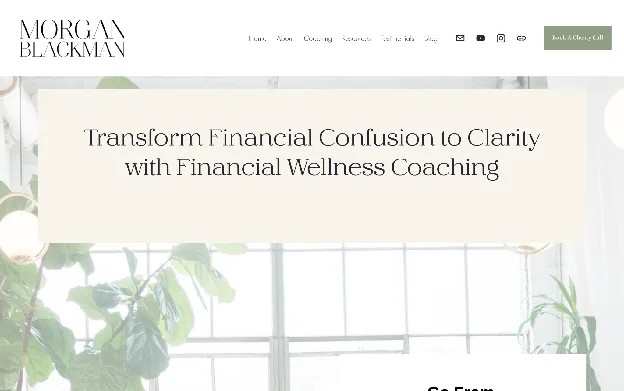
Morgan Blackman works with women in health and wellness businesses. She offers a free resource, a YouTube channel, a 5-day email course and a webinar.
Takeaway: offer more than one free option, from a quick video for the curious to a webinar for people closer to buying.
10. Alexandra Kaval, Christian life coach
What stands out: premium pricing stated plainly
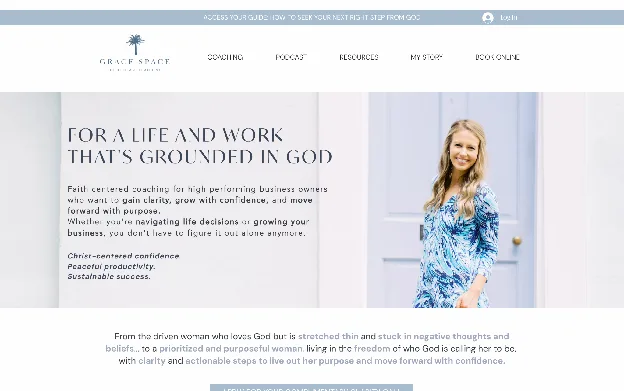
Alexandra Kaval coaches Christian women in business and leadership. Her coaching page lists 1:1 rates from $5,000, or $1,500 a month.
Takeaway: if you charge premium rates, list them. People who can't afford them won't book a call, and the ones who do book already know the price.
11. Phillipa Jacobs-Smith, menopause health coach
What stands out: tiered packages and a quiz
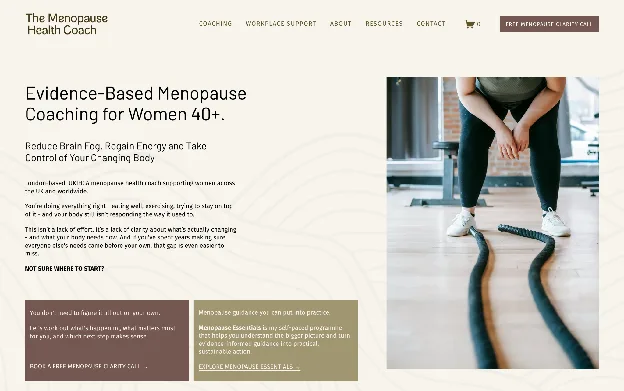
Phillipa Jacobs-Smith leads with evidence-based coaching for women over 40. Her coaching page compares two 12-week packages at £650 and £750, each with a "best if" note.
Takeaway: help visitors pick the right package themselves.
12. Alex Ross, sleep coach
What stands out: a headline that lists what you've tried
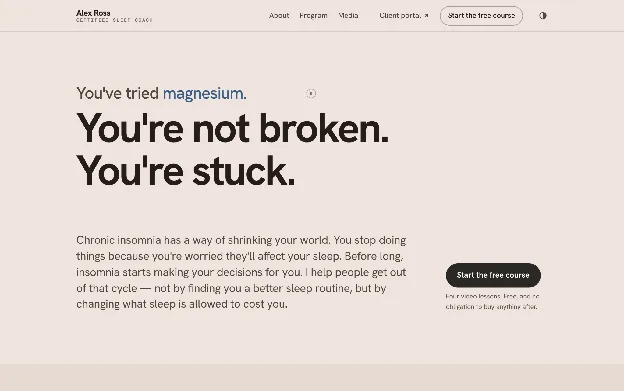
Alex Ross opens with the fixes every insomniac has already tried: melatonin, magnesium, no screens, sleep podcasts, white noise. An insomniac reading that list knows straight away the coach understands what they've been through.
Takeaway: open with the specific things your client has already tried, so they know you understand their problem.
13. Women's High Vibe Health, gut health coach
What stands out: a symptom-led headline
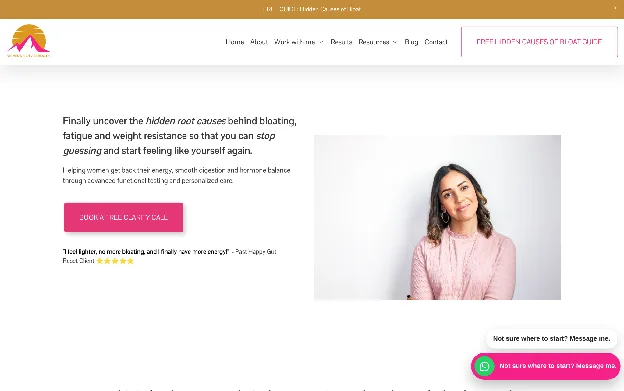
Women's High Vibe Health names the symptoms visitors search for: bloating, fatigue and weight resistance. Those words help with search, and they tell the visitor the coach understands the problem.
Takeaway: use the words clients type into Google.
14. Hillary Hufford-Tucker, career coach
What stands out: a price range on the coaching page
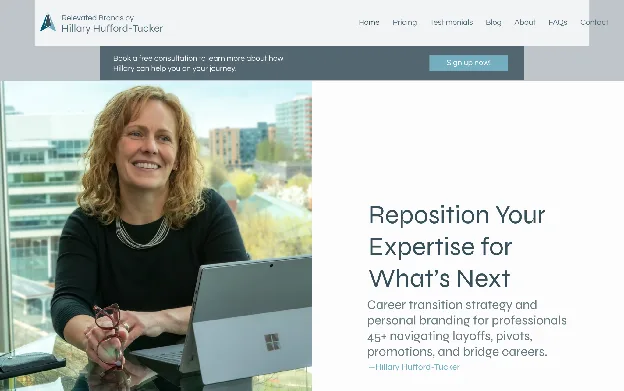
Hillary Hufford-Tucker's scope varies by client, so instead of a fixed price she lists $900 to $1,200, depending on experience, scope and complexity.
Takeaway: a range works when the price depends on the client.
15. Kris Plantrich, job search coach
What stands out: a four-word headline
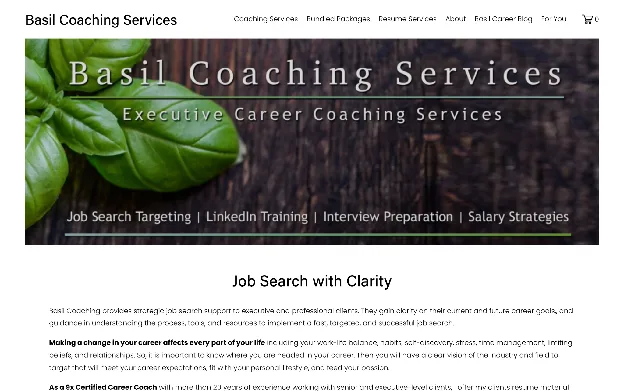
Kris Plantrich's headline is "Job Search with Clarity." Her career coaching page lists hourly coaching from $150 and a 4-month package.
Takeaway: for a practical service, a short, plain headline can be enough.
16. Lead to Change, career coach for women
What stands out: a three-part promise

Lead to Change uses three short lines as its headline: "Get seen. Gain influence. Step confidently into what's next."
Takeaway: if your offer has a few parts, short headline lines can name each one.
17. Elaine Lou, executive coach
What stands out: named testimonials with photos

Elaine Lou's homepage embeds an Acuity scheduler and shows dozens of testimonials with full names and photos.
Takeaway: ask clients if you can use their full name and photo with their testimonial.
18. Tristan de Terves, CEO coach
What stands out: an emotional headline, and prices on the site
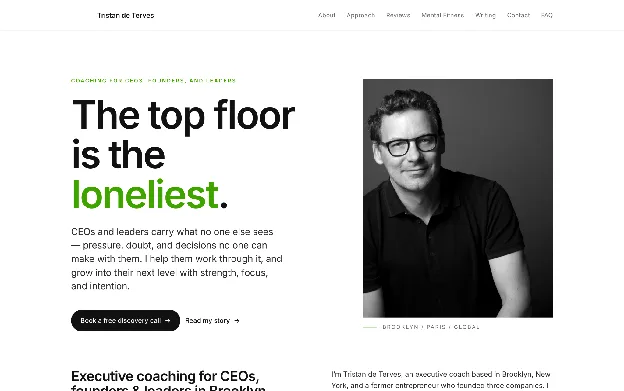
Tristan de Terves opens with "The top floor is the loneliest," a feeling his CEO clients know well. Further down he lists his rates: $350 a session, or $1,300 a month.
Takeaway: lead with what your client is feeling, and still list your rates further down the page.
19. Liz Wolfe, business coach
What stands out: a low-cost first offer

Liz Wolfe gives new clients a smaller first step: a $497 Vision Roadmap, credited toward a full program if they continue.
Takeaway: a smaller paid first step lets a client try working with you before committing to a full program.
20. Iveta Dulova, business coach for women in tech
What stands out: tiered pricing
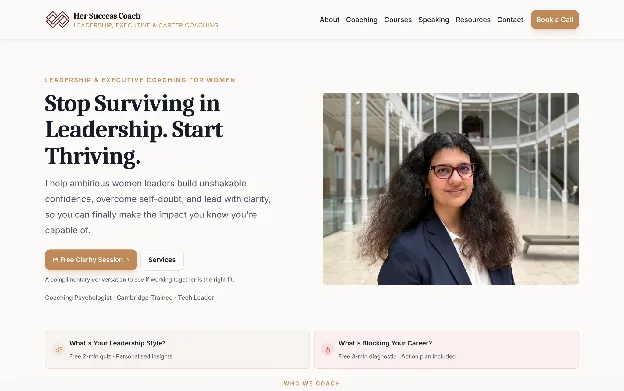
Iveta Dulova's first line describes where her clients are and where they want to be. Her coaching page has tiered programs, including 4 sessions over 2 months for $890 (about $223 a session).
Takeaway: show the per-session math on packages.
What to put on your coaching website
| Page | What goes there |
|---|---|
| Homepage | The outcome in the headline, who it's for in the subheadline, and a button to book a call. A testimonial and your free resource further down. See how to build a landing page that converts. |
| About | Why you coach: your story, background and training, with a photo. Keep it tied to the reader's problem. |
| Work with me | Each offer, its format and length, and a price or starting price. |
| Testimonials | Full names, photos and specific results, with your clients' consent. |
| Free resource | A guide, quiz, video or webinar that solves a small piece of the client's problem, in exchange for an email. |
| Booking | An embedded scheduler (Calendly or Cal.com) so visitors book without leaving your site, plus what to expect from the call. |
| Contact | An email address, your time zone and location, and how fast you reply. Time zone matters if you coach online. |
How to build a coaching website
WordPress was the most common builder among the 77 sites where we could identify one (28 sites), followed by Wix (17) and Squarespace (14).1 Some coaches use a course platform with its own site builder instead, or one of the coaching platforms.
| Route | Entry plan | Price | Setup effort | Best for |
|---|---|---|---|---|
| Website builder | Squarespace Basic | $19/month billed annually, or $25 monthly5 | Low: templates, hosting included | Coaches who want a clean site fast |
| Website builder | Wix Light | $17/month billed yearly6 | Low: drag-and-drop editor | Coaches who want design freedom without code |
| Website builder | Showit (no blog) | $22/month billed annually, or $27 monthly7 | Medium: free-form design | Coaches with a strong visual brand |
| WordPress | WordPress.com Personal | $4/month billed yearly, or $9 monthly8 | Medium to high: themes and plugins to manage | Coaches who plan to blog |
| Course platform | Kajabi Basic | $143/month billed annually, or $179 monthly9 | Medium: site, email and courses in one place | Coaches who also sell courses or programs |
If you need a few pages and a booking calendar, a website builder is enough, and it's the least work to maintain. If you plan to write a lot (a blog that brings in search traffic, for example), WordPress gives you the most room. A course platform costs more, so it's worth it once you sell courses or group programs alongside one-to-one sessions.
If you also run a group program, a membership or a course, Heartbeat gives you a custom domain, landing pages, checkout, events and courses in one place, so clients can find you, pay and join the group without you stitching four tools together. It has a 14-day free trial, with no card required.
How much does a coaching website cost?
| Cost | What it covers | Price |
|---|---|---|
| Website plan | Hosting and the site itself | $48 to $1,716 a year, depending on the route above |
| Scheduler | Booking calls without email back-and-forth | Free for one event type, or $10 a month on Calendly Standard, billed yearly10 |
| Email tool | Delivering your free resource | Free up to 10,000 subscribers on Kit11 |
| Designer (optional) | A custom look and setup | $1,001 to $5,000 a year, what 37% of businesses using a freelancer reported in WebFX's survey12 |
| Copywriting (optional) | Words for each page | Coach-focused studios charge $3,500 to $8,000 for a custom site with copy13; a freelance writer runs about 32¢ to $1 a word14 |
Common coaching website mistakes
These five gaps came up most often in our review.
Hiding your prices
41 of the 95 sites showed no prices.1 Visitors are left guessing, and people on a budget often won't book a call just to ask, in case the answer is awkward. Showing prices also saves you discovery calls with people who were never going to be able to pay.
The fix: a pricing page, a starting price or a range, with a payment plan next to the full price. See Helen Bennett and Jess Baldenhofer above.
A headline that's a label, not a result
37 of the 95 headlines were a label or statement with no result, like a job title ("sales coach").1 They tell visitors what you do, but not what will change for them if they hire you.
The fix: name the result or the problem, the way Alex Ross and Nicole Haley do.
Testimonials without names
Visitors know anyone can write "This changed my life! - J." on their own site, so anonymous quotes don't do much. Privacy matters for some kinds of coaching (relationship or health coaching, for example), but for most coaches a full name and photo make a testimonial much easier to believe.
The fix: ask clients for a full name and photo, as Elaine Lou does. If a client wants privacy, a first name plus age or job title still helps.
No clear way to book a call
40 of the 95 sites had no booking link or scheduler within two clicks, and 32 took bookings through a contact form only.1 With a form, the client sends a message, waits for you to reply with times, and then has to answer again, and some people lose interest somewhere in that exchange.
The fix: embed a scheduler (Calendly, Cal.com or TidyCal) on your homepage, like Lydia McDowall.
Offering only a free call
42 of the 95 sites offered nothing free except a discovery call.1 A visitor who isn't ready to talk yet leaves with nothing, and you have no way to reach them later.
The fix: add one guide, video, quiz or webinar that collects emails, the way Morgan Blackman does.
Frequently asked questions
What should a life coach website include?
An outcome headline, a clear offer with a price, testimonials, a free resource and a booking link. Most of the sites we reviewed also had About, Services and Contact pages.
Do life coaches need a website?
Yes, if you want clients to find and trust you beyond social media and directories. In DreamHost's November 2025 survey, 69% of consumers said a website is essential for a local business to be credible.15 See our guide for life coaches.
How much does a coaching website cost?
The site itself costs $48 to $1,716 a year, from WordPress.com Personal to Kajabi Basic. A scheduler and an email tool can be free to start. A designer or copywriter adds a few thousand dollars.
What is the best website builder for coaches?
For most coaches starting out, a website builder like Squarespace or Wix is the quickest route. WordPress suits coaches who plan to blog, and a course platform suits coaches who also sell courses or programs.
What pages should a coaching website have?
A homepage, About, Work with me, Testimonials, a free resource, a booking page and Contact. The table above says what goes on each.
Should I put a video on my coaching website?
A short video lets visitors hear how you talk before they book. 21 of the 95 sites had one on the homepage.1 Keep it short, and make sure it doesn't slow the page down.
Sources
Checked 11/2026
- 1
- 2
Nielsen Norman Group, page dwell timenngroup.com/…/how-long-do-users-stay-on-web-pag…
- 3
Nielsen Norman Group, showing pricesnngroup.com/articles/show-price
- 4
Spiegel Research Center, online reviewsspiegel.medill.northwestern.edu/How-Online-Revi…
- 5
Squarespace planssquarespace.com/pricing
- 6
Wix planswix.com/plans
- 7
Showit plansshowit.com/pricing
- 8
WordPress.com planswordpress.com/pricing
- 9
Kajabi planskajabi.com/pricing
- 10
Calendly planscalendly.com/pricing
- 11
Kit planskit.com/pricing
- 12
WebFX web design pricing surveywebfx.com/web-design/pricing
- 13
Studio+Mason coach website pricingstudioandmason.com/…/custom-website-design-for-…
- 14
Prime Web Design, copywriting ratesprimewebdesign.com/…/copywriting-cost
- 15
DreamHost Local Business Trust Indexdreamhost.com/…/dreamhost-2026-local-business-t…