How to become a life coach
How much life coaches make, certifications, popular niches, and more
Updated
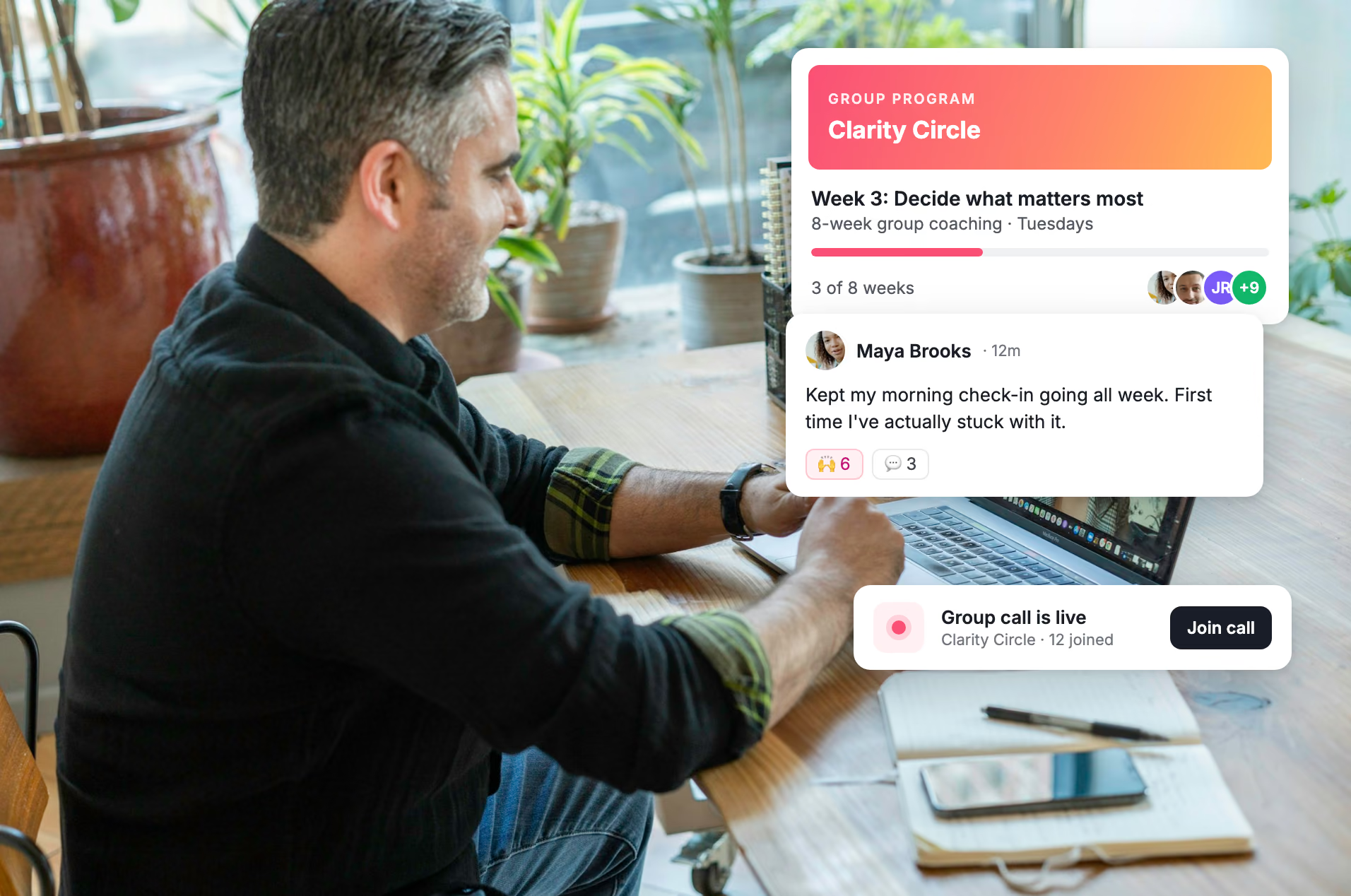
To become a life coach, pick a niche, get trained, practice with real clients, set up the business side, package what you offer, and find your first clients. No license is required, so the order is flexible, and the business side matters as much as the training.
The average coach earns $49,283 a year from coaching and works 11.6 hours a week with clients, according to the International Coaching Federation's 2025 Global Coaching Study. Those two numbers explain most of this guide. A coaching practice built only on 1:1 hours has a ceiling. Raising it means charging more per hour or helping more people in the same hours.
We paid off the mortgage of our house.
 Kat WeaverBusiness coach, Power to Pitch · $1M+ in salesRead the story
 What a life coach does
A life coach helps a client get clear on a goal, work out what is in the way, and follow through. Sessions are usually conversations: questions, reflection, accountability and small commitments between calls.
Coaching looks forward. It is different from therapy, which treats mental health conditions and is a licensed profession. A good coach knows the line and refers a client to a licensed professional when a conversation crosses it.
Do you need a certification?
No. Life coaching is unregulated, so anyone can call themselves a life coach and practice without a credential. Certification still matters in two places: it builds skill, and it builds trust with clients, especially companies hiring coaches for their teams.
The most recognized credential is the International Coaching Federation's Associate Certified Coach (ACC). It requires:
- 60 hours of coaching education
- 100 hours of coaching experience, with at least 75 of them paid
- 10 hours of mentor coaching over three months
- A performance evaluation and a passing score on the ACC exam
Training programs cost anywhere from about $1,000 to more than $15,000, and most take six months to a year. The ACC application itself is $175 for ICF members and $325 for non-members. Because the credential needs 100 coaching hours, many coaches take paying clients while they train.
Choose a niche
Clients usually look for help with a specific problem, like a career change, a relationship or confidence at work. A clear niche makes you easier to find and easier to recommend.
Fill in this sentence: I help [who] who struggle with [problem] to [result]. For example, "I help new managers who struggle with difficult conversations to lead their team with confidence." If you can name where those people spend time online, the niche is specific enough.
Common niches include career coaching, relationship coaching, leadership coaching, health and wellness coaching, and spiritual life coaching. Each one has its own training options, and all of them share the same business model below.
What life coaches earn
ICF's 2025 study puts the average fee for a one-hour session at $234, with coaches working with about 12 active clients at a time. Coaches with more than ten years of experience average $69,721 a year.
Every one of those numbers is tied to hours. To earn more with 1:1 coaching alone, you raise your rate or coach more sessions, and there are only so many of either. The calculator below lets you add a group program and a membership next to your 1:1 clients, and shows what you keep after platform and payment fees.
Life coach income calculator
Start with your 1:1 clients, then add offers that don't need more of your hours. Your first 14 days on Heartbeat cost $0.
Profit after your free trial
$0/mo
| Line | Free trialfirst 14 days | After trialBuild |
|---|---|---|
| Revenue monthly average | $0 | $0 |
| Heartbeat plan | $0 | $49 |
| Heartbeat transaction fee | $0 2.5% | $0 5% |
| Stripe processing | $0 | $0 |
| Profit | $0 | $0 |
14 days free, no credit card.
Profit is revenue minus Heartbeat and Stripe fees (2.9% + 30¢ a charge), before taxes and other costs. The Heartbeat share is your plan plus its fee. 1:1 clients are billed outside Heartbeat. Example numbers, not an income promise. See pricing.
Package your coaching beyond 1:1
A common way to grow past a full calendar is to add offers in this order:
- 1:1 packages. Sell three or six months of coaching instead of single sessions. Clients commit to the result, and your income becomes predictable.
- A group program. Teach your method to a cohort, for example 10 people over 8 weeks, with live calls, lessons and a shared space for questions. One hour of your time serves the whole group.
- A membership. Give past clients and people who can't afford 1:1 an ongoing place to keep working: monthly live sessions, a library of lessons and a community of peers. It earns less per person and keeps earning after a program ends.
- A self-paced course. Record the core of your method once. It works as an entry offer and as prework for your group program.
On Heartbeat these all live in one place: courses, live events and calls, discussion channels, memberships and checkout. A client who finishes your group program can move into your membership without switching apps.
Get your first 10 clients
Your first clients usually come from people who already know you. A simple plan:
- Tell your network what you do, in your niche sentence. Ask for introductions to one specific kind of person.
- Coach a few people free or at a discount in exchange for detailed feedback and a testimonial. Those hours also count toward a credential.
- Pick one channel and show up weekly. LinkedIn, Instagram, a podcast guest spot or a local group. Two or three channels done well beat six done occasionally.
- Open a founding-member waitlist before your first program is ready. Offer a lower price to the first people who commit. Paid waitlists tell you there is demand before you build, and Heartbeat includes them on every plan.
Set up the business side
Before you take payments, cover the basics: register your business, open a separate business bank account, get liability insurance, and use a written client agreement that explains what coaching is and isn't. Rules differ by location, so check what applies where you live.
Then set up the tools clients touch: a way to book sessions, a way to pay you, and a home for everything between sessions. Keeping that last part in one place means clients don't hunt through email, a video link and a separate course site to find their homework.
Common questions
How long does it take to become a life coach?
You can start coaching right away, since life coaching doesn't require a license. Most accredited training programs take six months to a year. The ICF ACC credential also requires 100 hours of coaching experience, so many coaches build their client base while they train.
Do you need a certification to be a life coach?
No. Life coaching is unregulated, so no credential is legally required. A recognized credential such as the ICF Associate Certified Coach (ACC) helps with skill and credibility, especially for corporate clients.
How much does life coach certification cost?
Training programs range from about $1,000 to more than $15,000 depending on the school, accreditation and format. The ICF ACC application fee is $175 for ICF members and $325 for non-members.
How much do life coaches make?
The ICF 2025 Global Coaching Study reports an average of $49,283 a year from coaching and an average fee of $234 for a one-hour session. Coaches with more than ten years of experience average $69,721 a year.
What does it cost to run a coaching business on Heartbeat?
Heartbeat starts with a 14-day free trial with no credit card, and plans start at $49 a month. When members pay you, Heartbeat charges a transaction fee based on your plan (5% on Build, 2.5% on Grow, 1.25% on Scale) on top of Stripe's card processing fee. The calculator on this page shows both.
Sources
- International Coaching Federation, 2025 ICF Global Coaching Study executive summary
- International Coaching Federation, Associate Certified Coach (ACC) requirements and fees
- iNLP Center, How to become a life coach (certification cost and training length)
- iNLP Center, What is the ICF and do you need its credential (regulation)