
Sooner than you think, and almost certainly before you feel ready. Your community is ready to launch when a new member can get something valuable in their first hour, not when every course is recorded and every channel is perfect. Readiness is about time to value. Waiting to feel fully prepared means waiting forever, because that feeling never arrives. The builders who launch and improve in public beat the ones polishing in private every single time.
This is the most common place I see community builders get stuck. Not on strategy or the platform, but on the quiet conviction that it isn't quite ready yet.
You launch before you're ready
The nervous, not-quite-ready feeling doesn't go away, so stop waiting for it to. It doesn't mean you have more work to do. It's what launching feels like. I've shipped features to tens of thousands of people for years and still get a knot in my stomach every launch morning. You won't make the fear disappear. Launch anyway.
This is gospel among the experienced community builders we host. Bri Leever, community strategist and founder of Ember, teaches every new builder the same thing: perfect is the enemy of a launched community.
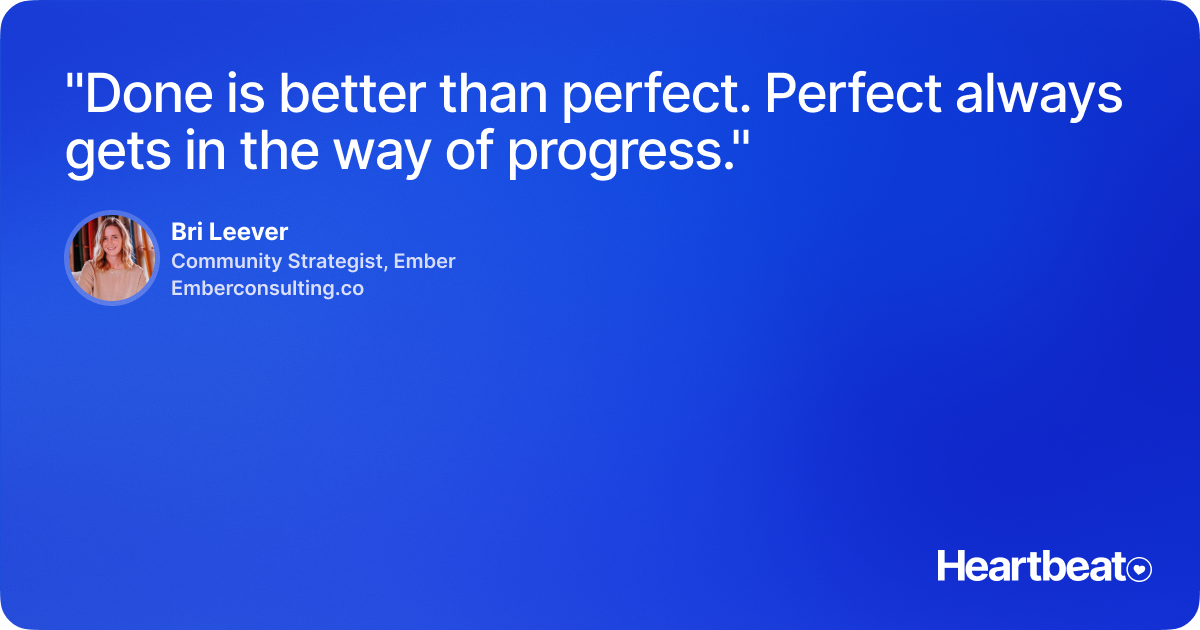
Bri's fuller point is that holding out for perfect actively makes your community worse, because you design a better community from member feedback than from months of guessing alone. Allie Guiang took a full year from idea to launch, terrified the whole way, and now runs a community across three cities. The year of hesitation taught her less than launching would have.
Readiness is time to value
Reframe the whole question. Stop asking "is everything built" and start asking "can a new member get value fast." When someone joins in the first day, the first hour, the first 10 minutes, can they get something worth their time? If yes, you're ready. If no, that's the only gap worth closing before launch.
This is a much lower bar than a finished product, and it's the right one. A member doesn't care whether you have 12 courses. They care whether showing up was worth it. Design for the first hour, launch, and build the rest while members are already getting value.
You don't need courses first
The thing people most often build before they feel ready to launch is a library of courses, and it's usually the wrong place to spend that time. You don't need a full curriculum to open the doors. You need members to get value quickly, and live events do that faster than recorded content ever will. Bri calls events the magical incentive that creates action in a community, and that's exactly what a launch needs.
When we launched our own community, we had almost nothing built. It was live events with community builders, every couple of weeks, and that was it. The bet was that the first month or two would feel quiet, and around month three the live conversations would start bleeding into the community on their own. It happened faster than we expected. The recordings from those events became the content library later, built as a byproduct of showing up.
Set a public date
The most reliable cure for launch paralysis is to remove your own ability to delay. Pick a launch date and make it public. Tell the people you're building for, put it in writing, say it out loud on a call. Once you've publicly committed, "it's not ready" turns into "what has to be done by the 15th."
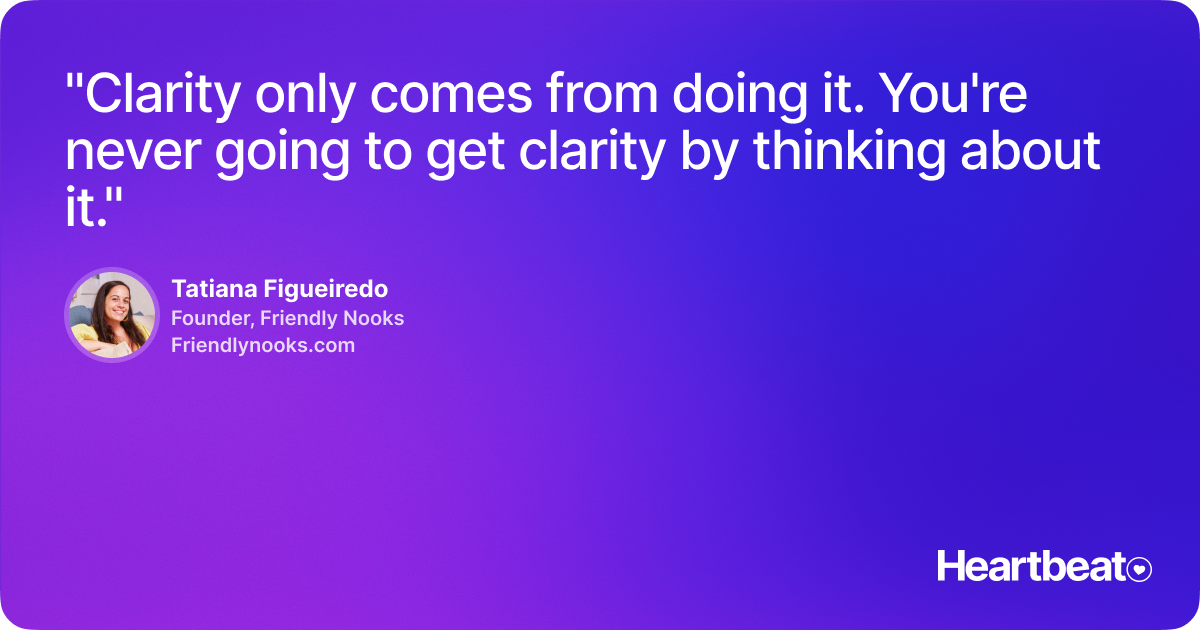
There's a deeper reason a public deadline works: the clarity you're waiting for comes from launching, not from thinking. Tatiana Figueiredo, founder of Friendly Nooks, says it plainly.
Give yourself a buffer of about a week and no more. People forgive a launch that slips a week. They're far less forgiving of one that slips two months, and a two-month slip means the date never did its job.
Solve the empty room
One specific fear keeps people from launching: what if someone joins and it's only them in an empty room for a week. It's a fair fear, and there's a clean fix. Build a waitlist, warm it up, and open to everyone at once so the community has people in it from day one. Bri's launch math is a comfort here: you only need a handful of founding members to start, and inviting enough people to get them is the whole job. Charge a small deposit so the people on the list are committed, run a live event or two before you open, and launch to a group instead of to silence. Here's how to make a waitlist actually convert.
Launch the ugly version
There's a well-worn startup line: if you aren't embarrassed by your first launch, you launched too late. It holds. The first version is supposed to feel rough. When we built our landing page tool, the earliest version was me on a call building pages by hand for a handful of customers, pretending to be the software. That embarrassing, held-together-with-tape version is what told us it was worth building for real.
And no amount of preparation gives you the one thing launching does: you can't know whether people will pay until you ask them to. There's no survey and no amount of positive feedback that predicts it. The only test of whether someone will pay is whether they pay. If standing up a minimum version feels like the blocker, Pulse can build the core of your community (channels, an event, a starter course, and an offer) in an afternoon, so "it isn't built yet" stops being the reason you haven't launched.
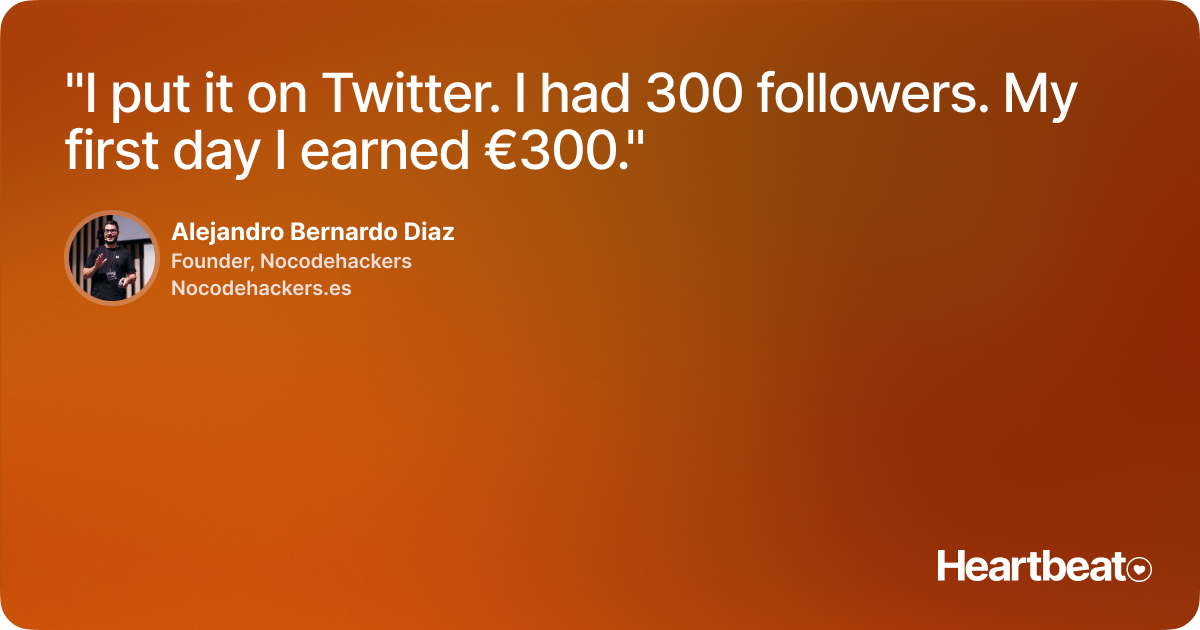
Alex from NoCodeHackers launched to 300 followers with a 5-euro tutorial. That embarrassingly small start grew into a business doing hundreds of thousands a year. He launched, then improved.
Ready is a low bar
Your community is ready when a new member can get value in their first hour and you have a date on the calendar. Everything else gets built in the open, while members are already benefiting. Set the date, warm a waitlist so the room isn't empty, launch the version you're slightly embarrassed by, and let the clarity you've been waiting for arrive the only way it can: by launching.
FAQ
How do I know when my community is ready to launch?
When a new member can get something valuable in their first hour, not when everything is built. Readiness is about time to value. If a person can join and get something useful quickly, open the doors and build the rest in the open.
Do I need to finish my courses before launching my community?
No. Live events deliver value faster than recorded courses and take far less upfront work. Launch with a couple of events, and let the recordings become your content library over time.
What if I launch and the community is empty?
Use a waitlist so you open to a group instead of to silence. Charge a small deposit to filter for committed members, run a live event or two before launch, and everyone joins at once, so day one has people in it.
How do I stop endlessly tweaking and actually launch?
Set a public launch date and tell people, with a buffer of about a week at most. A public commitment removes your ability to delay. The clarity you're waiting for comes from launching, not from more preparation.