How to solve the cold-start problem with a paid waitlist
Never open an empty community. The cold-start problem is structural: communities derive their value from the people inside them, but the people aren't there yet when you need to sell the membership. A potential member looks at an empty community and sees risk, not opportunity. No amount of clever marketing changes that math.
Don't open an empty community and hope the first few members don't notice. Run a paid waitlist before you open: collect founding member commitments, build the referral loop, and send a launch email sequence that keeps signups warm. By the time the community opens, you don't have a cold-start problem. You have a warm room of people who already paid.
Why the empty community is a harder sell than it looks
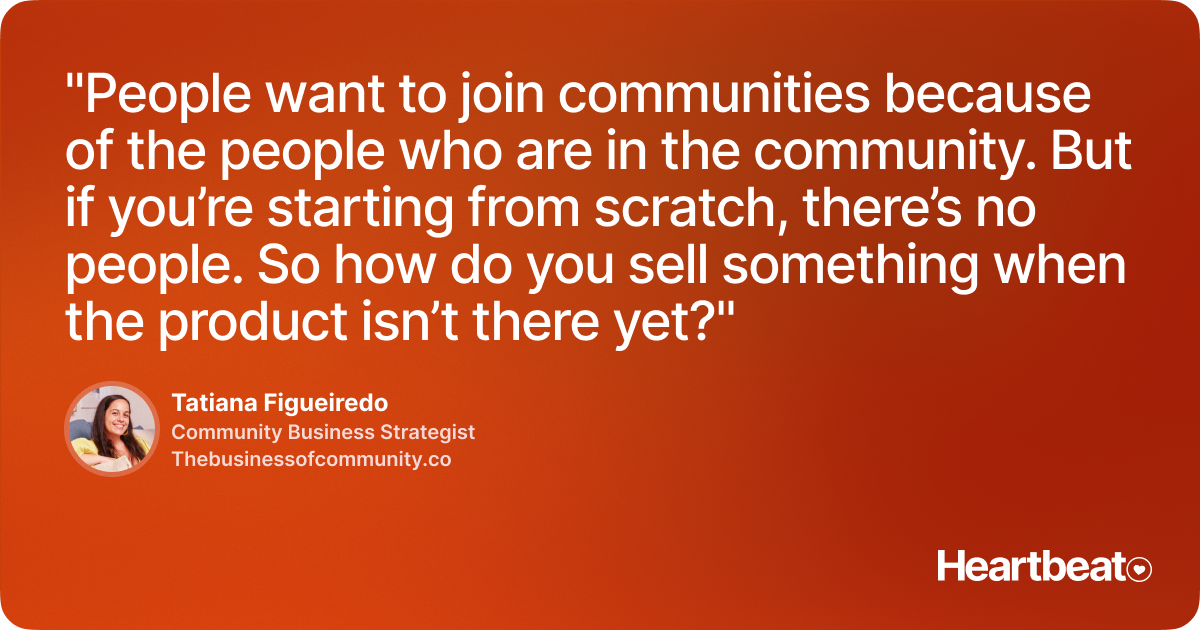
Tatiana Figueiredo, Community Business Strategist, names the problem precisely: "People want to join communities because of the people who are in the community. But if you're starting from scratch, there's no people. So how do you sell something when the product isn't there yet?"
The answer to that question determines everything. You can't sell the community as a community when it's empty. You have to sell something else.
What you can sell is access to the founding cohort: a chance to be in the first group, at the locked-in price, before the doors open to the public. That's a different purchase decision from "join an ongoing membership." It's a commitment based on the founder's credibility and vision, not on social proof that doesn't exist yet.
Why a free waitlist doesn’t convert
Most first launches start with a free waitlist, and most of those lists convert badly.
I watched this play out in an office hours call. A builder had grown her Instagram from a few hundred followers to 30,000, collected 400 people on a free waitlist, and then fewer than 10 converted at launch. She was crushed. She didn't have a bad community. She had a cold list and a launch that asked for too much, too fast.
The core error is treating a waitlist signup like a decision to join. It isn't. Getting someone onto a free waitlist is the same as getting them onto an email list: they raised their hand once. And even a warm list converts a fraction of itself, which is normal, not a failure. Bri Leever, community strategist and founder of Ember, teaches builders to expect exactly this math.
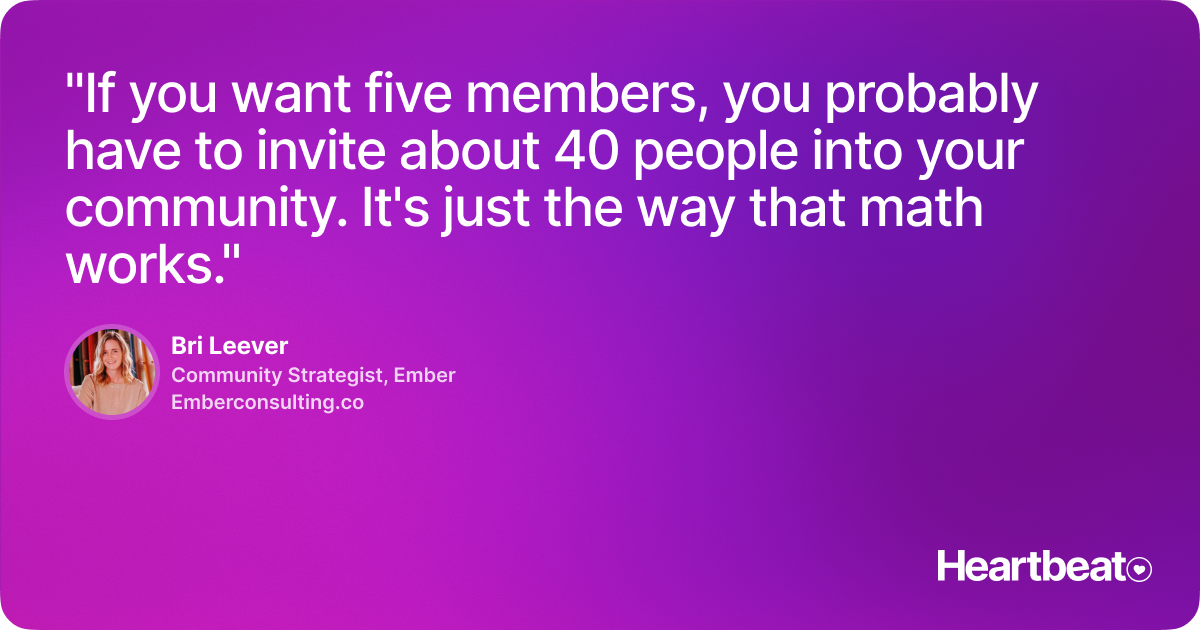
So a list of 400 free signups was never going to become 400 members. The job is to raise the fraction that converts, and that starts with making the list mean something before launch day.
Here's why a free list flops: it never measured the one thing that predicts conversion, which is willingness to pay. A free signup costs nothing, so it filters for nothing. You reach launch day with a list full of people who liked the idea for free and no idea which of them will spend money.
Even the ones who would pay need warming up. Converting a list takes 6 to 12 touchpoints, not the standard three launch emails, and not all of them can be emails people skim. It's a marketing sprint: reminders, a taste of the value, a reason to act now, and proof that other real people are going in with them. Plan that warm-up before you plan the list, or the list will sit cold.
Use a paid waitlist to collect founding members before you open
The waitlist is the first move. Before the cohort runs, before the community opens, before you have a single member, you run a paid waitlist that collects founding member commitments.
A Heartbeat paid waitlist does three things at once. It collects signups from people interested in joining through a waitlist landing page. It lets you charge an upfront founding member payment before you go live, validating demand with real money instead of email addresses. And it runs a built-in referral system where each waitlist member gets their own referral link, so the list grows itself.
By the time you open the waitlist to the founding cohort, two things have already happened: you know the demand is real (people paid), and the waitlist members already have social connections to each other (they referred their networks in). The cold-start problem is halfway solved before the first live call.
When the waitlist closes, Heartbeat converts it into a live offer. Waitlist members get access. The community opens to a group of people who committed early, referred their networks, and have been receiving your launch emails for weeks. That's a warm room, not a cold start.
The paid waitlist is available on every Heartbeat plan: Build, Grow, and Scale. There's no plan upgrade required to run one before your first launch.
Charge first month’s rent
The single biggest change is to make the waitlist paid. Instead of collecting free emails, charge the first month upfront and credit it toward the first month of membership. This does two things at once: it tests willingness to pay directly, and it front-loads commitment, so on launch day these people are already customers rather than maybe-someday leads.
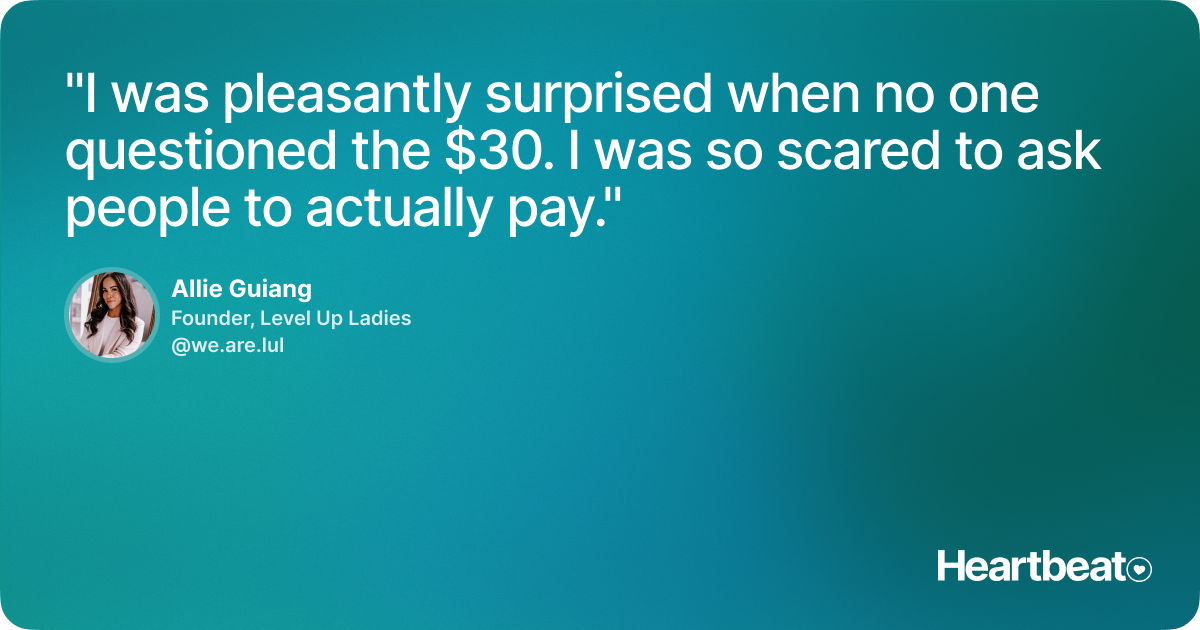
The fear of charging is almost always overblown. Allie Guiang was terrified to ask her first members to pay, and it turned out to be a non-issue.
Once someone has paid to hold a spot, they're far more likely to show up to your warm-up events and to walk through the door at launch, because they already have skin in the game.
Warm them up with events
The second change is to run one or two live events for the list before the community opens. This is the piece almost everyone skips, and it's where conversion happens. An email can't build connection. An hour on a call can. Bri makes the point that getting people to the event is 90% of the work, and a paid waitlist plus a good reason to show up is what gets them there.
Get the list onto a public event, let people turn on their cameras, and let them meet you and each other. After an hour together, a stranger becomes someone you've talked to. When you then open the community, they join a group they've already started to know instead of an empty room full of strangers. Run it once, run it again a couple of weeks later, and the list warms itself.
Converting a waitlist to cohort
A paid waitlist captures the commitment, while a contained cohort makes good on it.
Once the waitlist closes and the community opens, the founding cohort needs a structured experience, not an open-ended membership that asks new members to figure out where to engage. In Heartbeat, this is a private group with a fixed 30-day duration, pre-scheduled posts, and a live event cadence that gives members a shared experience during the cohort period.
Members know they joined something time-bounded. That changes the psychology in two ways. The decision to continue is easier, because they've already had the experience and know the people. And the experience itself is more focused. Members show up to something specific rather than drifting in and out of an always-on membership.
The founder's facilitation time becomes predictable too. You show up for specific events and respond to scheduled prompts instead of being available all the time. For most founders running their first community, the contained experience is more sustainable than jumping straight into the operational complexity of an ongoing membership.
At the end of 30 days, members are invited to continue as founding members of the ongoing community at their locked-in rate. Most do, because they've had the experience, they know other members personally, and leaving means giving up relationships they've built inside the cohort. The cold-start problem disappears because the community is already warm.
Building the audience that fills your waitlist
The paid waitlist solves the empty community problem. But without an audience, you may have an empty waitlist problem instead.
Karthik Puvvada (KP), founder of Build in Public Fellowship, has supported 500+ founders through community launches. His method: start sharing what you're building before you build it. Document the process, your assumptions, your early conversations with potential members, your pricing and positioning decisions. The people who follow the story become your first waitlist signups before the waitlist exists, because they've been watching you build it.
KP's most underrated tactical recommendation: don't try to build a following from scratch with original content. Instead, contribute substantive replies under larger accounts posting about your niche. The people you're trying to reach are already engaging with that content. One useful reply under a post with thousands of views exposes you to more potential members than a month of original posts on an account with a small following.
You don't need a massive audience before launch. You need 100-500 people who know exactly what you're building and have been following along. That's more than enough to fill a 10-15 person founding cohort waitlist. Building in public creates that audience. The paid waitlist converts them.
Selling before you're ready
I sold Heartbeat using Figma wireframes before we wrote a single line of code. The product didn't exist. What people bought was conviction: founders that clearly understood the problem, had a plan, and were obviously the right people to solve it. That's what good pre-product selling looks like.
The same principle applies to community cold-start. When you don't have an existing community to show, you're selling the founder's expertise, vision, and commitment. A potential member who can see the transformation clearly, believes you understand their problem deeply, and trusts you're committed to delivering it doesn't need to see a full community. They're buying access to you, your judgment, your curation, your ability to assemble a group of the right people.
This is why the founding member framing works. "You're not buying a finished product" is honest. "You're getting the locked-in founding member rate forever, plus direct access to me during the first cohort, in exchange for joining before we have social proof" is a clear value proposition. Some members prefer being early. For them, it's a privilege.
FAQ
How many waitlist signups do I need before I open?
Enough to fill a 10-15 person founding cohort, which means you need at least 30-50 signups to account for people who don't convert. If your waitlist has 30 interested people, open the cohort. Waiting for 500 signups before converting any of them is how waitlists go cold.
Should I charge upfront on the waitlist or wait until launch?
Charge upfront. An email address is easy to give. Money is a commitment. Founders who collect upfront payments on their waitlist consistently see higher cohort show-up rates, less ghosting on launch day, and faster founding member retention decisions. The people who paid are the people who are serious.
What if trial members see the empty community and leave?
The contained experience prevents this. If members are joining a 4-week cohort converted from a paid waitlist, they're not evaluating an empty room. They're joining a structured program with other founding members. The "empty community" problem only exists if you open an ongoing membership without solving the cold-start problem first.
Can I launch with no existing audience at all?
Yes, through direct outreach. Identify 20-30 specific people who have the problem you're solving (on LinkedIn, in communities you're already part of, through direct referrals) and reach out personally with a specific message about the founding cohort and why you thought of them. You don't need a platform audience to fill a 10-person waitlist. You need the discipline to have 30 conversations.
How many members do I need before a community feels "real" to new joiners?
Activity becomes visibly self-sustaining at around 15-20 active members, enough that someone scrolling sees multiple voices, recent conversations, and interaction happening without the founder's constant involvement. Below that number, the founder carries the energy manually. Above it, the community starts to carry itself. A paid waitlist that converts 12-15 people into a founding cohort gets you there on day one.
Why did so few people convert from my waitlist?
A free waitlist never tested willingness to pay, so it filled with people who liked the idea for free. Converting a list takes 6 to 12 touchpoints and usually a live event or two, not the standard three launch emails. The list was cold and untested, not the community.
How do I warm up a waitlist before launch?
Run one or two live public events for the list before you open. An hour on camera turns strangers into people who have met you and each other, so joining feels like continuing a relationship instead of entering an empty room. Getting them to the event is most of the work.