How to become a personal trainer
How much personal trainers make, certifications, online coaching, and more
Updated
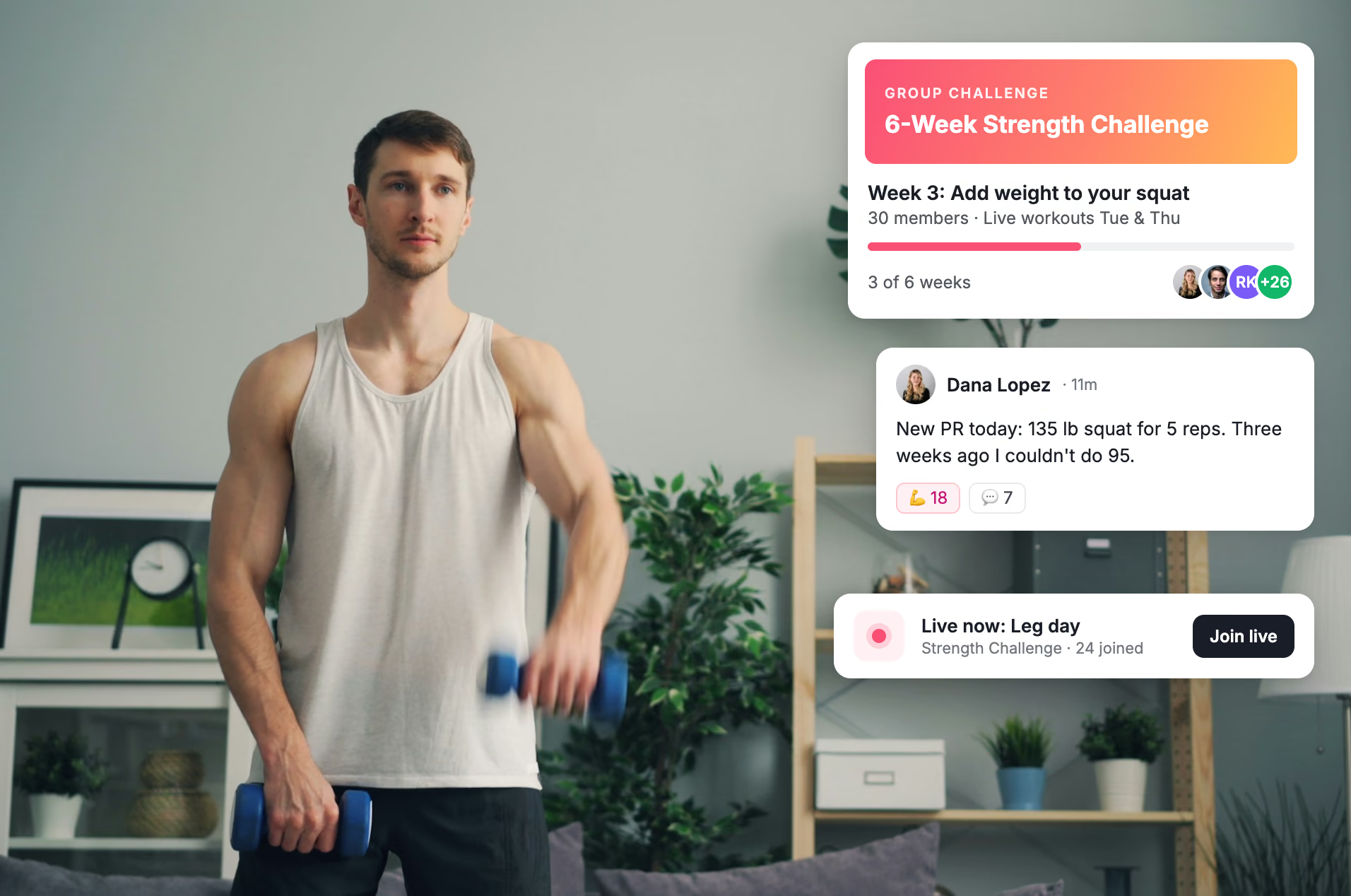
To become a personal trainer, earn an accredited certification, keep your CPR and AED certification current, practice with real clients, and then train at a gym, work for yourself, or coach online. Most people can get certified within months: ACE says most learners finish its personal trainer study program in 3 to 6 months.1
How much you make depends a lot on how you work. Fitness trainers and instructors earned a median of $47,160 a year, about $22.67 an hour, in May 2025, according to the U.S. Bureau of Labor Statistics. About 15% were self-employed, and many work part-time or on schedules that include nights and weekends.2 If you're paid by the session, your income tops out when your calendar does. So this guide also covers the online offers trainers add to earn more without training more hours.
People don’t lack trust in us; they lack trust in themselves. A subscription helped them start.
 Charlotte SalvanèsArt teacher, Un Autre Atelier · 80 → 900 paying studentsRead the story
 What a personal trainer does
A personal trainer assesses a client's fitness, builds a program around their goals, teaches exercises safely, and keeps them motivated from week to week. Training can happen in a gym, in a client's home, outdoors or over video.
There are limits. Trainers don't diagnose injuries or treat medical conditions. A client with pain, an injury or a health concern should see a doctor or physical therapist.
Do you need a certification?
In practice, yes. Most employers expect certification before you work with clients, along with certification in CPR, first aid and AED use.2 Look for a certification accredited by the National Commission for Certifying Agencies (NCCA). For example, the NCCA-accredited ACE Certified Personal Trainer exam requires you to:1
- Be at least 18 years old
- Have a high school diploma or the equivalent
- Hold a current CPR/AED certification with a live skills check
- Present a current government-issued photo ID
A degree isn't required, since the typical entry-level education is a high school diploma.2 Certification programs from NASM, ACE, ISSA and ACSM range from about $939 to $1,750, depending on the program and study package.3 You can start with one general certification and add specialties later.
Choose a niche
Clients want a trainer who has worked with people like them. "Personal trainer" is a crowded search. "Strength coach for new moms" isn't.
Fill in this sentence: I help [who] [reach a goal] without [common obstacle]. For example, "I help new moms get strong again in 30-minute home workouts."
Common niches include, with examples of what already runs on Heartbeat:
- Strength training for women. Heartbeat hosts strength communities built for women, where the program comes with a group that notices when you skip a week.
- Running. Several run clubs run on Heartbeat, from data-driven training groups to clubs for back-of-the-pack runners.
- Yoga, Pilates and movement. About a dozen yoga, Pilates and movement communities stream live classes and keep a library of recordings.
- Event prep. Brides-to-be and first-time racers already have a date on the calendar, which makes them a natural fit for a challenge.
- Pre- and postnatal fitness. Training through pregnancy and recovery, usually in step with the client's care provider.
- Older adults and mobility. Balance, strength and mobility for people who want to stay active as they age.
More than 300 health, wellness and fitness communities pay for Heartbeat.
What personal trainers earn
Gym trainers usually earn an hourly wage or a share of what clients pay for sessions. Independent trainers set their own rates but pay for their own space, insurance and marketing. Online trainers can take clients from anywhere and sell one program to many people at once.
Either way, 1:1 income stops where your available sessions do. The calculator below starts with your 1:1 clients, then adds a group challenge and an on-demand membership, and shows what you keep after platform and payment fees.
Personal trainer income calculator
Start with your 1:1 clients, then add offers that don't need more of your hours. Your first 14 days on Heartbeat cost $0.
Profit after your free trial
$0/yr
| Line | Free trialfirst 14 days | After trialBuild, per year |
|---|---|---|
| Revenue | $0 | $0 |
| Heartbeat plan | $0 | $49 |
| Heartbeat transaction fee | $0 2.5% | $0 5% |
| Stripe processing | $0 | $0 |
| Profit | $0 | $0 |
14 days free, no credit card.
Profit is revenue minus Heartbeat and Stripe fees (2.9% + 30¢ a charge), before taxes and other costs. The Heartbeat share is your plan plus its fee. 1:1 clients are billed outside Heartbeat. Example numbers, not an income promise. See pricing.
Grow past 1:1 sessions
Once your schedule is full, you can raise your rates, or you can train more people in the same hours. A common path:
- A paid community. An interactive home base for clients and followers who want your coaching between sessions, and a way to keep people training after a program ends. Heartbeat provides tools to grow and nurture your community, including live events, cohort-based courses, automated workflows, and pricing flexibility.
- A group challenge. Run a 6-week challenge with a start date, weekly live workouts and a group chat for check-ins. People show up for each other, and you teach one session instead of thirty. Heartbeat runs this with a cohort course, scheduled live calls with recordings, a private space for the group and a price for each seat.
- An on-demand membership. Recorded workouts, a few live classes a month and a community, priced for people who can't afford 1:1.
- Online 1:1 coaching. Programming plus weekly check-ins by video and message, for clients who don't live near you.
Heartbeat isn't a workout builder or client-tracking app. Many trainers keep programming in a dedicated training app and use Heartbeat for the community, live classes, courses and payments around it.
More than 1,100 creators have made their first $1,000 on Heartbeat, and more than 750,000 people belong to a Heartbeat community.
Get your first clients
- Start with people who know you. Tell friends, coworkers and people at your gym who you help (use your niche sentence) and ask who they know.
- Offer a free assessment or first session. People get to try you out before they pay for a package.
- Post short, useful videos. Form tips, quick home workouts and client wins show people how you coach.
- Build referral relationships. Physical therapists, chiropractors and doctors all see patients who need guided exercise once treatment ends.
- Run a free challenge. A 7-day challenge is a free preview of your group program. Heartbeat lets you open events to people who aren't members yet.
Set up the business side
If you work for yourself, register your business, open a separate business bank account and get professional liability insurance for personal trainers. Keep your CPR and AED certification current, and have every client complete a health screening questionnaire and sign a waiver before you train them.
Use a written agreement that covers session packages, payment terms, cancellations and refunds. Rules differ by state and country, so check what applies where you train.
Common questions
Do personal trainers make good money?
Some do. The U.S. Bureau of Labor Statistics reports a median of $47,160 a year for fitness trainers and instructors in May 2025. Trainers who work for themselves or coach online set their own rates, and group programs and memberships let them earn more without adding sessions.
How long does it take to become a personal trainer?
Most people can get certified within a few months. ACE says most learners finish its personal trainer study program in 3 to 6 months. You also need a current CPR/AED certification before you take an accredited exam.
Is 40 too old to become a personal trainer?
No. Certification exams set a minimum age, not a maximum: the ACE Certified Personal Trainer exam requires you to be at least 18. Plenty of clients would rather train with someone their own age, and that can be your niche.
Do you need a degree to be a personal trainer?
No. The typical entry-level education is a high school diploma or the equivalent, plus a personal trainer certification and CPR, first aid and AED certification.
How much does personal trainer certification cost?
Certification programs from NASM, ACE, ISSA and ACSM range from about $939 to $1,750, depending on the program and study package. Look for an NCCA-accredited certification, which most employers expect.
What does it cost to run a fitness community on Heartbeat?
Heartbeat starts with a 14-day free trial with no credit card, and plans start at $49 a month. When members pay you, Heartbeat charges a transaction fee based on your plan (5% on Build, 2.5% on Grow, 1.25% on Scale) on top of Stripe's card processing fee. The calculator on this page shows both.