How to become an influencer
How much influencers make, brand deals, how many followers you need, and more
Updated
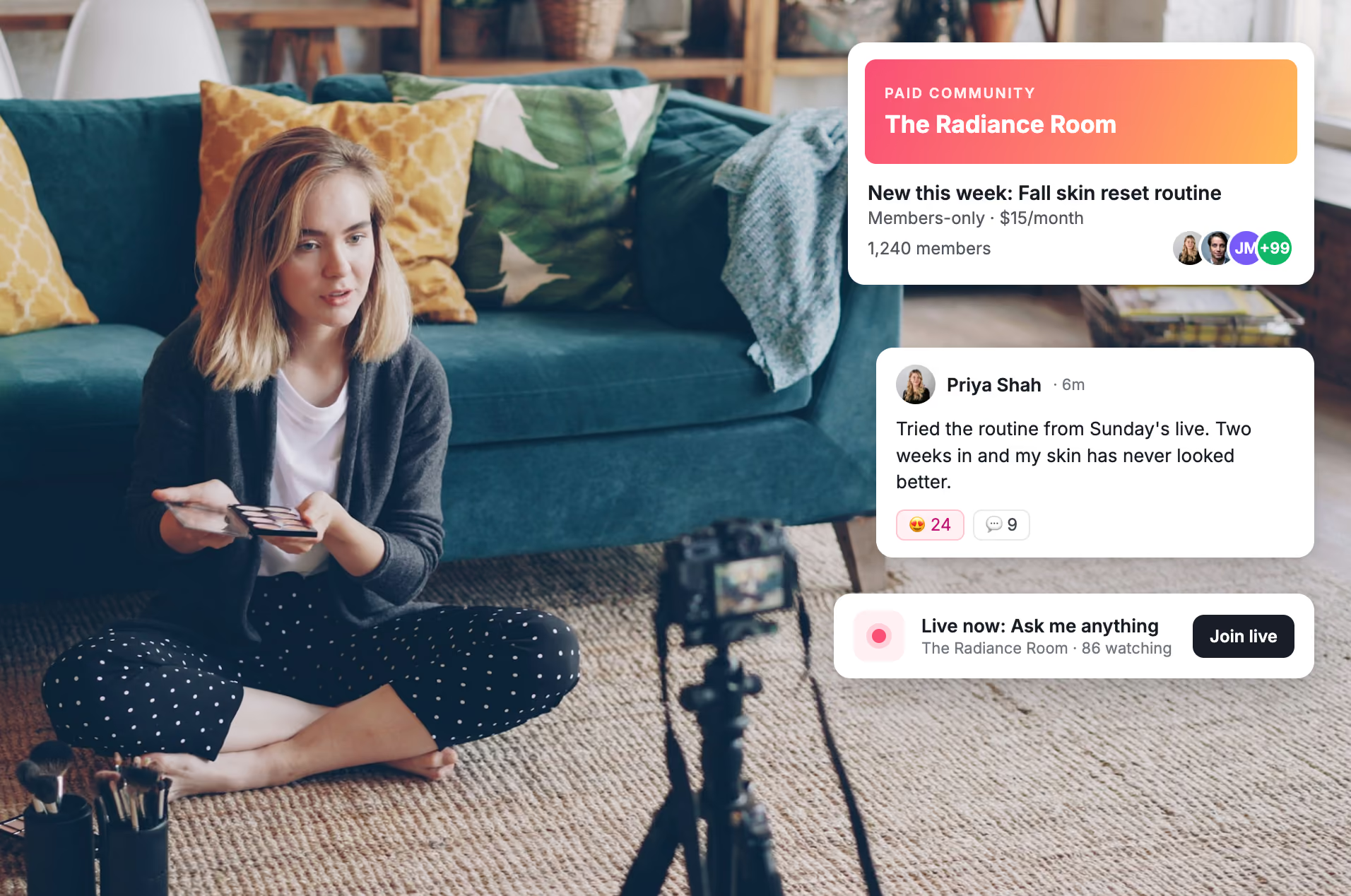
To become an influencer, start by picking a niche you can post about for years: something you're obsessed with and can't imagine tiring of. If you're the go-to person in your group chat for advice or knowledge on a topic, that might be a good niche to start with.
Then choose a main platform, post on a steady schedule, and build real conversations with the people who follow you. Once you earn their trust, you can start making money from brand deals, affiliate links, and your own services, like courses or a paid community.
Most creators don't earn much yet. In Influencer Marketing Hub's 2025 survey of more than 3,000 creators, more than half earned under $15,000 a year. Brand deals were the main source of income for 49% of creators, down 10 points from 2023.1 But income that depends on brand budgets and platform algorithms can disappear in the blink of an eye, so this guide focuses on steadier sources of income that are more under your control.
I also love that it’s off of social media! It really was the confidence I needed to go ahead and start a community!
What an influencer does
An influencer creates content for a specific audience and builds enough trust that people act on their recommendations. The content might be workouts, recipes, travel tips, parenting advice or personal finance. Brands pay for that trust. It's also why followers will buy from you directly.
Content creator and influencer mean nearly the same thing. The difference is perspective: a creator is known for what they produce, while an influencer is more known by the audience that listens to them.
Choose a niche and a platform
A niche tells people what they'll get if they follow you. Fill in this sentence: I help [who] [do or feel something] through [type of content]. For example, "I help busy parents cook healthy dinners through 15-minute recipe videos."
Popular niches include fitness, food, travel, beauty and fashion, parenting, personal finance and pets. It helps if the people who follow that topic already spend money on it. Skincare fans buy skincare. Runners buy shoes, watches and race entries.
Start with one platform and learn it well before adding others. Where you post matters too. In the same survey, Instagram creators reported the highest average income, while TikTok, which is easier to start on, had more creators at lower income levels.1
How influencers make money
Most influencers combine several income streams:
- Brand deals. A company pays you to feature its product. What you can charge depends on your audience and engagement, and the deals dry up when marketing budgets do.
- A paid community. Followers pay monthly for closer access to you, like live sessions and members-only content, plus a place to talk with each other. The money comes in every month from people who already know you.
- Affiliate commissions. You get a cut when someone buys through your link. Easy to set up, but each sale pays a small share.
- Platform payouts. Ad revenue and creator programs pay by views, on terms the platform can change whenever it likes.
- Digital products and courses. Guides, templates or a full course. You keep most of what they earn, and selling one more copy doesn't cost you any more time.
If you post sponsored content, the Federal Trade Commission requires you to disclose any financial, employment, personal or family relationship with a brand, including free or discounted products. The disclosure has to be hard to miss and part of the post itself, and simple labels like "ad" or "sponsored" work.2
How many followers do you need?
There's no official number. Brands look at engagement and audience fit, not just follower count. And if you're selling your own products, you don't need a big audience at all.
Writer Kevin Kelly's essay "1,000 True Fans" makes the math concrete: if 1,000 fans each spend $100 a year with you, that's $100,000.3 A paid community is one of the most direct ways to do that. The calculator below starts with brand deals, then adds a paid community and a course, and shows what you might keep after platform and payment fees.
Influencer income calculator
Start with your brand deals, then add income your followers pay you directly. Your first 14 days on Heartbeat cost $0.
Profit after your free trial
$0/yr
| Line | Free trialfirst 14 days | After trialBuild, per year |
|---|---|---|
| Revenue | $0 | $0 |
| Heartbeat plan | $0 | $49 |
| Heartbeat transaction fee | $0 2.5% | $0 5% |
| Stripe processing | $0 | $0 |
| Profit | $0 | $0 |
14 days free, no credit card.
Profit is revenue minus Heartbeat and Stripe fees (2.9% + 30¢ a charge), before taxes and other costs. The Heartbeat share is your plan plus its fee. Brand deals are paid outside Heartbeat. Example numbers, not an income promise. See pricing.
Build income you own
Brand deals are a fine place to start, but someone else decides when they happen. These offers let followers pay you directly:
- A paid community. An interactive home base for your most engaged followers, who pay for closer access to you and to each other. Heartbeat provides tools to grow and nurture your community, including live events, cohort-based courses, automated workflows, and pricing flexibility.
- A course. Take the questions your audience keeps asking and turn the answers into lessons. People can go at their own pace, or you can run it live with a group.
- Digital products. Templates, guides, meal plans and presets. They're cheap, which makes them an easy first purchase.
- Live workshops and challenges. A paid workshop or a 30-day challenge gives people a deadline to join, and a preview of what your community is like.
At least 60 paying communities on Heartbeat were started by creators who built an audience first, then gave their most engaged followers a place to gather. Across the platform, Heartbeat has paid out more than $24 million to creators from the people who follow them.
Turn followers into paying members
- Go live and talk with your audience. Comments, replies and live Q&As tell you what people want help with. That's your offer.
- Build an email list. One algorithm change can cut your reach overnight. Your email list stays yours.
- Open a founding-member waitlist before you launch. Offer a lower price to the first people who commit. If people pay before it exists, you know there's demand. Heartbeat includes paid waitlists on every plan.
- Run a free event. A free live session lets followers see what your community is like before they pay. Heartbeat lets you open events to people who aren't members yet.
Set up the business side
Register your business, open a separate bank account, and set money aside for taxes, since nobody withholds tax from brand payments or sales.
For brand deals, get a written agreement that covers deliverables, deadlines, payment terms, how long the brand can use your content, and whether you can work with competitors. Disclose every sponsored post the way the FTC describes, and keep a record of what you were paid or given.
Common questions
Do influencers get paid?
Yes, though most don't earn much. In Influencer Marketing Hub's 2025 survey of more than 3,000 creators, more than half earned under $15,000 a year. Influencers get paid through brand deals, affiliate commissions, platform payouts, and products they sell themselves, such as courses and paid communities.
How many followers do you need to be an influencer?
There's no official threshold. Brands consider engagement and audience fit alongside follower count, and selling your own products works with a small, engaged audience. Kevin Kelly's "1,000 True Fans" essay shows that 1,000 people paying you $100 a year adds up to $100,000.
Can you get paid with 500 followers?
You can. Brand deals are harder to land with a small audience, but affiliate links, digital products and a paid community don't require a minimum. A few hundred followers who pay you can be worth more than a big audience that only watches.
How do influencers make money?
Most combine several streams: brand deals, affiliate commissions, ad revenue and creator programs, digital products and courses, and paid communities or memberships. Brand deals were the main income source for 49% of creators in 2025, down 10 points from 2023, so many creators are adding income they control.
Do influencers have to disclose sponsored posts?
Yes. The FTC requires influencers to disclose any financial, employment, personal or family relationship with a brand, including free products. The disclosure must be clear and part of the post itself, using simple words like "ad" or "sponsored".
What does it cost to run a paid community on Heartbeat?
Heartbeat starts with a 14-day free trial with no credit card, and plans start at $49 a month. When members pay you, Heartbeat charges a transaction fee based on your plan (5% on Build, 2.5% on Grow, 1.25% on Scale) on top of Stripe's card processing fee. The calculator on this page shows both.
What is a micro influencer?
A micro influencer usually has between 10,000 and 100,000 followers, and a nano influencer has fewer than 10,000, according to Influencer Marketing Hub. Smaller creators tend to have more engaged audiences: its figures put average engagement at 5.60% for nano influencers and 2.05% for macro influencers, which is why a small audience can still support a paid community.
How do you become an influencer with no followers?
Pick a niche you know well, choose one platform, and post useful content on a steady schedule. Reply to every comment and message early on, since those conversations build trust and show you what your audience wants. Start an email list or a small free community early, so the people who find you can reach you without the algorithm in the way.
How do you make money on TikTok?
TikTok's Creator Rewards Program pays for qualifying videos of at least one minute. To join in the US you need to be 18 or older, have at least 10,000 followers, and have 100,000 video views in the last 30 days. Many creators also earn from brand deals, affiliate links, and by sending followers to a course or paid community they own.
How do small influencers get brand deals?
Start with brands you already use and mention naturally, and pitch them with a short media kit that shows your audience, engagement and past results. Engagement and audience fit often matter more than follower count. Get the terms in writing, and disclose every sponsored post the way the FTC requires.
How can influencers earn money without relying on brand deals?
Sell to your audience directly. With a paid community, a course, digital products or paid workshops, followers pay you, and no brand budget or algorithm decides what you earn. Heartbeat puts a paid community, courses, live events and payments in one place.