How to become a health coach
How much health coaches make, certification, scope of practice, and more
Updated
There are several paths to becoming a health coach or personal trainer. It's sometimes helpful to start with a formal training program before you practice with real clients, choose a niche, and finally open your own practice or join a team. There's also the decision of whether or not to apply for board certification. Health coaching isn't a licensed profession in the US, so certification is voluntary.1 The national board credential, NBC-HWC, is the one clinicians and employers recognize most.
Private practice pays well per hour and less well per year. In the National Board for Health & Wellness Coaching's 2025 survey of board-certified coaches, the median private practice rate was $100 an hour, with most coaches charging $75 to $150. Yet 36% earned less than $10,000 from coaching that year, and coaches named finding clients as one of their biggest challenges.2 Many health coaches, especially when starting out, have trouble filling their calendar and finding regular, steady work, which is what much of this guide is about.
With Heartbeat, we actually know who’s falling behind. That means we can reach out, support them, and keep people on track.
 Alex VaughttonEngineer, NocodeHackers · €100K → €350KRead the story
 What a health coach does
A health coach helps a client change the habits behind their health: eating, movement, sleep, stress and follow-through on a care plan. The client sets the goals. The coach asks questions, helps them plan small steps, and keeps them accountable between sessions. Most coaching now happens online, and 87% of board-certified coaches run sessions over video.2
Health coaching has clear limits. According to the national board's scope of practice, coaches on their own don't diagnose, interpret medical data, prescribe, recommend supplements, create meal plans, prescribe exercise or provide therapy.3 Working under a licensed professional such as a physician or physical therapist, a coach can help a client carry out that professional's treatment plan. A good coach knows the line and refers a client on when a conversation crosses it.
Do you need a certification?
No license is required, but rules on nutrition advice differ by state. In about 12 states, practicing medical nutrition therapy or dietetics requires a state license, so check yours before you give individualized nutrition advice.1
The best-known credential is National Board Certified Health & Wellness Coach (NBC-HWC). There were 11,490 board-certified coaches in 2025.2 To sit for the board exam you need:4
- A training program approved by the board. There are more than 138, from certificates to master's degrees, many online.
- An associate degree or higher in any field, or 4,000 hours of work experience in any field
- 50 logged coaching sessions, completed after passing a skills assessment in your program
- A $100 application fee and a $400 exam fee
Training costs vary widely by school. As one example, ACE's Health Coach study programs list at $1,309 and $1,659, and its certification exam on its own is $499.5 Because the board exam needs 50 real coaching sessions, many coaches start working with clients while they train.
Choose a niche
People look for help with a specific problem, not general wellness. A clear niche makes you easier to find, easier to refer and easier to price.
Fill in this sentence: I help [who] [change what habit] so they can [result]. For example, "I help women in perimenopause build sleep and strength routines so they can feel like themselves again."
Common niches include, with examples of what already runs on Heartbeat:
- Women's and hormonal health. Perimenopause, menopause, PCOS, fertility and postpartum. Heartbeat hosts paid communities for menopause support, hormone health and PCOS, usually built around monthly live sessions and a peer group that understands what members are going through.
- Movement, yoga and Pilates. About a dozen yoga, Pilates and somatic movement communities run on Heartbeat, many streaming live classes to members at home and keeping recordings in a library.
- Breathwork, stress and sleep. Breathwork, nervous system and calm-focused memberships are one of the more common wellness niches on Heartbeat, often with short daily or weekly guided sessions.
- Nutrition and gut health. Plant-based and whole-food nutrition memberships pair lessons and recipes with a group for accountability. Individualized meal plans stay with licensed nutrition professionals.
- Weight and metabolic health. Sustainable eating and strength habits, often run as a coaching program with a community alongside it, and often alongside a client's doctor.
- Chronic condition support. Heartbeat communities cover bone health, cancer support and neurodivergence. The coach helps members follow the plan their care team set and gives them peers who share the condition.
- Nurse coaching. Nurses adding coaching to clinical experience, in private practice or inside a health system.
More than 300 health, wellness and fitness communities pay for Heartbeat.
What health coaches earn
Earnings depend on how you work. In the national board's 2025 survey, 58% of board-certified coaches were self-employed. Coaches paid by the hour reported a median of $40, and 67% of full-time coaches earned between $50,000 and $99,999 a year. Only 7% of all respondents earned $100,000 or more from coaching.2
In private practice every one of those numbers is tied to sessions. At $100 an hour, a full year of income needs a full calendar of clients. The calculator below starts with your 1:1 clients, then adds a group program and a membership that don't need more of your hours, and shows what you keep after platform and payment fees.
Health coach income calculator
Start with your 1:1 clients, then add offers that don't need more of your hours. Your first 14 days on Heartbeat cost $0.
Profit after your free trial
$0/yr
| Line | Free trialfirst 14 days | After trialBuild, per year |
|---|---|---|
| Revenue | $0 | $0 |
| Heartbeat plan | $0 | $49 |
| Heartbeat transaction fee | $0 2.5% | $0 5% |
| Stripe processing | $0 | $0 |
| Profit | $0 | $0 |
14 days free, no credit card.
Profit is revenue minus Heartbeat and Stripe fees (2.9% + 30¢ a charge), before taxes and other costs. The Heartbeat share is your plan plus its fee. 1:1 clients are billed outside Heartbeat. Example numbers, not an income promise. See pricing.
Grow past 1:1 sessions
Once your calendar is full, you can raise your rate, or you can help more people in the same hours. A common path:
- A paid community. An interactive home base for people who want your guidance but aren't ready for 1:1, and a place for past clients to keep their habits going. Heartbeat provides tools to grow and nurture your community, including live events, cohort-based courses, automated workflows, and pricing flexibility.
- 1:1 packages. Sell three or six months of coaching instead of single sessions. Habit change takes time, and a package gives clients enough of it.
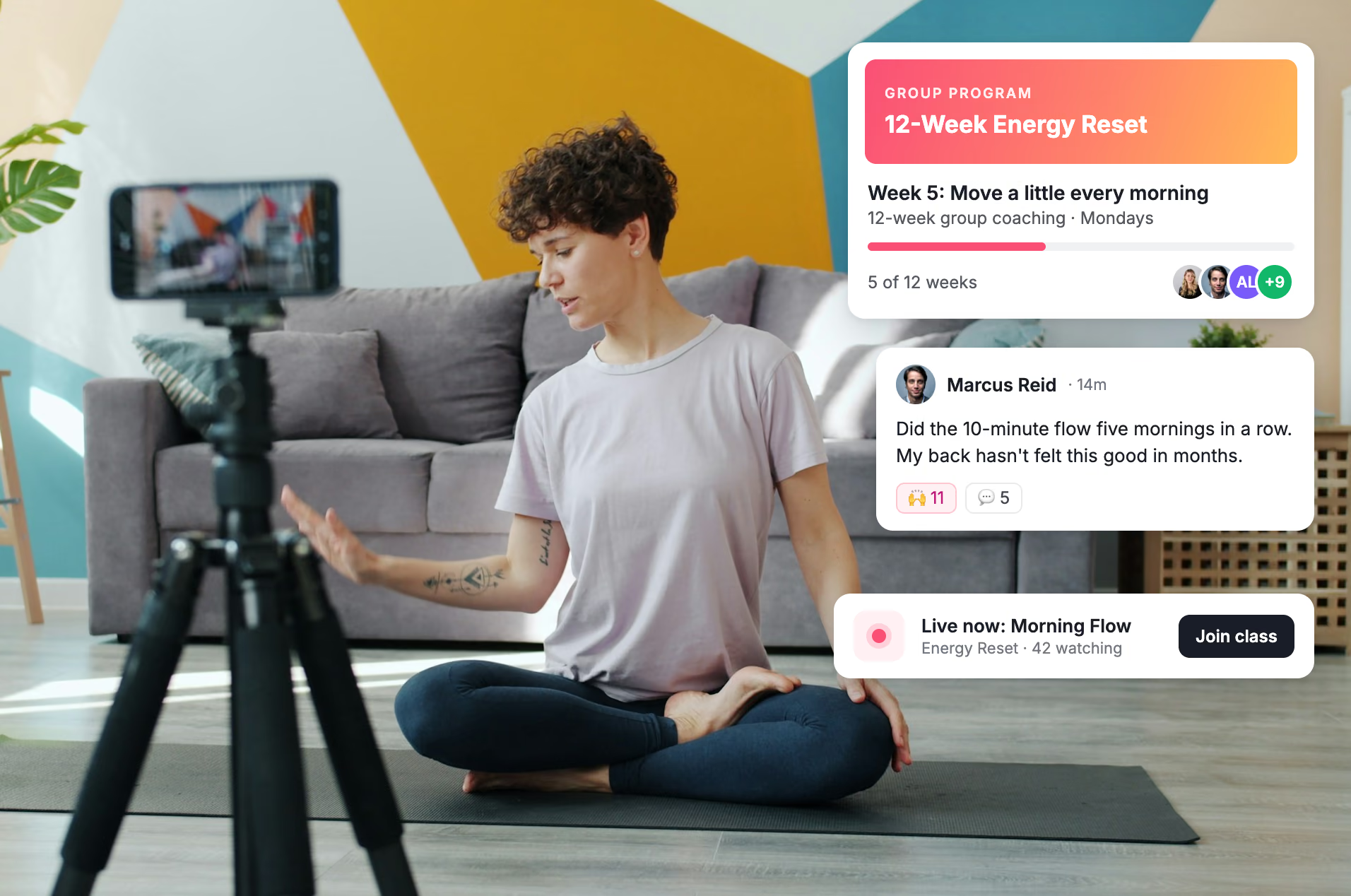
- A group program. Run your method as a cohort, for example a 12-week reset with weekly live calls, lessons and a group chat for check-ins. Members hold each other accountable, so one call supports the whole group. Heartbeat runs this with a cohort course, scheduled live calls with recordings, a private space for the group and a price for each seat.
- A self-paced course. Record the core of your method once. It works as an entry offer, and as prework for your group program.
Keep the community a place for education, accountability and support. Clients shouldn't post medical records or diagnoses in group spaces, and anything clinical belongs with their care team.
You won't be the first to run a program this way. Creators have built more than 30,000 courses and hosted more than 250,000 live events on Heartbeat.
Get your first clients
Finding clients is one of the most common challenges board-certified coaches report,2 so plan for it from the start:
- Build referral relationships with clinicians. Doctors, dietitians, physical therapists and functional medicine practices see patients who need support between appointments. Offer a simple way to refer, and report back on progress with the client's permission.
- Coach a few people at a discount in exchange for feedback and a testimonial. Those sessions can also count toward the 50 you need for the board exam.
- Run a free challenge or workshop. A 5-day sleep challenge or a live class on your niche shows people what working with you is like. Heartbeat lets you open events to people who aren't members yet.
- Open a founding-member waitlist before your first group program is ready. Offer a lower price to the first people who commit, so you know there is demand before you build.
Set up the business side
Before you take payments, register your business, open a separate business bank account and get liability insurance that covers coaching. Use a written client agreement that says what coaching is and isn't, that it doesn't replace medical care, and when you'll refer a client to a licensed professional.
Then set up the tools clients touch: a way to book sessions, a way to pay you, and one place for everything between sessions, like lessons, recordings, check-ins and your group. Keeping it in one place means clients don't hunt through email, a video link and a separate course site to find this week's plan.
Common questions
How long does it take to become a health coach?
You can start coaching as soon as you've trained, since health coaching doesn't require a license. Board certification takes longer: you need to finish an approved training program, log 50 coaching sessions after passing your program's skills assessment, and pass the board exam.
What qualifications do you need to be a health coach?
No license is required in the US. For the NBC-HWC board exam you need an approved training program, an associate degree or 4,000 hours of work experience in any field, and 50 logged coaching sessions. In about 12 states, giving medical nutrition therapy or dietetics advice requires a separate state license.
Do health coaches make money?
Many do, but income varies widely. In the National Board for Health & Wellness Coaching's 2025 survey, private practice coaches charged a median of $100 an hour, and 67% of full-time coaches earned $50,000 to $99,999 a year. At the same time, 36% of respondents earned less than $10,000 from coaching, and only 28% worked full-time.
Is becoming a certified health coach worth it?
Certification isn't legally required, but the NBC-HWC credential is the one clinicians and healthcare employers recognize most, and it helps with referrals. If you plan to build a private practice on your own audience, your niche, results and ability to find clients will matter as much as the credential.
What's the difference between a health coach and a nutritionist?
A health coach helps clients change habits and follow through on goals, and doesn't create meal plans or give nutrition consultation on their own. Nutrition professionals such as registered dietitians can assess, advise and prescribe diets, and in about 12 states that work requires a state license.
What does it cost to run a health coaching business on Heartbeat?
Heartbeat starts with a 14-day free trial with no credit card, and plans start at $49 a month. When members pay you, Heartbeat charges a transaction fee based on your plan (5% on Build, 2.5% on Grow, 1.25% on Scale) on top of Stripe's card processing fee. The calculator on this page shows both.
Sources
- 1.Institute for Integrative Nutrition, How to find health coach laws by state
- 2.National Board for Health & Wellness Coaching, 2025 Annual Survey Report
- 3.National Board for Health & Wellness Coaching, Health & Wellness Coach Scope of Practice
- 4.National Board for Health & Wellness Coaching, Get board certified (requirements and fees)
- 5.American Council on Exercise, Health Coach certification study programs and exam