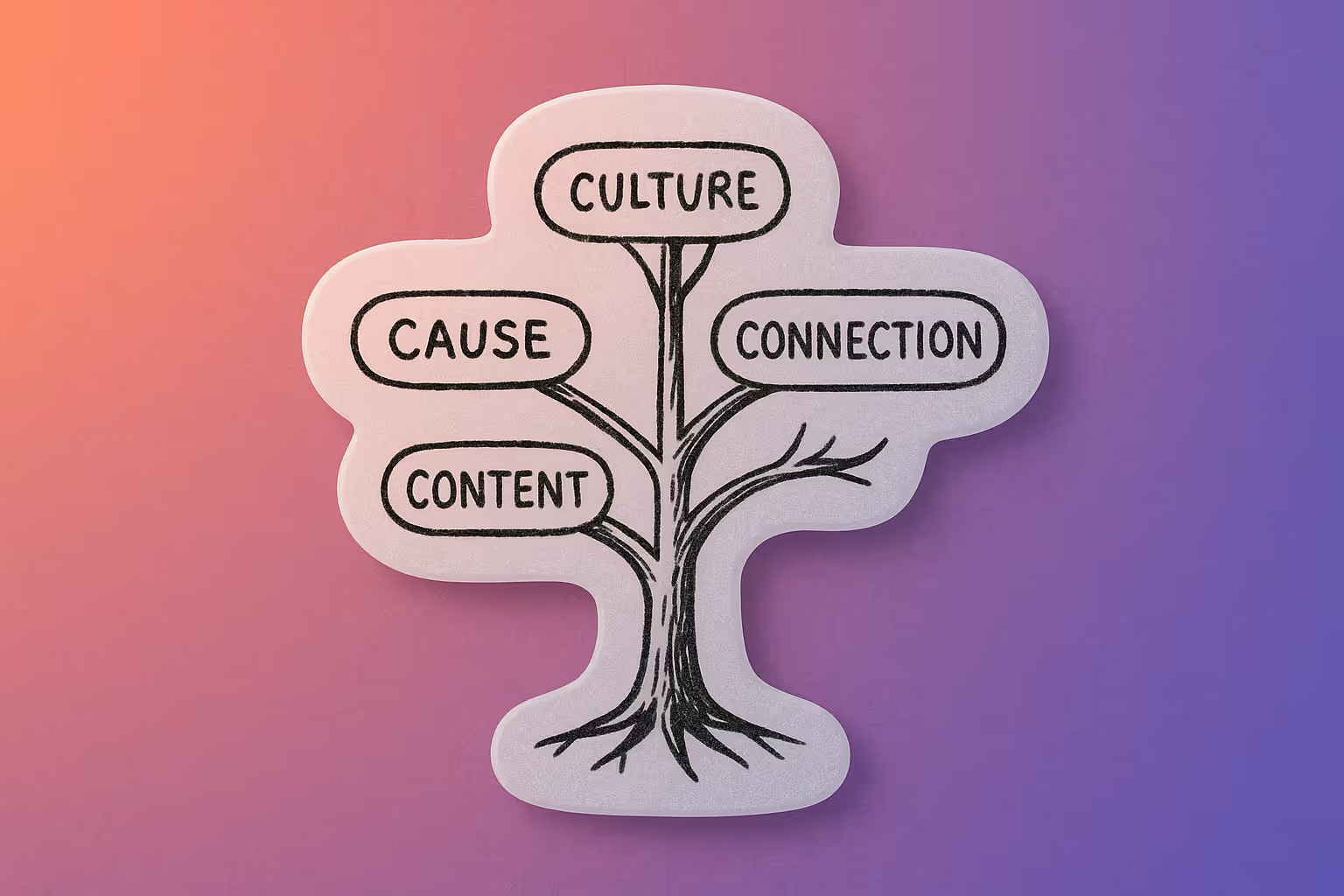
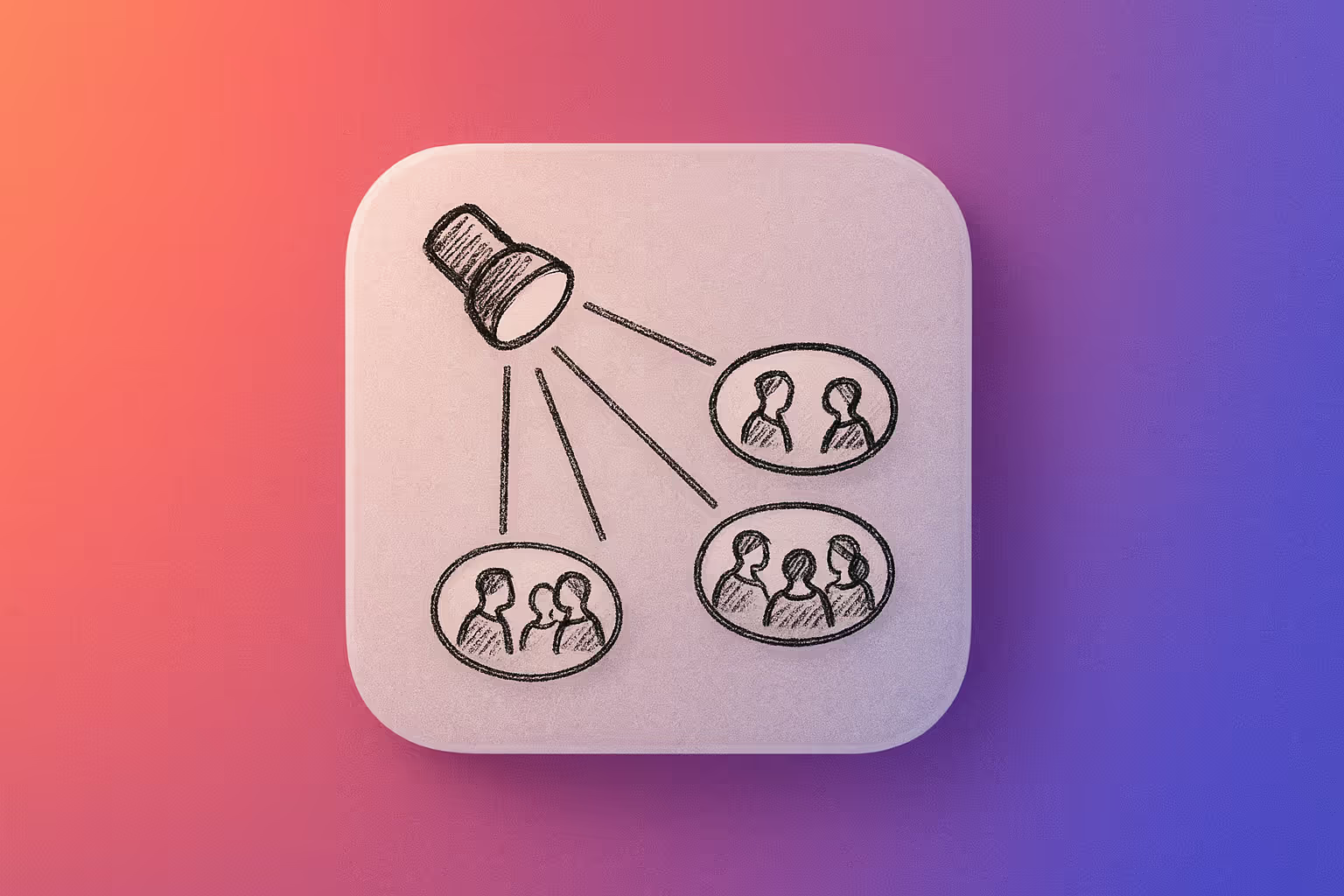
Low engagement in a community is almost always a direction problem. The default direction of engagement in most online communities is founder to member: the founder posts, members respond, the founder replies. It looks like a community. It functions like a newsletter with comments.
Flip that direction, from founder-to-member to member-to-member, and engagement increases without adding more content, more events, or more prompts. The founder becomes less of a bottleneck. The community becomes stickier because members have reasons to show up for each other, not just for the founder.
The 30-day sprint below is built around that flip. But the sprint only works if you understand why the direction problem exists in the first place.
First, are your members happy?
Start here, because it changes which problem you're solving. If members are unhappy, quiet is a symptom and retention is the work. If members love the community and aren't posting, this is a design problem, and it's very fixable.
Here's how to tell. Ask a few members, or look at what happens after your live sessions and events. If people show up to calls, tell you the community is valuable, and renew, but the channels are silent, the experience is good and the design is off. That's the common case. If instead people are drifting, not renewing, and going dark, the problem is upstream in onboarding or value delivery, and no amount of clever prompting fixes it. What "good" looks like once you fix the design: a handful of members posting each week without you asking, wins showing up on their own, and members answering each other instead of routing everything through you. That's the target. If your members are happy, assume the design is the gap and keep reading.
Why the wrong direction persists
Jade Olivia, Community Strategist and Automation Expert, names the structural cause: most online communities are designed like concerts when they should be designed like conferences.
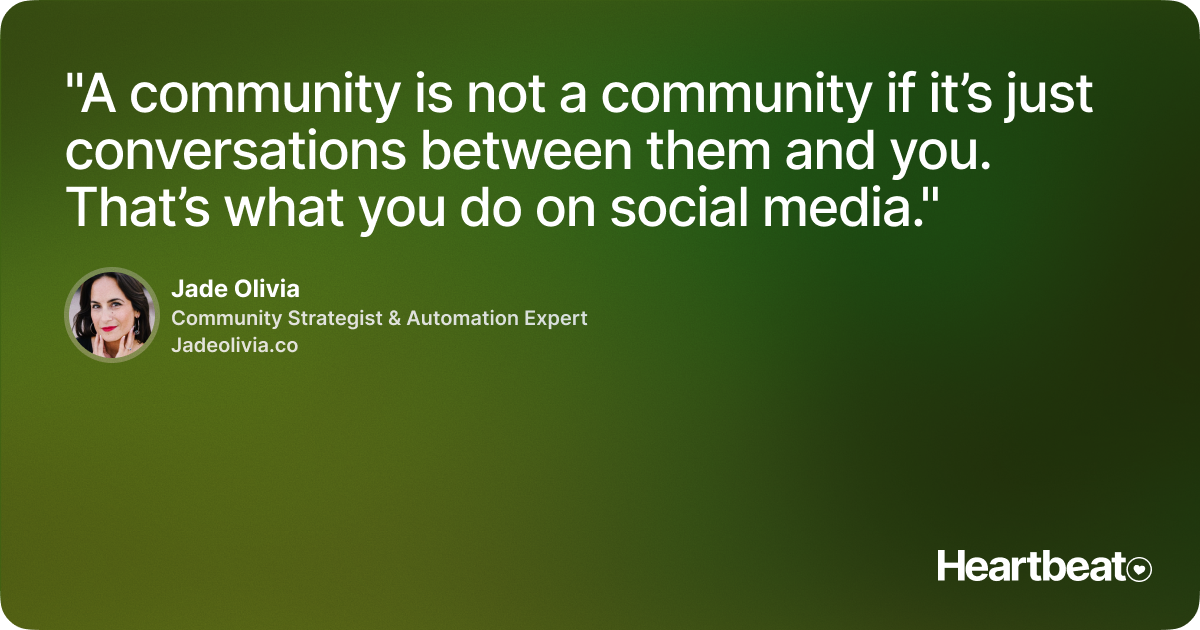
At a concert, everyone faces one stage. One performer, one audience, one direction. That's what founder-to-member communities look like: one person performing, everyone else watching. At a conference, people mingle. They break into small conversations. They find someone with the same problem and solve it together. The host facilitates. The attendees are the show.
The concert design feels natural because it's how most online platforms work. You post to your followers. They react. You post more. It's frictionless and produces visible numbers: impressions, reactions, replies. It doesn't produce the kind of engagement that retains members, because it doesn't build relationships between them.
A community where the founder takes a week off and engagement drops is a concert. A community where the founder takes a week off and members keep showing up for each other is a conference. The second one retains at dramatically higher rates. And building the second one requires one specific habit change.
The one habit that flips everything
When a member asks you a question, don't answer it.
This is the most effective way to shift the direction of engagement. Instead of answering, tag a member who solved that same problem recently: "I want you to meet [Name], they figured this out last month. [Name], would you be willing to share what worked?" The person who asked gets a useful answer. The member who answers gets public recognition for their expertise. A new member-to-member relationship starts.
Do this ten times in a week and the direction of engagement in your community changes visibly. Members start to see each other as resources. They start reaching out to each other directly. The conversation traffic that used to run through you starts routing around you.
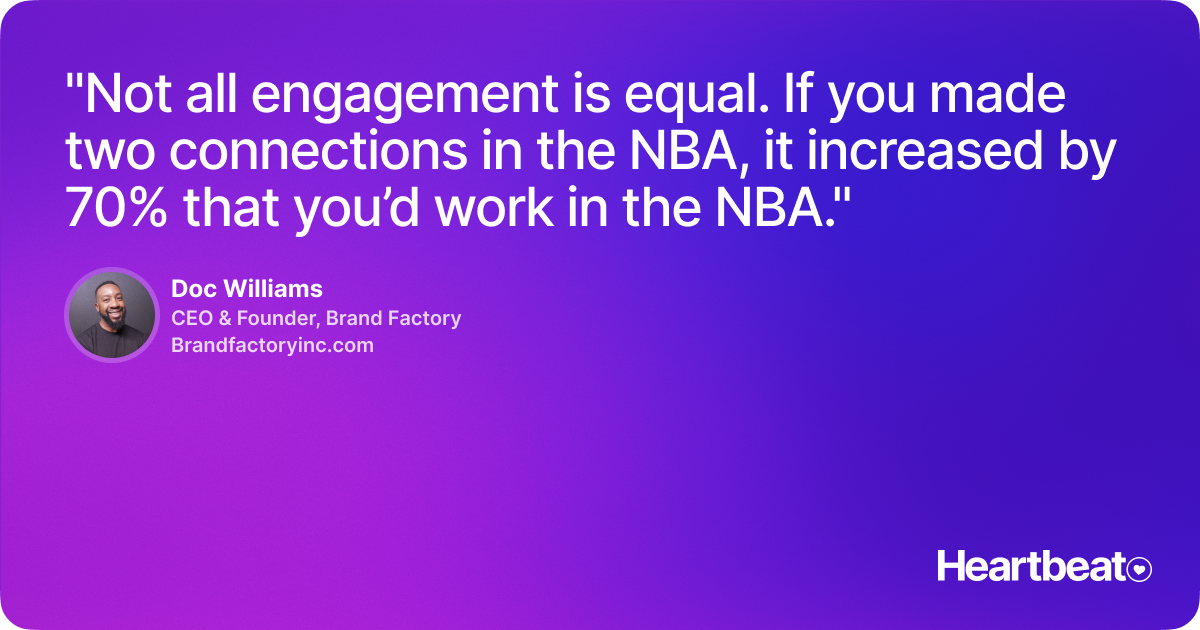
Doc Williams, community strategist for ESPN, VaynerMedia, and the NBA's Summer League, has data on what this produces at scale. NBA research showed that players who made two meaningful connections inside the league were 70% more likely to keep working in it. In paid communities, the same effect applies: members with relationships inside the community are significantly harder to lose than members whose only relationship is with the founder.
The direction shift is the most important change. It doesn't require new content or new tooling. It requires a different response to the questions that are already coming in.
That shift in direction does more than save the founder time. It changes what the community is. When conversations run through you, members are subscribers to your expertise. When conversations run between members, they're part of something that exists independent of you. One of those communities survives a founder taking two weeks off. The other doesn't.
Move private questions public
Your members are already engaging, just privately. Every DM and email you get is a public post that hasn't happened yet. When a member sends you a good question one to one, the play is to say, this is a great question, would you post it in the channel so I can answer it there for everyone. Most people happily do it, and now the answer helps the whole community instead of one person, and others see that this is a place where questions get answered. Doing this a few times a week seeds the visible activity that makes the next member comfortable posting.
The system that makes it reliable
The direction shift changes the dynamic. What keeps it running without daily effort is a content cadence that gives members something consistent to engage with, and each other someone to engage with about it.
Noele Flowers, community and online learning expert who ran community at Teachable for four years, teaches a four-cadence calendar: weekly prompts, event anchors, member spotlights, and resource drops. What matters is that each piece creates a predictable trigger for member-to-member engagement.
A well-designed weekly prompt asks a question that members answer from their own experience. When five members post their answers, each answer becomes a conversation starter for another member. The prompt is the kindling. The member-to-member replies are the fire. The same prompt format, posted every Tuesday at 10am, trains members to expect it and plan for it. After six weeks, some members are pre-writing their answers on Monday.
In Heartbeat, you can batch four weeks of weekly prompts in a single session using automated post scheduling, set them to auto-post at the same time each week, and pin the upcoming event calendar in a featured channel so members always know what's next.
They came with a goal
The deepest reason members don't post is that we ask them to "engage" when what they want is to get somewhere. Rosie Sherry, founder of Rosieland and Ministry of Testing, puts it bluntly: people don't come to communities to talk.
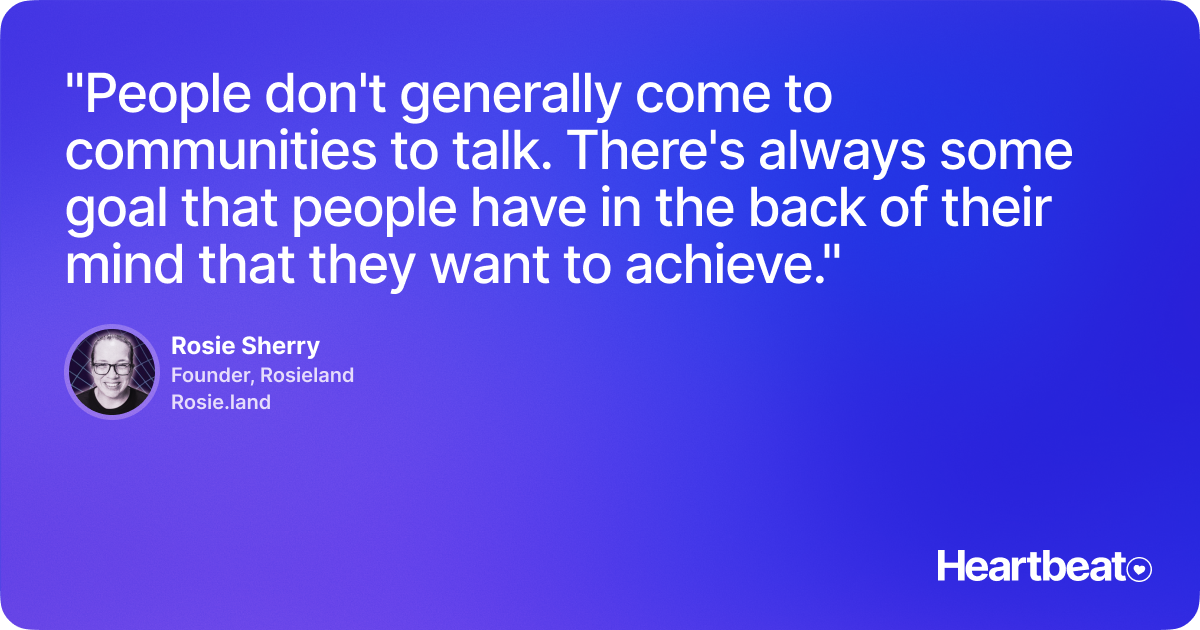
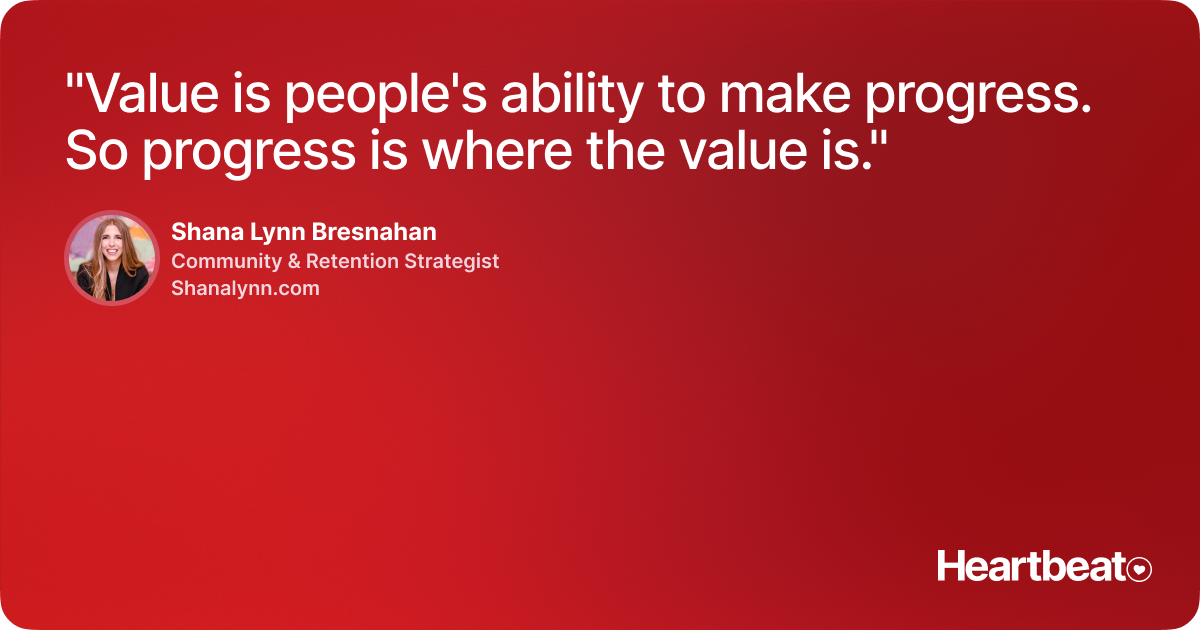
That reframes the whole job. Stop asking for engagement and start designing for progress. Shana Lynn Bresnahan, a community and retention strategist, gets it down to one line: value is people's ability to make progress. So every prompt should move a member one step toward the outcome they came for. Instead of "introduce yourself," ask "what are you trying to accomplish this month, and where are you stuck." Instead of "share your thoughts," ask "post the one thing you're working on this week so the group can help." A prompt tied to a goal gets answered. A prompt asking for generic participation gets skipped.
Make the first ask tiny
Even a perfect prompt fails if the action feels big. The move is to shrink the first ask until it's almost impossible to refuse. Bri Leever, community strategist and founder of Ember, teaches this precisely: don't say "attend the event," say "click RSVP." The shift in language is tiny, and it trains people to take the 30-second action instead of the daunting one.
Apply that everywhere. The first post a new member makes should be one sentence, not an essay. Ask them to drop a single emoji, answer one question, or share one win. Once someone has posted once, the second post is far easier, and the third becomes a habit. Design the on-ramp so the first contribution costs almost nothing, and set it up so it happens in their first few minutes, while their intent is highest.
Recognition as fuel
The content cadence creates the conditions for engagement. Recognition is what makes members want to participate in it.
Victoria Cumberbatch, community development consultant with nearly a decade of experience across nonprofits and digital communities, makes the case that recognition is the most underused retention lever in community building. The research is consistent: members are motivated to engage most by being seen and acknowledged by someone whose opinion they respect, more than by extra content or discounts.
The recognition that compounds is specific. Not "great post!" but "I want to highlight what [Name] shared in this week's prompt, this is exactly the kind of insight this community exists to create." It's an acknowledgment that shows you were paying attention and that their contribution mattered.
Design your community so every member gets specifically recognized for something meaningful at least once a month. Member spotlights, milestone celebrations, and "best answer of the week" callouts all create the moments that make members feel visible. Members who feel visible engage more. Members who engage more get recognized more. The flywheel compounds quickly.
The 30-day sprint
Here's what all of this looks like combined into a 30-day proof of concept:
Days 1-3, Audit. Answer two questions: What percentage of your conversations are member-to-member right now? Who are your five most recently active members? Start there.
Days 4-7, Set up the cadence. Post a public shoutout to your top three contributors. Create the weekly prompt recurring schedule. Pin the next event in a visible location. This is your infrastructure for the month.
Days 8-14, Facilitate three introductions. Tag Member A directly: "I want you to meet Member B, you're both working on [specific thing]. You should continue this conversation." Do this three times. Measure how many conversations it generates.
Days 15-21, Run a member spotlight. Ask one member to share a specific win or lesson in a dedicated post. Celebrate it publicly and specifically.
Days 22-30, Review and decide. What increased? What didn't move? Pick one mechanic to make permanent and one to retire. Don't try to keep all of it running. Pick the one that moved the metric.
The goal of the sprint is to find the two or three mechanics that produce member-to-member engagement for your specific community, so you can run those permanently and stop guessing.
FAQ
How do I measure engagement meaningfully?
Track two numbers: member-to-member conversation rate (what percentage of posts are replied to by someone other than you), and monthly active member rate (what percentage of members post, comment, or attend something each month). Both are more informative than total post counts or reaction numbers.
My community is small. Does this work at under 50 members?
Under 50 is ideal for building engagement habits. You can personally introduce every new member, personally recognize every contribution. Use the advantage of small scale. The communities that build strong member-to-member culture at 30 members carry it to 300. The ones that wait until they're bigger rarely close the gap.
How do I restart a community that's gone quiet?
Find your three to five most recently active members and start there. Post directly to them, ask for their opinion on something specific, introduce them to each other. Build a small cluster of active members first. Visible activity by a few people signals to quieter members that the community is alive.
Should I post more frequently to increase engagement?
More frequency helps when the content is relevant. It creates noise when it isn't. Before posting more, post better. One well-designed prompt per week that produces member-to-member conversation consistently outperforms five daily posts that don't.
Why won't my members post even though they like the community?
Because posting isn't tied to what they came for. People join to make progress on a goal, not to chat, so generic "share your thoughts" prompts get skipped. Ask questions tied to a member's specific outcome ("what are you working on this week, where are you stuck"), make the first post a single sentence, and recognize people when they contribute.
How do I get members to post publicly instead of DMing me?
When a member sends a good question privately, ask them to post it in a channel so you can answer it there for everyone. It turns a one-to-one reply into visible value, and it shows other members the space is active and worth posting in.